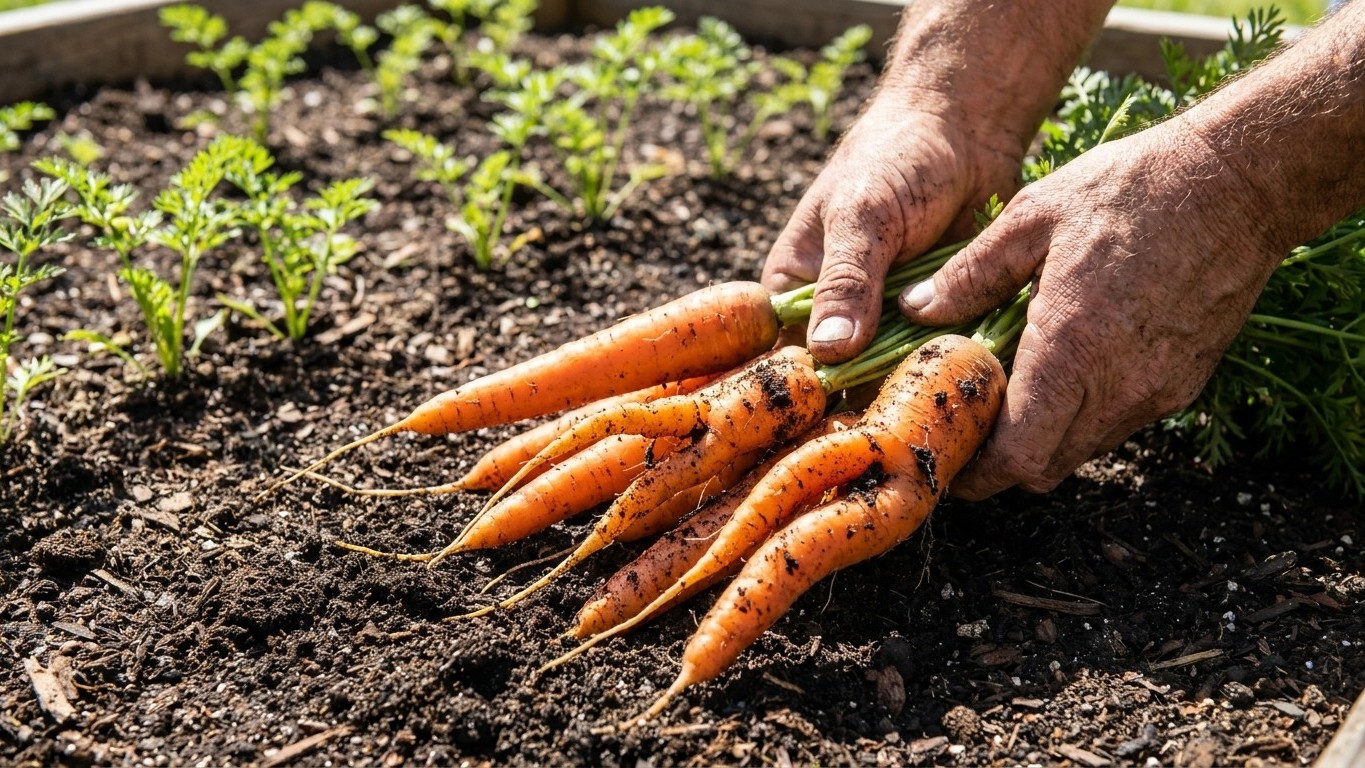

Idaho gardeners are told to count backward from the last spring frost when timing carrot seed, but the calendar is only half the story. Before that math even matters, the ground under your row decides whether a carrot grows long and straight or twists into a stub. Idaho’s representative soil is a light, ash-derived loam that generally treats carrots well, but that’s a statewide average, not your backyard, and what’s actually in your dirt changes everything about how this crop performs for you.
The short answer
The soil that USDA lists as representative of Idaho carries the name Threebear, and it isn’t the heavy garden loam most people picture when they think “dirt.” It’s an Andisol, built from volcanic ash rather than the usual mix of weathered rock. That origin makes it light and porous, and unusually good at holding onto both water and phosphorus, according to USDA NRCS Soil Data Access records for the series’ surface horizon. Texture runs 35 percent sand, 15 percent clay and 50 percent silt, which puts it solidly in silt loam territory, and drainage is rated moderately well drained. Surface pH averages about 5.0, which counts as strongly acid.
For carrots, that texture is mostly good news. Utah State University Extension is direct about what ruins a carrot root: heavy or rocky ground makes it fork, splitting into two or three legs instead of pushing down as one clean taproot. With only 15 percent clay, Threebear soil isn’t the dense, compacting ground that causes that problem. The volcanic-ash structure tends to stay loose even when wet, which is closer to the deep, well-drained condition carrots want. That doesn’t guarantee every carrot bed in the state is free of forking risk, only that the state’s representative ground isn’t working against you the way heavy clay would.
Two numbers worth a second look
The organic matter figure on that soil report, about 75 percent, is far higher than any worked garden bed will ever show. That number reflects a natural surface layer as USDA mapped it, likely a forest litter or ash-derived organic horizon, not the loamy topsoil left after years of tilling and planting. And a pH near 5.0 is acidic enough that a home soil test is worth running before amending anything, since lime or compost decisions should follow your own reading rather than a state average.
None of this replaces knowing what’s under your own feet. Idaho spans hundreds of mapped soil series, from valley bottoms built on river silt to hillside ground scraped bare by construction. The Threebear series is a starting point for understanding what the region’s soil tends toward, not a diagnosis of your raised bed. If your garden turns out heavier and higher in clay, Utah State University Extension’s fix is plain: work in plenty of compost, double dig the bed to loosen it well below where the root will grow, or skip the argument with native soil and grow carrots in a raised bed filled with a looser mix.
The test that settles it in your own garden
Soil surveys describe what a whole region tends toward. They can’t tell you what’s three feet from your back door. The only way to know is to check it yourself, and none of it requires a lab.
- Dig a hole where the carrot row will go. Go down as deep as you’d want a carrot root to reach. If your shovel stops on rock or hits a hard, compacted layer, that’s an answer before a single seed goes in the ground.
- Look at what comes out of the hole. Note the stones, their size and how many turn up. Any rock or hardpan in the top layer of a carrot bed is exactly the kind of obstruction that makes a root fork or stop short.
- Feel the texture in your hand. Grab a handful of moist soil and squeeze it. If it holds a tight, slick ribbon like modeling clay, that’s heavy clay. If it falls apart and feels gritty, it leans sandy. Soil that holds a loose clump but crumbles with a little pressure is closer to the loam carrots prefer.
- Watch how water moves through it. Pour water into the hole and watch the surface. Ground that drains away steadily is workable for carrots. Water that sits and pools for a long stretch signals poor drainage, the same failure mode as heavy clay, where the root struggles to push down and is more likely to rot or fork.
- Compare what you find against the state average described above. Sandy, loose, stone-free soil is already close to what the Threebear series describes, and basic bed prep should be enough. Heavy, rocky, or slow-draining soil is the sign to add compost, double dig, or build up a raised bed instead of fighting the native ground.
What goes wrong here
Even where the soil leans favorable, carrots run into a handful of predictable problems in Idaho gardens. Each one has a specific fix.
- Forked or twisted roots in heavy ground: wherever a garden runs heavier in clay than the state’s ash-derived average, or wherever old construction fill or river-bottom clay sits under the topsoil, roots hit resistance and split. Utah State University Extension’s fix is working in generous compost and double digging the bed, loosening the soil well beyond where the root will grow, or sidestepping the problem entirely with a raised bed filled with looser mix.
- Poor germination during a hot, dry stretch: carrot seed is small and sits shallow, so it dries out fast once summer heat sets in. Keeping the top inch of soil consistently damp until seedlings appear, with light, frequent watering rather than one deep soak, is what gets a stand to come up evenly.
- Split roots from uneven watering: a carrot that grows through a dry spell and then gets hit with a heavy rain or a deep soak swells too fast and cracks along the length of the root. Watering on a steady schedule, rather than letting the bed dry out completely between soakings, keeps growth even and the root intact.
- Slow growth or pale foliage in strongly acid ground: soil running near pH 5.0, as Idaho’s representative series does, can tie up some nutrients before roots can use them. A basic soil test settles whether lime is worth adding, rather than guessing based on a statewide figure that may not describe your bed.
Common questions
Do I need to test my own soil before planting carrots in Idaho?
Yes. The state’s representative soil, the Threebear series, is a light volcanic loam that generally suits carrots, but Idaho holds hundreds of different mapped soil series, and your garden may be nothing like the state average. A simple dig-and-feel test at home, checking depth, stones, texture and drainage, tells you more than any statewide figure ever could.
How long do carrots take to mature after sowing in Idaho?
Utah State University Extension counts 70 to 100 days from the day the seed goes into the ground. That figure runs from seeding, not from any transplant date, because carrots are sown directly where they’ll grow rather than started elsewhere and moved.
What if my soil turns out heavier than the state average?
According to Utah State University Extension, heavy or rocky soil is exactly what causes a carrot root to fork instead of growing straight. The remedy is working in plenty of compost and double digging the bed to loosen it below root depth, or building a raised bed filled with a looser mix if the native ground won’t cooperate.
Does Idaho’s acidic representative soil mean I need to add lime?
Not automatically. The state soil’s surface pH runs about 5.0, strongly acid, but that figure describes the statewide representative series, not necessarily your yard. A home soil test is the only reliable way to know whether your own ground needs lime before you plant a row of carrots.