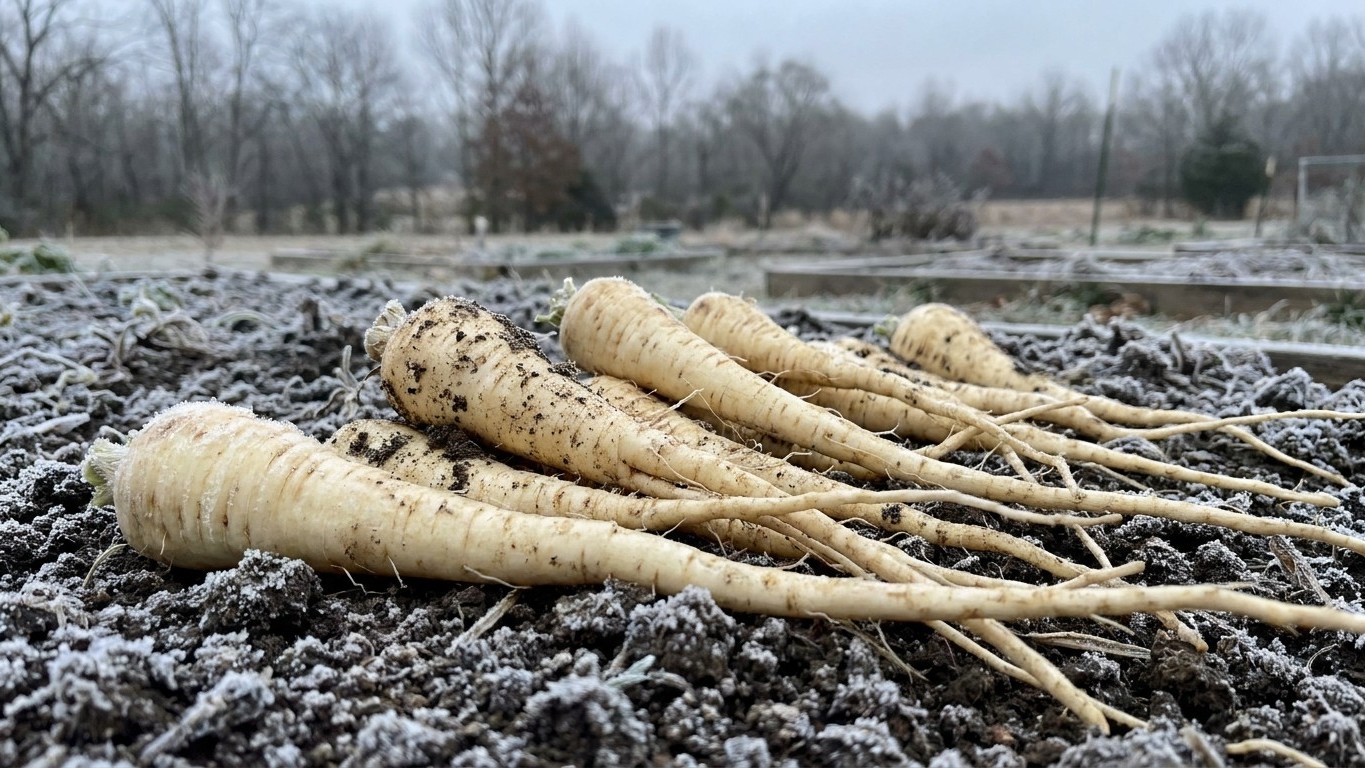

Yes, New Hampshire’s winters bring enough sustained cold to sweeten parsnips left in the ground. The state’s frost exposure runs deep and long enough to convert stored starch into sugar, provided the roots go into the ground early enough and come out after several hard frosts rather than the first light one. The bigger question isn’t whether it gets cold here. It’s whether your season is long enough to grow a mature root before that cold arrives.
The short answer
The number that actually settles this is the mean minimum temperature of the coldest month, not the hardiness zone printed on a seed packet. For the Manchester reference station, that figure sits at 17.1°F, based on NOAA NCEI Climate Normals covering 1991 to 2020. That’s the average low on a typical day in the coldest stretch of winter, not a record cold snap and not a monthly average blending highs and lows together. It’s the number that tells you how much sustained cold a parsnip left in your garden bed will actually experience.
A hardiness zone tells you what survives here. It says nothing about whether a root sweetens, because sweetening isn’t about survival at all. It’s a chemical reaction triggered by repeated exposure to freezing temperatures, which breaks down starch stored in the root and turns it into sugar. A parsnip can survive a mild zone just fine and still taste flat and starchy, because it never got the frost exposure that flips the switch.
New Hampshire doesn’t have that problem. A coldest-month mean minimum of 17.1°F means multiple weeks where nighttime temperatures drop well below freezing, night after night, which is exactly the pattern parsnips need. This isn’t a state where you’re hoping for one lucky cold snap before the ground locks up. The cold here is reliable, repeated, and long enough in duration to do the conversion work properly.
So the parsnip itself won’t be the limiting factor on sweetness. If a New Hampshire gardener grows parsnips and finds them bland, the cause is almost always timing or technique, not a lack of winter. Roots pulled too early, right after the first frost, miss out on weeks of additional sugar conversion that a longer wait in the ground would have delivered. Left through several more hard freezes, that same root gets noticeably sweeter, which is why growers in cold climates like this one are often told to wait rather than rush the harvest. The climate does its part reliably. What varies is whether the gardener lets it finish the job.
Does the season fit?
Parsnips need 100 to 120 days counted from the day you sow the seed, according to Utah State University Extension, and they’re direct-sown into the garden bed rather than transplanted. That timeline, combined with New Hampshire’s frost dates, determines whether the crop fits comfortably or gets squeezed. Here’s how the arithmetic plays out step by step.
- The reference station’s last spring frost falls between April 16 and April 27. Seed should go in the ground 2 to 3 weeks before that window closes, which puts a realistic sowing date somewhere in late March to mid-April, depending on how workable the soil is that year.
- Germination is slow. Parsnip seed takes 14 to 21 days to sprout, which matters because gardeners who don’t see anything after a week often assume the seed failed and till the bed under. Patience here avoids a wasted planting.
- Counting 100 to 120 days forward from an early-to-mid April sowing lands root maturity somewhere in mid to late July, assuming average growing conditions and no major setbacks from drought or poor germination.
- The first fall frost at the reference station arrives between October 13 and October 26. That leaves roughly three months between a mature root in July and the first freeze in October, which is well past the minimum window the crop needs.
- That gap matters because sweetening happens after maturity, not during it. Roots that reach full size by midsummer can sit in the ground through September and into the frost season, absorbing the cold exposure that turns starch to sugar, without racing against a closing window.
The fit here is comfortable, not tight. New Hampshire’s frost-to-frost season gives parsnips room to mature well before the first freeze and still bank several weeks of frosty weather afterward. Gardeners at higher elevations or in colder valley pockets should expect that first fall frost noticeably earlier than the reference dates, which only helps the sweetening timeline, though it does compress the growing window slightly.
What goes wrong here
- Forked roots from heavy or stony ground. Parsnips push a single taproot straight down, and any rock, clod, or compacted layer splits it into two or three thin legs instead of one thick root. The fix is a deep, sandy bed. If your soil is heavy clay or full of stones, double dig the bed to at least 12 inches before sowing rather than fighting the problem after the fact.
- Forked roots from overwatering. This is a separate cause from soil texture, and it’s easy to blame the ground when the real issue is a hose left running too long. Excess moisture encourages the root to branch rather than drive straight down. Water deeply but infrequently once seedlings are established, letting the top few inches dry between waterings.
- A season that runs out. Sowing too late, whether from a wet spring or a delayed start, pushes root maturity past the point where there’s enough time left before frost lock-in. The remedy is straightforward: get seed in the ground as soon as the soil is workable in that late March to mid-April window, and don’t wait for perfect conditions.
- A winter too mild to finish the job. This isn’t the typical New Hampshire risk given how reliably cold the state gets, but a heavily mulched bed can insulate roots enough to blunt frost exposure even when the air temperature outside is plenty cold. If you mulch for winter storage, keep it modest, and pull roots for eating only after several hard frosts have actually reached them, not right after the first light one.
A safety warning most garden guides skip
Parsnip foliage and roots carry a compound that most gardeners never hear about until it’s too late. According to North Carolina Extension Gardener Plant Toolbox, “All parts of this plant contain furocoumarins which can make skin sensitive to light causing burns so be sure to wear gloves, long sleeves and long pants when dealing with it.” That’s every part of the plant, not just the leafy tops.
The mechanism is what makes this catch people off guard. Furocoumarins don’t burn skin on contact by themselves. The reaction needs sap on the skin and sunlight hitting it afterward. That’s why the burn shows up hours after a bright afternoon spent pulling tops or digging roots, not immediately during the work, and why the person handling the harvest often has no idea what caused it until the mark appears. It also explains why the protection that matters is what you wear while working, not scrubbing your hands afterward. Gloves, long sleeves, and long pants during any harvest, weeding, or foliage handling on a sunny day are the actual defense here.
Checking this against your own county
The figures above come from a single reference weather station, and New Hampshire’s terrain varies enough that your own garden can run noticeably colder or warmer. Rural and suburban sites away from that reference station typically see the last spring frost later and the first fall frost earlier, sometimes by one to two weeks, with elevation pushing that gap even wider. Before locking in a sowing date, check your county’s actual frost history rather than assuming the reference dates apply exactly where you garden.
UNH Extension is the resource built for that kind of local check. They can confirm frost timing for your specific county, along with soil test results and planting guidance tailored to your growing conditions rather than a single weather station’s averages.
Common questions
Can I leave parsnips in the ground all winter in New Hampshire?
Many gardeners do, since the roots tolerate freezing soil well and continue sweetening through repeated frosts. The main risk is ground freezing solid enough to make digging difficult, so a layer of mulch can keep the soil workable without insulating the roots so much that frost exposure is blocked.
How do I know when parsnips are ready to harvest for the best sweetness?
Wait until the roots have experienced several hard frosts, not just one light freeze. Pulling immediately after the first frost of the season is the most common reason gardeners end up with a bland root instead of a sweet one.
Why did my parsnip seeds seem to fail?
Slow germination is normal. Parsnip seed takes 14 to 21 days to sprout, and many gardeners give up and till the bed under after a week or two, assuming the planting failed when it simply hadn’t emerged yet.
Does heavy clay soil ruin parsnips completely?
It causes forked, misshapen roots rather than ruining the crop outright. Double digging the bed to loosen compacted soil to a depth of at least 12 inches before sowing, or working in sand to lighten heavy ground, solves the problem at the source.