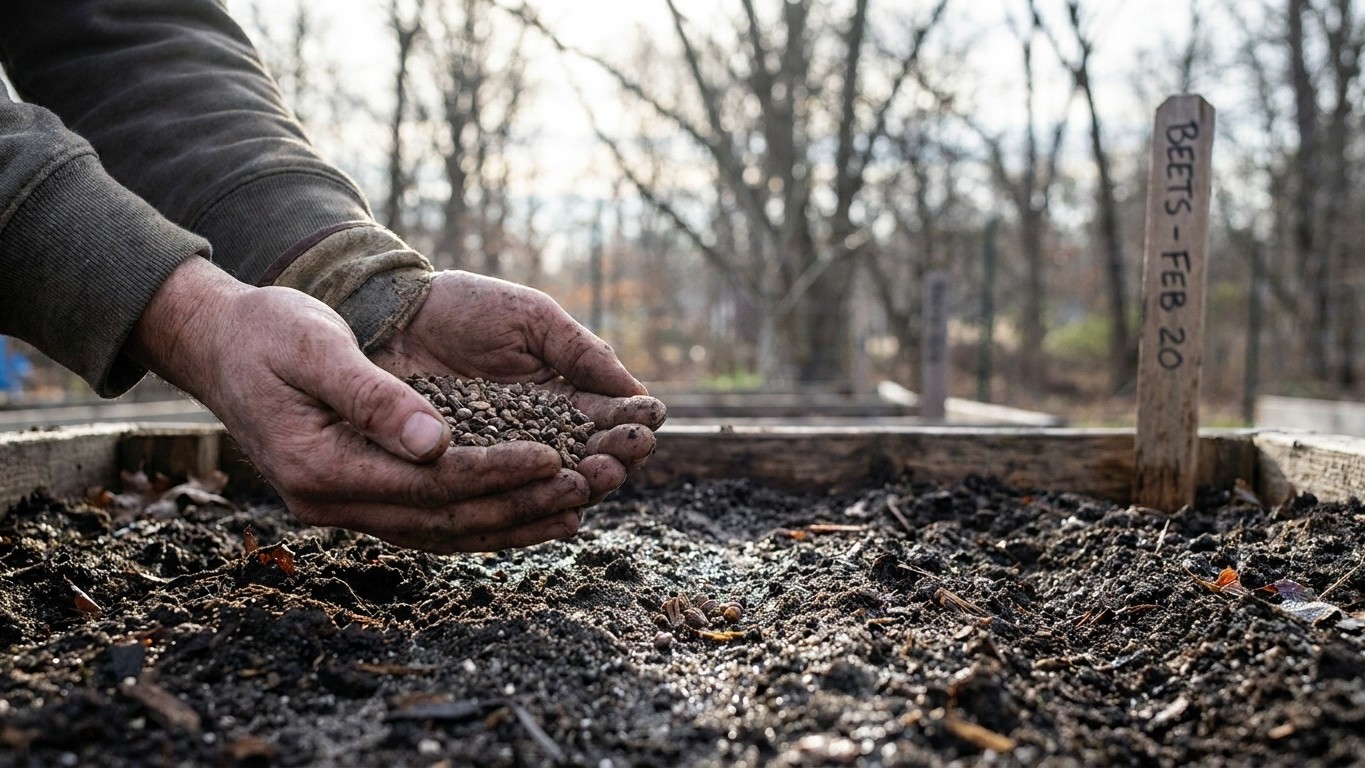

The direct answer: sow beet seed in Ohio 2 to 3 weeks before your local last spring frost date, which runs May 5 to May 15 across the state’s zone 6a areas. That puts seeding in the ground somewhere around mid to late April for most gardeners, and beets go in as seed, not transplants, since the root doesn’t take to being moved once it starts forming.
The short answer
Ohio’s representative soil, the series USDA lists as the state’s benchmark, is called Miamian, an Alfisol formed under old forest cover. Its surface layer runs about 26 percent sand, 20 percent clay and 53 percent silt, a texture that leans toward silt loam rather than the sandy ground beets actually prefer. Surface pH sits around 6.5, slightly acid, and organic matter averages about 2.0 percent. The series is classified well drained, which is the one part of this profile that lines up cleanly with what a beet wants.
That matters because beets want deep, sandy, well-drained soil rich in organic matter, according to Utah State University Extension, and Miamian gives you two out of three. The drainage class is right. The organic matter is on the low side of adequate. The texture is heavier and siltier than ideal, which means a Miamian-type bed can crust over after a hard rain and slow germination, or hold surface moisture longer than a sandy bed would. The fix Extension recommends is modest: work in no more than 1 inch of composted organic matter per 100 square feet, loosening the top layer without overdoing the nitrogen, which pushes leafy top growth at the expense of the root.
On heat, the sources behind this page don’t publish a specific count of days per year that any Ohio city spends above 90°F, so that number isn’t repeated here. What is documented is the threshold that matters for beets: temperatures above 85°F combined with water stress make the root turn woody, per Utah State University Extension. Ohio’s hottest stretch typically arrives in July and August, well after a beet sown in April or early May would already be sizing up, which is exactly why the timing window at the front end of the season carries so much weight. Sow late, and the root’s final weeks of bulking overlap with the state’s warmest, driest stretch.
None of this is a stand-in for testing your own ground. Ohio spans hundreds of mapped soil series, and Miamian is a starting point for thinking about the region, not a description of any one backyard. Fill dirt, river-bottom ground, and hillside plots can all behave nothing like the representative profile above. A basic soil test remains the only way to know your actual texture, pH and organic matter before you plant.
The six weeks that decide it here
Sowing 2 to 3 weeks ahead of the May 5 to May 15 frost window means the first six weeks of a beet’s life in Ohio, the stretch that sets whether it bolts or bulks properly, land somewhere between mid-April and late June depending on where in the state you garden and which end of that frost range applies to you. That six-week stretch is the one Utah State University Extension flags as the danger period for premature flowering, since water stress early in a beet’s life is what triggers bolting, not heat later on.
Ohio spring in that window doesn’t hold a single pattern year to year. Some years bring a cold, wet stretch that keeps soil saturated well into May, delaying planting and slowing early growth. Other years swing dry early, with a warm spell in April giving way to a rainless run that can leave a newly seeded bed short on moisture right when the beet needs it most. Either extreme creates a different problem. Wet, cold soil delays germination and invites damping-off in seedlings sitting in cool, saturated ground. Dry soil during those same six weeks is the direct trigger for bolting, since a beet under water stress reads that stress as a signal to flower and set seed rather than build a root.
The practical takeaway is that the calendar date matters less than what the ground is actually doing. A gardener who sows on schedule but into soil that then goes ten days without rain faces the same bolting risk as someone who sowed on time into cold, waterlogged ground and lost half the stand to rot. Watching the bed, not just the calendar, is what keeps those first six weeks on track. Once beets are up and past that early establishment period, the risk shifts, and it shifts toward the back half of the growing season, when heat rather than thirst becomes the threat to root quality.
What goes wrong here
- Crusting after a hard spring rain. Miamian-type ground, at 53 percent silt, can seal over on the surface once it dries after a downpour, which blocks small beet seedlings from pushing through. Rake the surface lightly before sowing, sow slightly shallower than the seed packet suggests on heavier ground, and keep the top inch consistently moist rather than letting it form a crust and then flooding it.
- Bolting from a dry stretch in the first six weeks. This is a separate failure from summer woodiness, and it’s caused specifically by water stress right after germination, per Utah State University Extension. If a sown bed goes without rain for a week or more in that early window, water it directly rather than waiting for the sky to do it.
- Woodiness from late-season heat and thirst together. Once temperatures push past 85°F, a beet under water stress develops a fibrous, tough root instead of a tender one. This shows up toward the end of the growing season if sowing was delayed into late spring, pushing root maturation into the hottest weeks. Sowing on the early end of the recommended window, and keeping beds watered through any hot spell, addresses this directly.
- Over-amending a naturally moderate soil. Miamian already carries roughly 2.0 percent organic matter, adequate but not rich. Extension caps compost additions at 1 inch per 100 square feet for a reason: more than that, especially with a nitrogen-heavy amendment, tends to feed leaf growth over root development.
- Assuming your garden drains like the mapped series. Miamian is classed well drained, but compacted, filled or graded home lots frequently don’t behave the same way. A bed that holds water longer than expected after rain needs raised rows or added coarse organic matter to get beet roots the drainage they actually need.
Common questions
Can I start beets indoors and transplant them outside in Ohio?
It isn’t recommended. Beets are grown from seed sown directly in the garden bed, and the maturity window Utah State University Extension gives, roughly 60 to 80 days depending on variety, is counted from that direct seeding date, not from a transplant date. Disturbing the root early tends to produce misshapen or forked beets.
What if my part of Ohio has a later or earlier last frost than May 5 to May 15?
That range covers zone 6a areas generally, but Ohio State University Extension’s gardening calendar is built around local frost dates that shift by region. Check your specific county’s typical last frost and count back 2 to 3 weeks from that local date rather than assuming the statewide range applies exactly where you garden.
How long until beets are ready to harvest after sowing?
Roughly 60 to 80 days from the seeding date, per Utah State University Extension, with the exact number depending on which variety you’ve planted. That window is what should guide your sowing date if you’re trying to avoid the root maturing during the hottest stretch of an Ohio summer.
Can I sow a second beet crop later in the season for fall harvest?
The two facts that matter here are the same ones that govern spring sowing: avoid water stress in the six weeks right after seeding, and avoid the root’s final growth weeks overlapping with temperatures above 85°F under dry conditions. Counting back 60 to 80 days from your area’s first fall frost, while keeping late-summer beds watered through any hot, dry stretch, follows the same logic that governs the spring window.