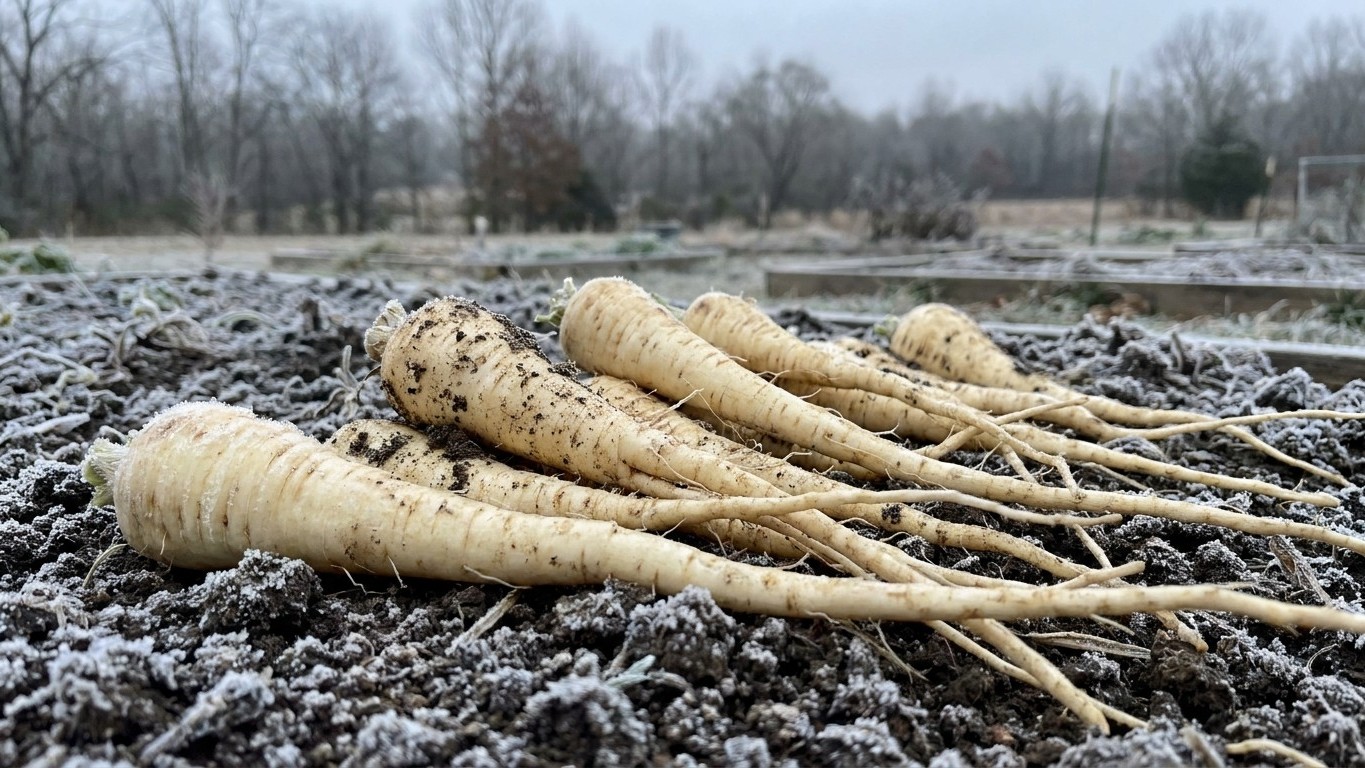

Pennsylvania winters give parsnips exactly what they need: sustained, repeated cold that converts stored starch into sugar. Even the state’s mildest corner, greater Philadelphia, averages a nightly low of 26.0°F in its coldest month, and the rest of the state runs colder still. That’s enough frost exposure to sweeten a parsnip properly, not just fatten it up. The growing season works too, with room to spare, so long as you sow on schedule and know where forking and slow germination trip growers up.
The short answer
Does Pennsylvania deliver several frosty weeks in a row, cold enough to flip a parsnip’s stored starch into sugar? That’s the only question worth asking here, not the hardiness zone printed on a seed packet map. Hardiness zones describe what survives winter. They say nothing about the repeated, root-chilling cold snaps that actually trigger sweetening.
The Philadelphia reference station, the state’s warmest weather monitoring point, recorded a mean daily minimum of 26.0°F in the coldest month over the 1991-2020 climate normals period, according to NOAA’s National Centers for Environmental Information. That’s a nightly average, not a one-time record low, meaning the typical night in the coldest month sits six degrees below freezing even in the mildest pocket of the state.
Six degrees below freezing, night after night, isn’t a token frost. It means weeks of cold sitting in the soil, freeze-thaw cycles working repeatedly through the ground and into the roots. That’s the mechanism sugar conversion needs: sustained cold exposure across multiple weeks, not a single hard freeze followed by a quick thaw.
Move away from Philadelphia and the numbers only get colder. The southeastern corner runs mild by Pennsylvania standards, but the Alleghenies, the northern tier, and the Laurel Highlands see colder nightly minimums, longer snow cover, and frost that arrives earlier and lingers later into spring. If Philadelphia’s own coldest-month average sits six degrees under freezing, the higher and more northern parts of the state offer even more of the cold exposure a parsnip is asking for.
So the short answer: a parsnip grown almost anywhere in Pennsylvania will sweeten, not merely mature. This isn’t a state where you pull a decent-sized root that stays starchy and flat because winter never really commits. Winter arrives here, reliably, and stays long enough to finish the job. The plant’s own biology decides where sweetness caps out, but the climate supplies what it needs to get there.
Timing still matters more than location. Pulling roots the week after the first light frost skips most of the sweetening window. Leaving them in the ground through several hard freezes, or digging through a mulched winter, is what actually delivers the sugar. Pennsylvania’s climate sets the ceiling. Harvest timing decides whether you reach it.
Does the season fit?
Utah State University Extension pegs parsnips at 100 to 120 days from seeding, with sowing recommended 2 to 3 weeks before the last spring frost. Lay that timeline over Pennsylvania’s frost dates and the fit isn’t close. It’s generous.
- Find the sowing date. Philadelphia’s last spring frost falls between March 29 and April 6, per NOAA’s 1991-2020 climate normals. Sowing 2 to 3 weeks earlier puts seed in the ground around March 8 to March 23.
- Add germination time. Parsnip seed is slow, 14 to 21 days to sprout. Don’t mistake a bare-looking row for a failed planting and till it under; seedlings are often just getting started three weeks in.
- Count forward to the first fall frost. Philadelphia’s first fall frost lands between November 5 and November 16, per the same NOAA dataset. From a March 8 to March 23 sowing to a November 5 frost is roughly 227 to 242 days of open growing season.
- Compare that to the 100 to 120 days the crop needs. Even at the tight end, sowing later and hitting the earlier fall frost date, the window clears 220 days: nearly double what a slow-maturing parsnip requires.
- Adjust for the rest of the state. The northern tier and the Alleghenies push the last spring frost two to four weeks later, which trims the season from the early end. Even shaved by a month, the window still clears 120 days without strain.
The arithmetic leaves no county in Pennsylvania running a tight parsnip season. The real constraint isn’t whether the crop can finish before frost. It’s making sure you sow early enough, and patiently enough through that slow germination, to actually use the season you’ve been given.
What goes wrong here
- Forked roots in heavy or stony ground. Pennsylvania’s clay-heavy soils and rocky subsoils, common across the Piedmont and the ridge-and-valley region, split a taproot the moment it hits an obstruction. Utah State Extension recommends deep, sandy soil and says heavy ground must be double dug before sowing, working the bed 12 to 18 inches deep and pulling out stones as you go.
- Forked roots from overwatering. This is a separate cause from soil texture, not the same problem twice. Consistently soggy soil encourages the taproot to branch instead of driving straight down. Water deeply but let the top few inches dry between waterings rather than keeping the bed saturated.
- Giving up on germination too early. Parsnip seed takes 14 to 21 days to show above ground, longer than most garden vegetables. Re-sowing or tilling a row after a week or two of nothing usually means uprooting seedlings that were about to emerge.
- Sowing too late and pinching the finish. The season here runs long, but only if you start on time. Waiting past the recommended 2 to 3 weeks before the last frost eats into a margin that’s generous, not infinite, especially in the northern tier where frost arrives earlier in fall.
- Harvesting before real frost exposure. A root pulled after one light frost hasn’t had the sustained cold that converts starch to sugar. Leave roots in the ground through several hard freezes, mulching heavily if you plan to dig into winter, rather than harvesting at the first sign of frost.
Parsnip foliage and sap carry a hazard almost no garden page mentions. According to the North Carolina Extension Gardener Plant Toolbox, “All parts of this plant contain furocoumarins which can make skin sensitive to light causing burns so be sure to wear gloves, long sleeves and long pants when dealing with it.” Not just the leaves. All parts.
The mechanism explains why the burn catches people off guard. Furocoumarins don’t burn skin on contact. They need sap on the skin plus sunlight hitting that same skin to cause a reaction, a process called phytophotodermatitis. That’s why it happens on a bright day of harvest or of pulling tops, and why the burn often doesn’t show up until hours later, after the sun has already done its work. It’s also why the useful protection is clothing worn during the job, gloves, long sleeves, long pants, rather than washing up afterward once the sap has already been exposed to light.
Anyone pulling parsnips, clearing the tops, or handling foliage on a sunny Pennsylvania afternoon is handling a plant with this property, regardless of variety or how the roots turned out.
Checking this against your own county
The numbers here come from the Philadelphia reference station, the mildest corner of Pennsylvania. A county in the Alleghenies, the northern tier, or the higher ridges of the central part of the state will see colder nightly minimums, an earlier fall frost, and a later spring frost than what’s laid out above, all of which shifts sowing dates and can only add to the cold exposure that sweetens a parsnip.
Penn State Extension is the land-grant service covering the state, with county offices that track local frost dates, soil conditions, and planting windows specific to your area. Before locking in a sowing date, a quick check with your county’s Penn State Extension office will confirm how far your local frost dates sit from the Philadelphia figures used here, and whether your particular soil needs the same double-digging Utah State Extension recommends for heavy ground.
Common questions
Can I grow parsnips anywhere in Pennsylvania?
Yes. The season length, even trimmed by two to four weeks in the northern tier and Alleghenies, still comfortably clears the 100 to 120 days parsnips need from seeding. Cold exposure for sweetening is present statewide, and it’s stronger away from Philadelphia’s milder southeastern corner.
Do I need to wait for a hard freeze before harvesting?
Utah State University Extension ties good flavor to several weeks of cool, frosty weather, not a single freeze event. Pulling roots after just one light frost usually means harvesting before the starch-to-sugar conversion has had time to run its course.
Why does my parsnip look forked instead of straight?
Two separate causes produce the same result. Heavy or stony soil forces the taproot to split around obstructions, which is why deep, sandy soil or a double-dug bed matters. Overwatering is the other cause, encouraging branching instead of a single straight root, and it’s fixed by letting soil dry between waterings rather than keeping it saturated.
Is it safe to handle parsnip tops without gloves?
No. Every part of the plant contains furocoumarins that sensitize skin to sunlight, and the resulting burns show up after sap contact combined with sun exposure, sometimes hours later. Gloves, long sleeves, and long pants during harvest are the protection, not washing afterward.