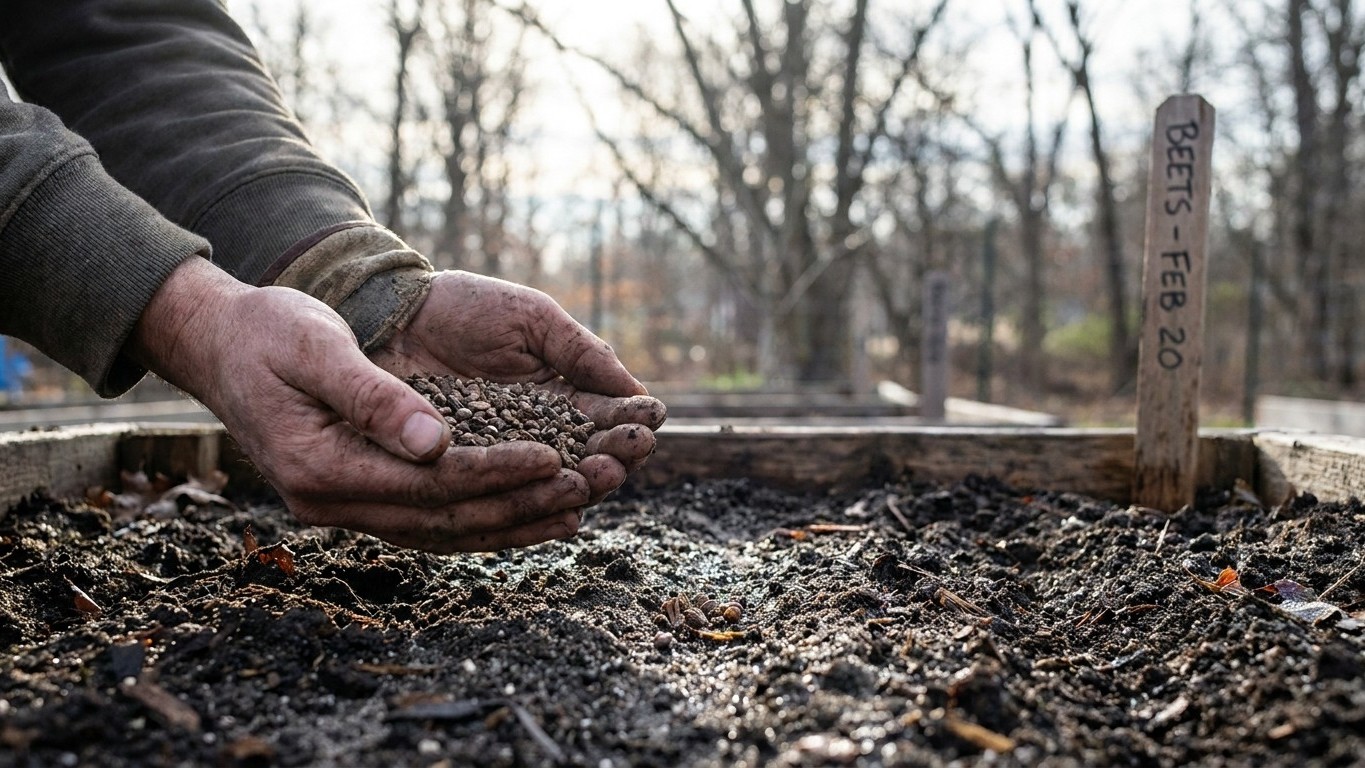

In Rhode Island, the safest window to sow beets outdoors runs from about mid-March through the first days of April, roughly two to three weeks ahead of the state’s last spring frost. That timing keeps the seed’s early root growth out of the coldest ground while still landing the first six fragile weeks before summer heat sets in. The soil under that seed, though, and what the calendar does after sowing, decide whether the crop actually finishes as a smooth root or bolts early and turns woody later.
The short answer
The Narragansett series is the soil USDA lists as representative of Rhode Island, an Inceptisol, meaning it’s young ground that hasn’t had time to build strong internal layers the way older soils have. Its surface horizon runs 34 percent sand, 6 percent clay and 60 percent silt, a loam-to-silt texture, with organic matter around 4.0 percent and a surface pH near 5.3, which is strongly acid. It’s classed well drained. For a beet, that combination is mixed news. The high silt fraction holds moisture better than a straight sandy soil, which helps a beet seedling through the dry spells that trigger premature flowering. But Utah State University Extension is clear that beets want deep, sandy, well-drained ground rich in organic matter, and a pH near 5.3 sits well below what most root vegetables prefer; acidic ground like this typically calls for lime worked in ahead of sowing, and a soil test is the only way to know how much a given bed actually needs.
A state spans hundreds of soil series, and Narragansett is a starting point, not a verdict on any one yard. A garden dug into river-bottom silt, a hillside plot, or a lot a builder filled and graded years back can behave nothing like this representative profile. The organic-matter figure above is a mapped-surface value too, not a measurement of a bed that’s been dug, amended and planted for seasons, so treat the numbers as a description of what the region’s ground tends to do rather than a stand-in for a home soil test.
Days above 90 F for the reference weather station aren’t part of the published figures here, so no specific count can be given. What is established is the threshold that matters for beets regardless of the exact tally: Utah State University Extension notes that heat above 85 F combined with water stress is what turns a beet root woody, so the practical question for a Rhode Island grower isn’t how many 90-degree days the year brings, it’s whether the root is still sizing up when the first stretch of stress heat and dry soil arrives together.
The six weeks that decide it here
Sowing two to three weeks before the last frost puts the earliest, most sensitive stretch of a beet’s life inside a fairly narrow window: seed going into ground that’s still cold and often damp, then six weeks of root and top growth that need to happen without either drying out or sitting waterlogged. Coastal and inland New England springs are known for swinging weather rather than settling into a steady pattern, with cold snaps and thaw stretches trading places through March and April before a run of consistently warmer days arrives. That variability is the backdrop a Rhode Island sowing has to work inside, whether the bed sits near the shore or well up the state.
For beets specifically, Utah State University Extension’s finding is direct: water stress in the first six weeks after seeding is what causes premature flowering, or bolting, before the root has had a chance to size up. A beet that bolts doesn’t recover into a good harvest; the plant has shifted its energy into a flower stalk instead of the root, and there’s no watering schedule that reverses that once it starts. That makes the early weeks after sowing the period to watch most closely for dry spells, not the hot stretch of July that most gardeners instinctively worry about.
The reference-city last frost falls between April 7 and April 17, drawn from 30 to 70 percent freeze-probability figures in NOAA’s 1991-2020 climate normals for that station. Suburban and rural gardens away from that airport site typically see their own last frost run later, often by one to two weeks, and more again at elevation, so a bed a few miles inland or up a hill should expect its safe sowing window to slide later than the airport-based dates suggest. That’s a reason to sow in stages rather than all at once, watching each patch of ground rather than a single calendar date.
Because bolting from early water stress and woodiness from later heat are two separate failures with two separate causes, the six weeks right after sowing call for attention specifically to moisture, keeping the bed evenly damp rather than letting it swing between soaked and dry, while the heat-and-woodiness risk becomes the concern once the root is further along and the season turns warmer.
What goes wrong here
- Bolting from a dry stretch in the first six weeks. A cold, silty soil like Narragansett can crust on top even while it holds moisture below, so the surface looks dry and a grower skips watering while the seedling is actually starting to stress. Check moisture with a finger below the crust, not just by looking at the surface, and water evenly through that early window rather than waiting for visible wilting.
- Stunted roots from acidic, unlimed ground. At a surface pH near 5.3, nutrient availability for a root crop drops off, and beets in particular are known to struggle in strongly acid soil. A soil test ahead of sowing, followed by lime worked into the bed according to that test’s recommendation, addresses this before seed ever goes in the ground; guessing at lime rates without a test risks over- or under-correcting.
- Woody roots from heat arriving on top of dry soil later in the season. Utah State University Extension ties woodiness to temperatures above 85 F combined with water stress, which is a different failure from early bolting and needs a different response: consistent watering through any hot, dry stretch once the roots are sizing up, rather than assuming the crop is past its risk period once it survives the first six weeks.
- Over-amending organic matter into ground that’s already fertile. Narragansett’s surface organic matter runs near 4.0 percent already, and Utah State University Extension caps composted organic matter at no more than 1 inch per 100 square feet. Piling on more than that doesn’t help root development and can throw off the balance a beet needs to size properly.
- Poor drainage in a bed that isn’t actually Narragansett-like. The representative series is well drained, but a home garden built on fill, clay pockets, or a low spot can hold water far longer than that description implies. Raised beds or added drainage correct this where a plot doesn’t match the regional profile.
Common questions
How many days do beets take to mature after sowing in Rhode Island?
Beets are sown directly in place rather than transplanted, and the maturity clock runs from that seeding date, typically 60 to 80 days depending on the variety and growing conditions, not from any later transplant step since none occurs.
Should I lime my soil before sowing beets in Rhode Island?
The state’s representative soil runs strongly acid at a surface pH near 5.3, and beets generally do better in less acidic ground, so a soil test ahead of sowing is the practical first step; the test result, not a general figure like this one, should set the actual lime rate for a given bed.
Can I sow beets again later in the season in Rhode Island?
A second sowing timed so the roots mature before the season’s heat and dry stretches set in can work, though the specific fall-sowing window and first fall frost date for a given county aren’t part of the figures published here, and a grower should check local conditions rather than assume the spring window’s dates apply in reverse.
What’s the biggest mistake gardeners make sowing beets in Rhode Island?
Treating the crop’s water needs as one continuous concern rather than two distinct risk periods: skipping water in the first six weeks after sowing triggers bolting, while letting the bed dry out once heat arrives later triggers woody roots. They call for the same remedy, consistent moisture, but at two different points in the season for two different reasons.