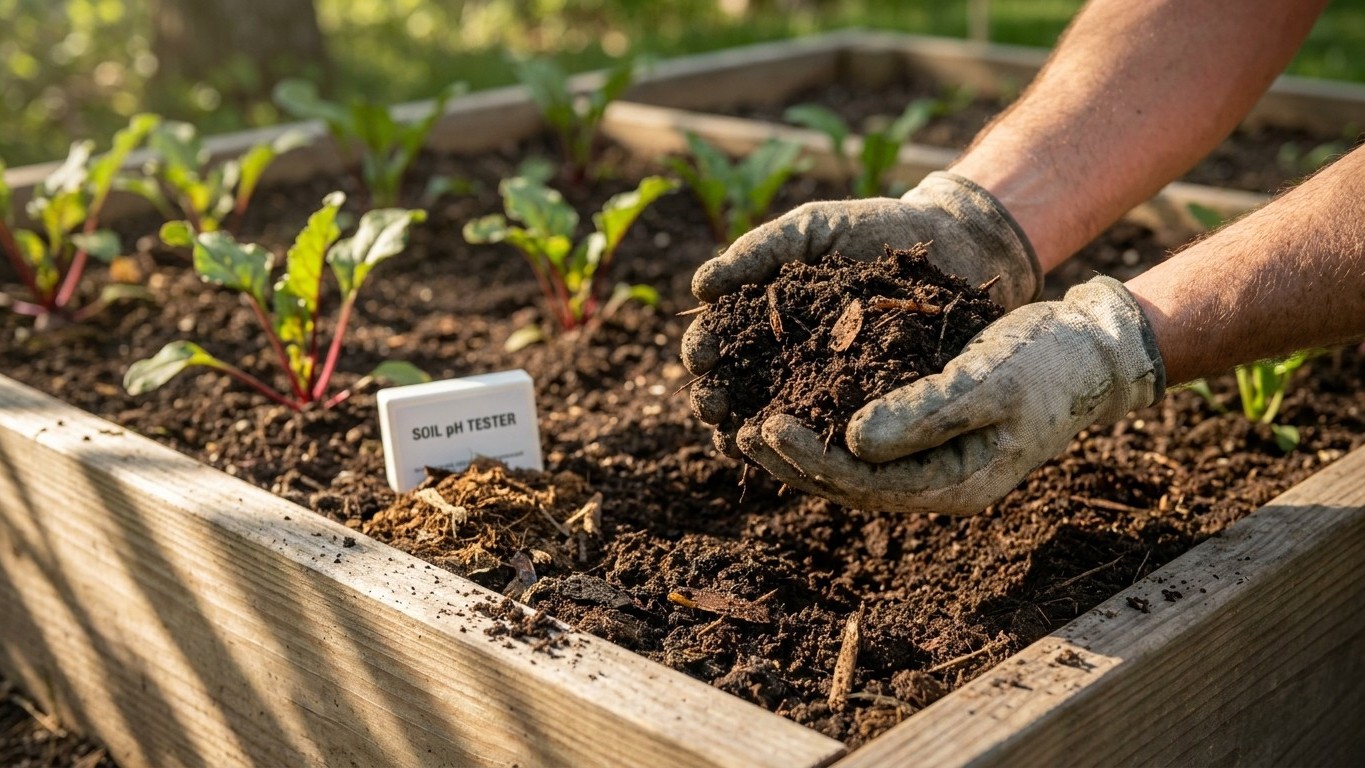

Rhode Island’s beets do best in loose, acidic ground that drains fast enough to avoid rot but holds moisture long enough to carry a seedling through its first six weeks without a check. The state’s representative soil runs strongly acid, which beets handle less comfortably than most root crops, and the coastal climate rarely pushes deep into the kind of sustained heat that turns a root woody. The bigger risk here is a dry snap right after sowing, not the July sun. Get the timing and a real soil test right, and the rest tends to follow — see When to Sow Beets in Rhode Island for the specific dates that fit this six-week window.
The short answer
The soil USDA lists as representative of Rhode Island is the Narragansett series, an Inceptisol, meaning it’s a relatively young soil that hasn’t had time to build the strong, distinct layers older soils show. Its surface horizon runs about 34 percent sand, 6 percent clay and 60 percent silt, which puts it in the loam-to-silt-loam range, with roughly 4.0 percent organic matter and a surface pH around 5.3, solidly in the strongly acid range. Drainage class is listed as well drained.
Utah State University Extension notes that beets want deep, sandy, well-drained soil rich in organic matter, and that the usual fix is working in no more than 1 inch of composted organic matter per 100 square feet. Narragansett soil already carries decent organic matter and drains well, so on paper it clears two of the three boxes. The sticking point is the pH. Strongly acid ground can lock up nutrients that a beet seedling needs to get going, and root development can stall in soil that’s more acid than the crop prefers, which is exactly the kind of thing a soil test catches before you plant rather than after — a closer look at Beet Soil in Rhode Island spells out what that means in practice.
On the heat side, the picture is less complete than gardeners might want. Woodiness in beets shows up when temperatures climb above 85 F while the plant is also short on water, according to Utah State Extension. Rhode Island’s coastal position generally keeps it cooler and more humid than inland New England through the growing season, which should limit the number of days that combination shows up. But a specific count of days per year the reference weather station spends above 90 F isn’t published in the data behind this page, so that number simply isn’t something to state here. Treat the risk as real but secondary to the early-season water issue covered next, and check local conditions before assuming your summer runs mild.
None of this replaces a soil test from your own bed. Rhode Island spans hundreds of mapped soil series, and Narragansett is simply the one USDA uses to represent the state as a whole. A yard near a river, a lot that’s been filled or graded, or ground on a hillside can behave in ways that have nothing to do with these numbers.
The six weeks that decide it here
Beets are sown directly in the ground, never transplanted, and the standard window is 2 to 3 weeks before the last spring frost. At the reference weather station used for this page, that last spring freeze typically falls between April 7 and April 17, based on NOAA’s 1991-2020 climate normals. That puts a typical Rhode Island sowing date somewhere in the last half of March into the first days of April, which means the six weeks that matter most for bolting risk run through late March, April and into May.
That stretch of the Rhode Island calendar tends to swing. Coastal New England spring weather is known for alternating between damp, raw stretches when little seems to dry out and shorter windy, dry spells when topsoil can crust and lose moisture fast, sometimes within the same week. For a beet seedling, the second kind of stretch is the dangerous one. Utah State Extension is specific that water stress in the first 6 weeks after sowing is what triggers premature flowering, or bolting, in beets, and that’s a separate failure from the woodiness caused by heat later on. A beet that bolts early has essentially quit on you: the plant shifts its energy into a flower stalk instead of the root, and the root itself won’t recover no matter what you do afterward.
The practical takeaway for a Rhode Island garden is to treat those first six weeks after sowing as non-negotiable watering time, regardless of how the rest of the season looks. A dry week in early April matters more to a beet crop than a dry week in July, because the plant’s decision to bolt or not gets made early and can’t be undone. Mulch laid down at sowing helps buffer the crust-and-dry cycle that coastal spring winds can cause, and a consistent watering habit through that window does more for the eventual harvest than almost anything applied later in the season.
Bear in mind these frost dates come from a single airport weather station. Suburban and rural gardens across the state often see their last spring frost run later than this by a week or two, more at elevation, which shifts the safe sowing window later as well.
What goes wrong here
- Bolting from an early dry spell. The most common failure tied to this state’s spring pattern. If a windy, dry week hits in the first six weeks after sowing, the crop can bolt before you notice a problem. The remedy is mulch at sowing to buffer soil moisture and a fixed watering schedule through that window, rather than watering only when the topsoil looks dry.
- Woody roots from heat layered on water stress later in the season. This is a different failure from bolting, tied to Utah State Extension’s threshold of temperatures above 85 F combined with a dry spell, and it shows up as a fibrous, tough root rather than a plant that’s flowered. The remedy is keeping watering consistent straight through summer rather than easing off once seedlings are established, and pulling roots at the appropriate size instead of leaving them in the ground through a hot stretch.
- Stunted growth from the soil’s strongly acid pH. Narragansett series soil runs around pH 5.3, and beets in ground that acidic can struggle to take up nutrients even when fertility looks adequate on paper. The remedy is a soil test followed by lime applied at the rate the test recommends, done well before sowing since pH shifts slowly.
- Waterlogged patches despite a “well drained” soil label. The Narragansett series carries a well-drained rating overall, but silt-heavy ground like this can still pond in low spots or after heavy rain, and beet seedlings sitting in saturated soil rot rather than grow. The remedy is raised beds or raised rows in any spot that holds water after a storm, and staying off the bed with tools or feet while it’s still wet.
Checking this against your own county
Everything above starts from the soil series USDA uses to represent Rhode Island as a whole, not a measurement of any one garden. Before you commit a bed to beets, get an actual soil test from where you’re planting, since pH, drainage and organic matter can all differ from the state-level figures once you’re on a specific lot.
The University of Rhode Island Cooperative Extension is the land-grant extension office for the state and the right first call for a soil test kit, county-level frost date guidance, and any local advisories on the season you’re planting into. They can also tell you how the current year’s spring is shaping up compared with the normals cited here, which matters more than any single historical average once you’re actually deciding when to put seed in the ground.
Common questions
How many days do beets take to mature in Rhode Island?
Beets generally run 60 to 80 days from seeding, not from transplanting, since the crop is always sown directly in the ground. Count from your actual sowing date rather than the calendar date you intended to plant, since a delayed sowing pushes the harvest window back by the same amount.
Should I lime my soil before planting beets in Rhode Island?
Possibly, but only based on an actual soil test. The state’s representative soil runs strongly acid at around pH 5.3, which can limit nutrient uptake in beets, but lime rates depend on your specific soil’s test results, not on the state-level figure alone.
Is bolting or woodiness the bigger risk for Rhode Island beets?
Bolting is the more immediate risk given the state’s spring pattern, since it’s triggered by water stress in the first six weeks after sowing, a window that regularly includes dry, windy stretches here. Woodiness, driven by heat above 85 F combined with dry soil later in the season, is a separate problem tied more to summer conditions than to this state’s typically moderate coastal heat.
When should I sow beets in Rhode Island?
The standard rule is 2 to 3 weeks before your last spring frost. At the reference weather station used for this page, that frost typically falls between April 7 and April 17, but rural and inland gardens often see it a week or two later, so confirm your own timing with your county extension office before sowing.