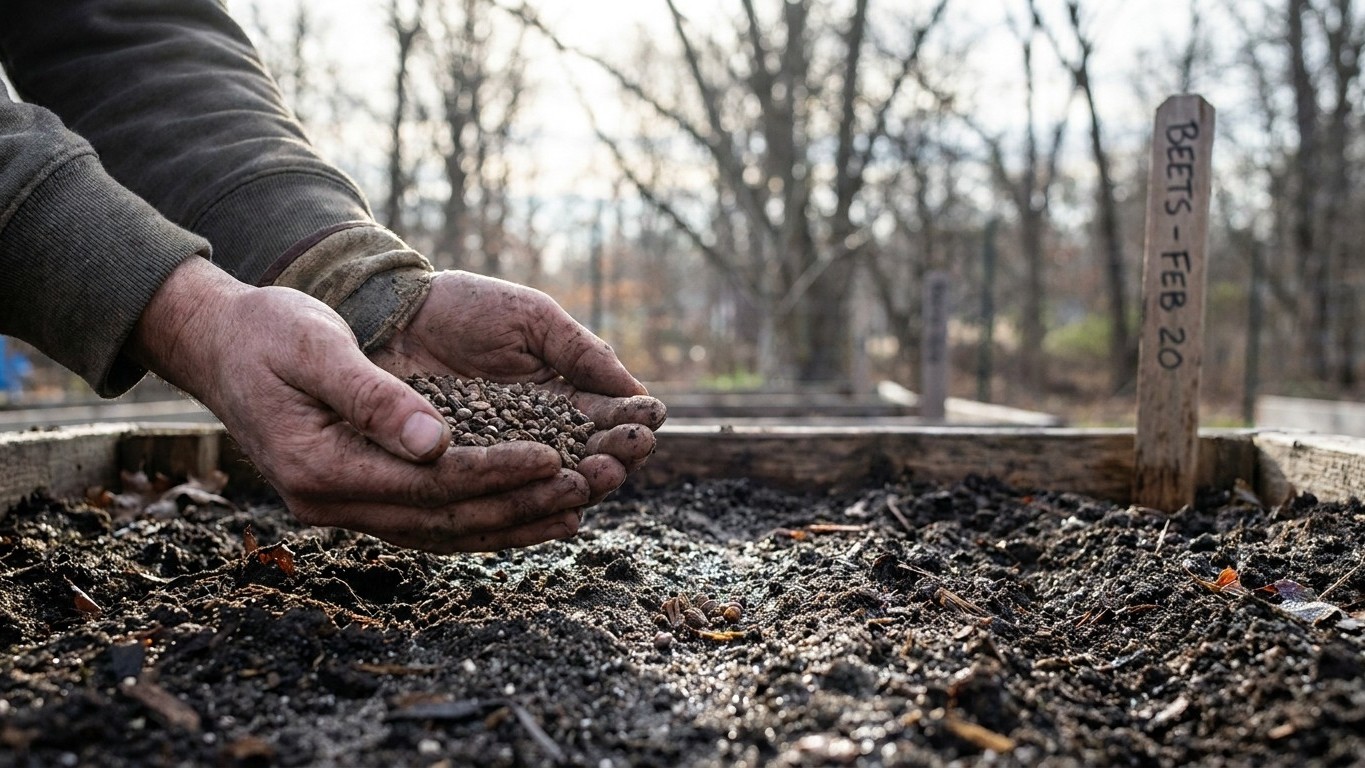

In most of Virginia, beets go into the ground outdoors 2 to 3 weeks before the last spring frost. Using the coastal reference station near Virginia Beach, where that frost falls between March 20 and April 3, seed can go down in late February to mid-March. Inland and mountain gardens run weeks behind that coastal clock, so the same rule applies later on the calendar there.
The short answer
Start with the ground itself. The soil USDA lists as representative of Virginia is the Pamunkey series, an Alfisol, which is a forest-derived soil of moderate fertility that holds nutrients reasonably well. Its surface horizon runs slightly acid, with a pH near 6.2, and its texture sits in loam-to-silt territory: about 50 percent sand, 11 percent clay, and 39 percent silt, with organic matter around 1.2 percent. It’s classified as well drained.
Beets ask for deep, sandy, well-drained ground that’s rich in organic matter, according to Utah State University Extension. Measured against the Pamunkey numbers, that’s a partial match. The sand fraction and the well-drained rating line up with what a beet root wants: room to push down without fighting standing water. But 1.2 percent organic matter is on the lean side for a crop that wants richness, and 11 percent clay plus 39 percent silt means this isn’t a loose sandy loam so much as a soil that can still crust and compact if it’s worked wet. The fix Utah State outlines is modest, not aggressive: no more than 1 inch of composted organic matter per 100 square feet worked into the bed. Overdoing it pushes a beet toward leafy top growth at the expense of the root, which isn’t the trade a home gardener wants.
Heat matters here too, though a specific count of 90-degree days for a Virginia reference city isn’t part of the dataset behind this page, so that number won’t be manufactured here. What is documented is the threshold that matters agronomically: air above 85 F combined with water stress is what turns a beet root woody, according to Utah State Extension. Virginia’s summers reliably clear that 85-degree mark for stretches in most regions, which is one reason timing sowing around the cooler edges of the season, not the hottest stretch of it, does more work than any single soil amendment.
None of this replaces a look at the dirt actually under a rake in a specific yard. Virginia spans hundreds of mapped soil series, and the Pamunkey profile above is a statewide representative, not a survey of every backyard. Coastal Plain sand, Piedmont clay, Shenandoah Valley limestone soils and mountain hollows can each behave nothing like it. A basic soil test remains the only way to know the pH, texture, and organic matter percentage of the bed a gardener is actually planting.
The six weeks that decide it here
Sowing 2 to 3 weeks ahead of the last frost means the first six weeks of a beet’s life, germination through early root formation, land in a fairly predictable slice of the Virginia calendar: roughly late winter into mid-spring along the coast, and later inland as the frost date itself slides back. That window is exactly the stretch Utah State Extension flags as the one where water stress does its damage, triggering premature flowering, or bolting, rather than a usable root.
Virginia spring doesn’t hold a single character across that window. It swings. Cold fronts can drop through with raw, damp days that leave beds soggy for a stretch, and those same weeks can flip into a dry, windy run that pulls moisture out of a seedbed fast, especially in the sandier Coastal Plain soils and on the drier southwest-facing slopes of the Piedmont. Neither extreme is unusual; the pattern is the swing itself, not a settled dry season or a settled wet one.
That variability is exactly where the bolting risk sits. A beet sown on schedule can still hit a dry ten-day run in its first six weeks purely because that’s how a Virginia spring behaves, and the plant reads that thirst as a signal to flower rather than bulk up a root. This is a separate failure from the woodiness that shows up later from summer heat; conflating the two leads to a single vague fix (“just water it”) when the two problems actually call for different attention at different points in the season. In the first six weeks, the job is keeping the bed from drying out during whatever dry stretch the spring throws in. Later, once temperatures push past 85 F, the job shifts to keeping water steady through heat rather than through a cold snap.
Gardeners west of the Blue Ridge and in the far southwest counties should treat every date in this section as arriving later than it does on the coast. The last frost window used here comes from a single coastal station; a mountain garden’s own six-week window opens weeks after that coastal one closes.
What goes wrong here
- Cold, tight soil delays or blotches germination. Pamunkey-type ground, with its clay-and-silt majority, can crust or stay cold and heavy right when seed goes in early. Wait until the bed is dry enough to crumble in a hand rather than smear, and work in the compost allowance (no more than 1 inch per 100 square feet) ahead of sowing rather than after germination.
- A dry spring stretch in the first six weeks pushes plants to bolt. Because Virginia spring swings between wet fronts and dry runs, a beet sown right on the calendar can still catch a dry patch during establishment. Keep the bed evenly moist through that window specifically, with mulch to buffer the swings, rather than watering on a fixed schedule.
- Summer heat with dry soil turns roots woody later on. This is a distinct failure from bolting, tied to air above 85 F rather than early cold or thirst. Time sowing so the 60- to 80-day maturity window from seed lands before the hottest stretch of summer, or hold a crop for cooler weather instead of pushing it through peak heat.
- Over-amending naturally sandy, well-drained beds. Because Pamunkey-type soil already drains well and beets don’t need heavy enrichment, adding more than the 1-inch-per-100-square-foot compost guideline tends to feed leafy top growth rather than the root itself.
- Using a coastal sowing date in an inland or mountain garden. The March 20 to April 3 last-frost window comes from a single coastal Virginia station. Piedmont, valley, and mountain gardens run behind that date by weeks, and sowing on the coastal schedule there risks seed and seedlings sitting through a frost the coastal date doesn’t anticipate.
Common questions
Can beets be direct sown in Virginia’s clay soil?
Yes, but the bed needs help first. Clay-heavy ground, closer to the 11 percent clay and 39 percent silt makeup of the state’s representative Pamunkey series, benefits from a modest compost addition (no more than 1 inch per 100 square feet, per Utah State University Extension) worked in before sowing, and from waiting until the soil crumbles rather than smears before seed goes down.
How many days do beets take to mature from seed in Virginia?
The 60- to 80-day maturity window applies from the day seed goes into the ground, not from a transplant date, since beets are grown as a direct-sown crop. Counting from that in-place sowing date is what determines whether a crop finishes before the hottest, driest stretch of summer sets in.
What is the best month to plant beets in Virginia?
It depends on where in the state the garden sits. Along the coast, where the last frost falls between March 20 and April 3, sowing 2 to 3 weeks earlier lands in late February to mid-March. Piedmont, valley, and mountain gardens should push that same 2-to-3-week-before-last-frost rule back by however many weeks later their own local frost date runs.
Should beets be sown again in fall in Virginia?
A fall sowing is common practice for beets generally, timed by counting the 60- to 80-day maturity window backward from the first fall frost. That fall frost date isn’t part of the data set behind this page, so no specific fall sowing date is published here; gardeners should check their own local frost timing rather than apply the spring dates above to a fall planting.