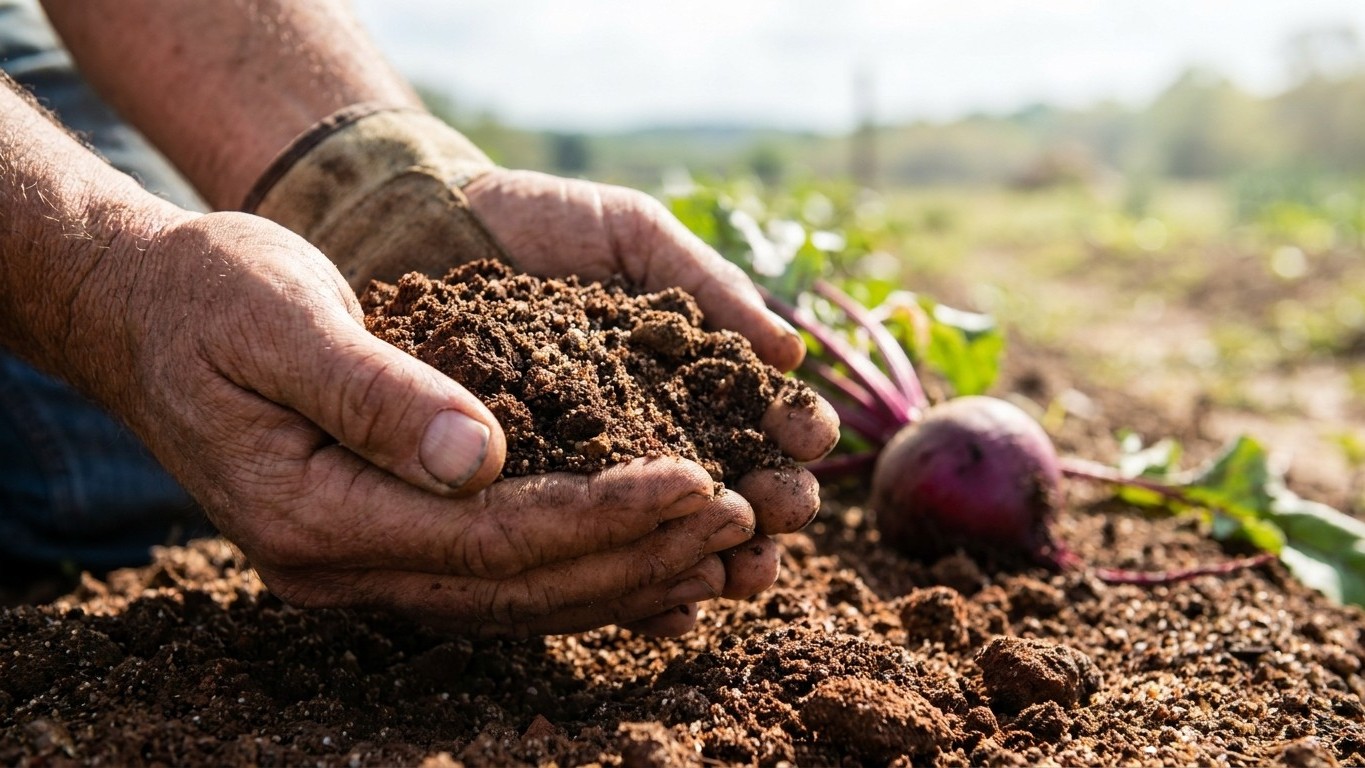

Washington’s official state soil, the Tokul series, is a volcanic-ash soil so acidic and so different from a working vegetable bed that it barely resembles one. If your garden sits in western Washington’s mild, wet spring, the beet’s real enemy in the first six weeks isn’t heat, it’s water timing. East of the Cascades, the season compresses and the risks flip. Neither region gets one planting formula, but the numbers below narrow the guesswork.
The short answer
The Tokul series is what USDA NRCS lists as representative of Washington under the agency’s State Soils programme, and it’s an odd baseline for a root crop. It’s an Andisol, built from weathered volcanic ash, which makes it light and porous and unusually good at holding onto both water and phosphorus. The surface horizon runs 45 percent sand, 10 percent clay and 45 percent silt, a loam-to-silt texture, and it drains moderately well. None of that is disqualifying for beets, which want deep, sandy, well-drained ground according to Utah State University Extension. Where Tokul breaks from that ideal is the chemistry: a surface pH near 4.5, strongly acid, sitting well below where most root vegetables do their best work.
One more figure needs a warning label. USDA records organic matter in the Tokul surface horizon at about 75 percent, a number that only makes sense once you know what it’s measuring. Organic matter that high describes a natural surface layer, forest litter or a similar undisturbed horizon, not a dug and amended garden bed. A cultivated plot, even one built on Tokul-mapped ground, won’t carry anywhere close to that figure once it’s been turned, planted and cropped for a season or two.
On heat, the honest answer is that a specific count of days above 90 F for a reference city in this state isn’t published in the sources behind this page. What the frost-date record does confirm is that western Washington runs a mild, maritime climate, the kind where stretches of intense heat are the exception rather than the rule for most of the growing season. Utah State’s warning that heat above 85 F combined with water stress turns beet roots woody still matters here, it’s just a risk tied to particular hot spells rather than a steady summer condition.
Washington spans hundreds of mapped soil series, river-bottom silt, glacial till, sandy outwash, and any lot a builder has cut, filled or graded. Tokul is a starting point for what the region’s ground tends to do, not a reading of your own back yard. A basic soil test still tells you more than any state-level series ever will.
The six weeks that decide it here
NOAA’s 1991-2020 climate normals put the last spring freeze for western Washington’s reference station, USW00024233, somewhere between February 27 and March 18. Sowing beets 2 to 3 weeks ahead of that date, which is standard practice for a cold-tolerant root crop, lands the first six weeks of germination and root establishment squarely in a Pacific Northwest spring: cool, often overcast, and typically damp rather than dry. That matters directly, because Utah State Extension ties bolting, premature flowering that ruins the root, to water stress specifically in those first six weeks after seeding.
A wetter-than-average spring west of the Cascades tends to work in the beet’s favor here, keeping soil moisture steady without the gardener doing much. The complication runs the other direction: a mild frost date doesn’t mean an early start is safe. Cold, wet soil and low late-winter light hold germination back well past the point when the thermometer stops threatening frost, so a calendar-perfect sowing date can still sit in ground too sluggish to sprout evenly. The bolting risk in western Washington shows up less from drought and more from dry snaps inside an otherwise wet pattern, the week or two when a bed dries out faster than expected between rains.
East of the Cascades the picture changes entirely. That’s high-desert country with a shorter season and a drier spring pattern, and the western Washington frost window doesn’t apply there. A grower on that side of the state is working against faster drying soil and a narrower margin for error in the same six-week stretch.
| Factor | Western Washington | Eastern Washington |
|---|---|---|
| Climate type | Mild, maritime | High desert |
| Spring pattern | Cool, often wet | Drier, faster warming |
| Last frost window (reference station) | Feb 27 – Mar 18 | Not covered by this station’s data |
| Main early risk | Dry snaps between rains | Sustained spring dryness |
What goes wrong here
- Acid surface soil locks up root growth. A pH near 4.5, the Tokul reading, sits well below where beets and most root crops thrive. Where a soil test on your own bed shows strongly acid ground, working in lime ahead of sowing brings the range closer to neutral before the roots start forming.
- Cold, wet soil stalls germination even after the last freeze passes. Because low light and chilly, damp ground hold beet seed back regardless of the frost date, waiting for the soil itself to warm rather than sowing strictly by the calendar avoids weeks of uneven, patchy stands.
- A dry snap inside a wet spring triggers bolting. Utah State Extension is specific that water stress in the first six weeks after seeding causes premature flowering. A short dry week tucked inside an otherwise damp Pacific Northwest spring is enough; even watering through that stretch, rather than assuming the season’s general wetness has it covered, prevents the loss.
- An occasional hot spell combined with a dry bed turns roots woody. Heat above 85 F paired with water stress is the specific combination Utah State flags for woodiness, a later-season failure distinct from bolting. It’s an occasional-heat-wave risk in maritime western Washington and a more regular one east of the Cascades, so consistent watering through any hot stretch matters more than it might seem in a generally mild climate.
- Over-amending organic matter causes forked, misshapen roots. Utah State’s guidance caps composted organic matter at 1 inch per 100 square feet. Piling on more than that, especially tempting on ground that already reads acid and mineral-poor, works against the beet rather than for it.
Common questions
Does the Tokul series mean my Washington garden soil is acidic?
Not necessarily. Tokul is the series USDA lists as representative of the state overall, and Washington maps hundreds of other soil series. A pH test of your own bed is the only way to know where it actually sits.
Should I sow beets by the last frost date or wait for the soil to warm?
The last frost window for western Washington runs February 27 to March 18 at the reference station, and sowing 2 to 3 weeks ahead is standard timing. But cold, wet soil and low light can hold germination back regardless of that date, so a grower watching soil condition rather than the calendar alone tends to get a more even stand.
Are bolting and woody roots the same problem?
No. Bolting is premature flowering caused by water stress in the first six weeks after seeding. Woodiness is a separate, later failure caused by heat above 85 F combined with water stress. Fixing one doesn’t fix the other.
How much compost should I add before sowing beets?
Utah State University Extension recommends no more than 1 inch of composted organic matter per 100 square feet. More than that risks working against root formation rather than helping it.