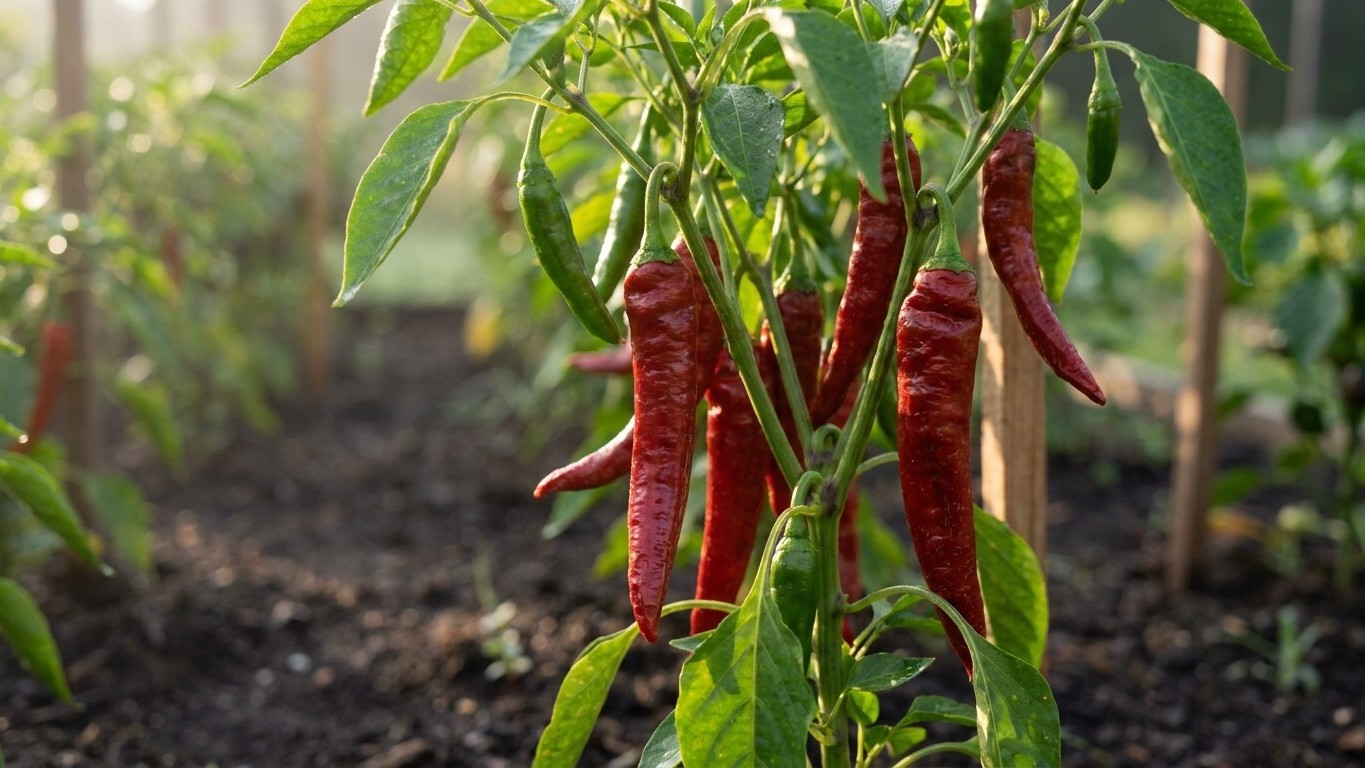

Long Slim Cayenne is a cayenne-type pepper included on Clemson Cooperative Extension’s list of recommended garden varieties. Expect a long, slender pod meant for drying and grinding, not fresh eating like a bell or a jalapeno. No published days-to-maturity, fruit size, or yield number exists for this specific cultivar, so the seed packet in your hand, not a chart online, is the number that applies to your planting schedule.
What Long Slim Cayenne Actually Is
The type comes first because it decides almost everything else: how the plant grows, what the pods look like, and how you’ll use them in the kitchen. Long Slim Cayenne belongs to the cayenne group, the same family that gives home cooks the long, tapered, wrinkled red pods sold dried and ground into cayenne pepper powder. That’s a different plant from a bell, a jalapeno, or a habanero, and it behaves differently in the garden bed too.
Clemson Cooperative Extension lists Long Slim Cayenne among its recommended garden pepper varieties, identifying it simply as a “cayenne” type. That’s the extent of the university’s published word on this cultivar: a recommendation and a type classification, nothing more.
No days-to-maturity count, fruit length or diameter, or yield-per-plant estimate is published anywhere in the extension literature for this cultivar. NC State Extension publishes detailed cultivar notes for many garden peppers but doesn’t carry a separate entry with those specifics for Long Slim Cayenne beyond the type itself. That gap is worth naming rather than papering over. A gardener who assumes a maturity window borrowed from a different cayenne variety is setting expectations this cultivar hasn’t earned.
One more distinction matters, because pepper displays at garden centers mix them freely: ornamental pepper plants, sold for colorful foliage and berry-like fruit in fall arrangements, are bred for looks and are not food. Long Slim Cayenne is an edible garden variety meant for the kitchen, not the porch planter.
How Hot Is It, Really?
Cayenne peppers sit toward the hot end of the pepper spectrum, well above a jalapeno’s moderate kick and nowhere near the extreme end occupied by a habanero or the Carolina Reaper. That’s the honest answer, given by type. No Scoville figure is published for Long Slim Cayenne specifically, and any number attached to this cultivar’s name would be a guess dressed up as data.
For comparison, jalapenos measure 2,500 to 8,000 Scoville Heat Units, and the Carolina Reaper averages 1.64 million. Where a cayenne type actually falls between those two points isn’t nailed down by a single published number for most named cultivars, including this one.
What NC State Extension does say, describing edible garden peppers generally, is that fruits are edible “but spiciness is UNPREDICTABLE in intensity.” That line is worth sitting with, because it explains something every pepper grower eventually notices: the same plant, grown in the same spot two years running, can taste noticeably different from one harvest to the next.
The mechanism behind that is stress. Capsaicin, the compound responsible for a pepper’s heat, tends to concentrate when the plant is under pressure: a dry spell, a stretch of intense heat, uneven watering. A cayenne plant that sails through a mild, well-irrigated summer often produces milder pods than the same variety grown through drought. That variability is a feature of the type, not a defect in a particular seed packet.
Growing Conditions This Cultivar Needs
Beyond the recommendation and the type label, Clemson’s published entry for Long Slim Cayenne doesn’t describe it as compact, container-bred, or disease-resistant the way some other listed cultivars are flagged. Nothing in the source material sets it apart as needing special handling. That absence is itself useful information: treat it as a standard-growth cayenne-type pepper unless your own seed packet says otherwise.
Days to maturity: check the packet, not a chart
Days-to-maturity figures aren’t published for this cultivar in the extension sources behind this page. That’s true for nearly every named cultivar on Clemson’s recommended list; only one pepper in the guide carries a specific number. Rather than borrow a maturity window from a different cayenne variety, or from a “typical hot pepper” average that may not apply, use the number printed on your own seed packet, which reflects the breeder’s actual trial data for that seed lot.
The one rule that applies regardless
What does apply to Long Slim Cayenne, and to every pepper cultivar without exception, is that peppers are a warm-soil crop. Cold soil doesn’t just slow growth, it can stall a transplant for weeks while the plant sits in a kind of suspended animation, roots too cool to expand, foliage too stressed to push new growth. Gardeners who move transplants outdoors before soil temperatures climb into the warm range often end up with a plant that looks the same in June as it did in mid-May.
That single fact, more than any cultivar-specific trait, determines whether a Long Slim Cayenne planting succeeds on schedule or lags all season. For guidance on timing that transition correctly, see our pages on starting pepper seeds indoors and transplanting peppers outdoors, both of which cover the soil-temperature thresholds that matter more than the calendar date.
Taste and Best Uses in the Kitchen
No cultivar-specific tasting note is published for Long Slim Cayenne, so the honest description here comes from the type rather than an invented flavor profile. Cayenne peppers as a category are grown primarily to be dried and ground, which is exactly where the pepper’s name comes from: cayenne pepper powder, the red spice found in most kitchen cabinets, is made from peppers of this type. Fresh off the plant, cayenne pods are thin-walled, tapered, and sharply hot compared to a bell or banana pepper, with a straightforward heat rather than the fruity notes found in a habanero.
That thin flesh is part of why cayenne types suit drying rather than fresh slicing. A bell pepper’s thick walls hold up well stuffed or roasted; a banana pepper’s mild, tangy flesh is built for pickling; a jalapeno’s moderate heat and firm bite work in fresh salsa. A cayenne pod, by contrast, dries quickly on a string or in a dehydrator and grinds into a fine, potent powder or crushed-red-pepper flake, the form most cooks actually use.
Some cayenne pods do get used fresh, chopped into stir-fries or hot sauces where a straightforward, sustained heat is the goal rather than complex flavor. But the category’s real strength shows up once the pods are dried, when concentrated capsaicin and thin flesh combine into a shelf-stable spice that keeps its punch for months in a sealed jar.
Common questions
Is Long Slim Cayenne hotter than a jalapeno?
By type, yes. Cayenne peppers generally rank hotter than jalapenos, which measure 2,500 to 8,000 Scoville Heat Units. No specific Scoville figure is published for Long Slim Cayenne, but its category sits well above the jalapeno range on the heat spectrum.
How many days does Long Slim Cayenne take to mature?
No days-to-maturity figure is published for this cultivar by Clemson Cooperative Extension. Check the number printed on your own seed packet, since it reflects the specific seed lot’s trial data rather than a general estimate for the cayenne type.
Can I eat ornamental pepper plants?
No. Ornamental peppers sold for their colorful foliage and decorative berries are bred for looks, not flavor or food safety, and should not be treated as edible. Long Slim Cayenne is a separate, edible garden variety grown specifically for kitchen use.
Why does the same pepper plant produce different heat levels each year?
NC State Extension notes that fruit spiciness is unpredictable in intensity. The mechanism is stress: drought, heat, and uneven watering concentrate capsaicin in the fruit, so a plant grown through a hard, dry summer typically produces hotter pods than the same variety grown in a mild, well-watered season.