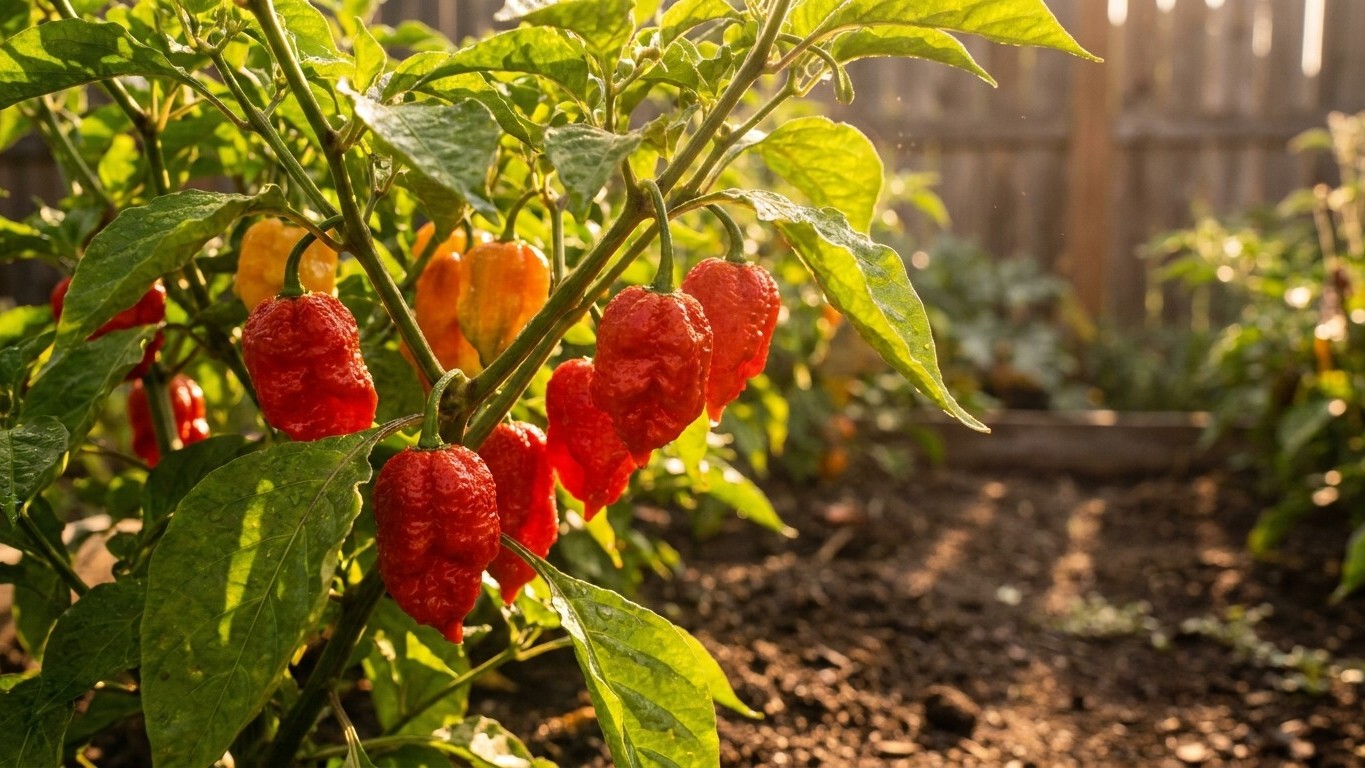

Ghost Pepper pepper is classified as a hot pepper by Clemson Cooperative Extension, which lists it among its recommended garden cultivars. No published days-to-maturity or fruit-size figures exist for this specific cultivar, and no Scoville number is on record for it either. What growers can count on: it needs warm soil to get going, and its heat will vary with the season.
What the source actually says about this cultivar
Ghost Pepper pepper is not a bell, banana, or jalapeno. Clemson Cooperative Extension places it squarely in the hot pepper category on its recommended-varieties list for home gardeners. That classification tells a grower more than the cultivar’s name does, since hot peppers as a group share a growing profile and use case that bells and banana peppers don’t.
Clemson’s listing is brief by design: it names the cultivar as recommended for South Carolina gardens, a statement about regional performance, not a promise of specific yield or fruit dimension. Neither Clemson nor NC State Extension publishes a fruit length, weight range, or maturity window for this particular cultivar. If the figure isn’t in these sources, the honest answer is that it isn’t available here, not that it doesn’t exist somewhere. A gardener who knows what’s unverified is better off than one handed a guess dressed up as fact.
One distinction worth making: some pepper plants sold at nurseries are ornamental, bred for foliage or fruit display rather than eating, and those are not food. Ghost Pepper pepper, as covered by Clemson’s recommended list, is an edible garden cultivar. The two categories get mixed up at garden centers more often than you’d think, so it’s worth checking the tag before anything ends up in a salsa bowl.
How hot is it, really
Nobody has published a Scoville number for this exact cultivar through Clemson or NC State Extension. Only two peppers in this kind of reference carry a hard figure: the Carolina Reaper averages 1.64 million Scoville heat units, the extreme end for a home garden, while jalapenos run 2,500 to 8,000, the standard entry point for heat-seekers who want it without punishment.
Ghost Pepper pepper sits somewhere in the hot pepper category, and NC State Extension’s language about this kind of pepper is the most useful thing available: fruits are edible, the university writes, “but spiciness is unpredictable in intensity.” That sentence carries more weight than a made-up number, because it describes a real biological pattern.
The mechanism is straightforward. Capsaicin, the compound responsible for heat, concentrates under stress. A plant pushed through a droughty, hot stretch tends to load its fruit with more capsaicin than the same cultivar grown in a mild, well-watered season. Two gardeners growing the identical cultivar in different conditions, or the same gardener across two years, can end up with fruit that bites completely differently.
So the honest planning advice is to treat the first fruit of the season as a test fruit. Taste a small piece before committing it to a big batch of salsa or hot sauce. Given the range hot peppers can cover, and the absence of a published number for this cultivar, that small caution costs nothing and saves a ruined dinner.
What growing this cultivar actually requires
The details the source gives, and doesn’t
Clemson’s recommendation tells a gardener that this cultivar performs well in Southeastern growing conditions, but it’s not a full growing profile. There’s no published note on container suitability, disease resistance, or ornamental use. What’s published is the recommendation and the hot pepper classification, nothing more.
Days to maturity is the number gardeners ask for most, and it isn’t published for this cultivar in either source. The number that will actually matter is the one printed on the seed packet in hand, since that reflects the seed lot and the breeder’s trial data in a way a general reference can’t capture. Treat the packet as the authority for timing, not a website.
The one rule that applies regardless
What does hold true across every hot pepper, this cultivar included, is that peppers are a warm-soil crop. Soil temperature, not air temperature, triggers real growth. Set transplants into ground that’s still cold and the plant doesn’t die, it stalls, sometimes for weeks, and that lost time rarely gets recovered before frost ends the season. Timing the move from seed tray to garden bed matters more for peppers than for most vegetables; see our pepper transplanting guide and seed-starting page for the soil-temperature thresholds that govern success.
Flavor and how it’s used in the kitchen
Taste and use come down to type more than to the individual cultivar name. Hot peppers as a category bring capsaicin heat, not sweetness, and are used in measured amounts rather than eaten like a snack, unlike a sweet bell pepper, a mild banana pepper built for pickling, or a jalapeno that straddles the line in salsa, poppers, or pickled rings. For hot peppers generally, uses lean toward sauces, dried seasoning, or small fresh additions where a little goes a long way.
Neither Clemson nor NC State Extension publishes a tasting note for Ghost Pepper pepper specifically, no line about sweetness, fruitiness, or flavor tied to this cultivar by name. Where NC State does offer cultivar-specific language for other hot peppers, phrases like “sugary sweet flavor” show up attached to those entries. No comparable line exists for this one, and inventing one would undercut everything accurate on this page. The honest description is the type-level one: a hot pepper, used in small quantities, whose unpredictable heat is the real defining trait.
Common questions
Is Ghost Pepper pepper the same as the famous “ghost pepper” heat record-holder?
The cultivar name overlaps with a well-known hot pepper reputation, but Clemson’s listing carries no Scoville figure. Only the Carolina Reaper (1.64 million average) and jalapenos (2,500 to 8,000) have published numbers in this reference. Treat any other figure attached to this cultivar as unverified.
How many days until it’s ready to pick?
No days-to-maturity figure is published for this cultivar through Clemson or NC State Extension. Check the seed packet for the specific lot being grown, since that number is far more reliable than a general estimate.
Why did my peppers turn out hotter this year than last?
Capsaicin concentrates under stress. A hot, dry growing season pushes more heat into the fruit than a mild, well-watered one, which is why NC State Extension describes this category’s spiciness as unpredictable rather than fixed.
Can I eat the ornamental pepper plant I bought at the garden center?
Not necessarily. Some pepper plants are sold purely for decorative foliage and are not food. Ghost Pepper pepper, as covered here, is an edible cultivar recommended by Clemson Cooperative Extension, but always confirm a plant’s tag before treating any pepper as edible.