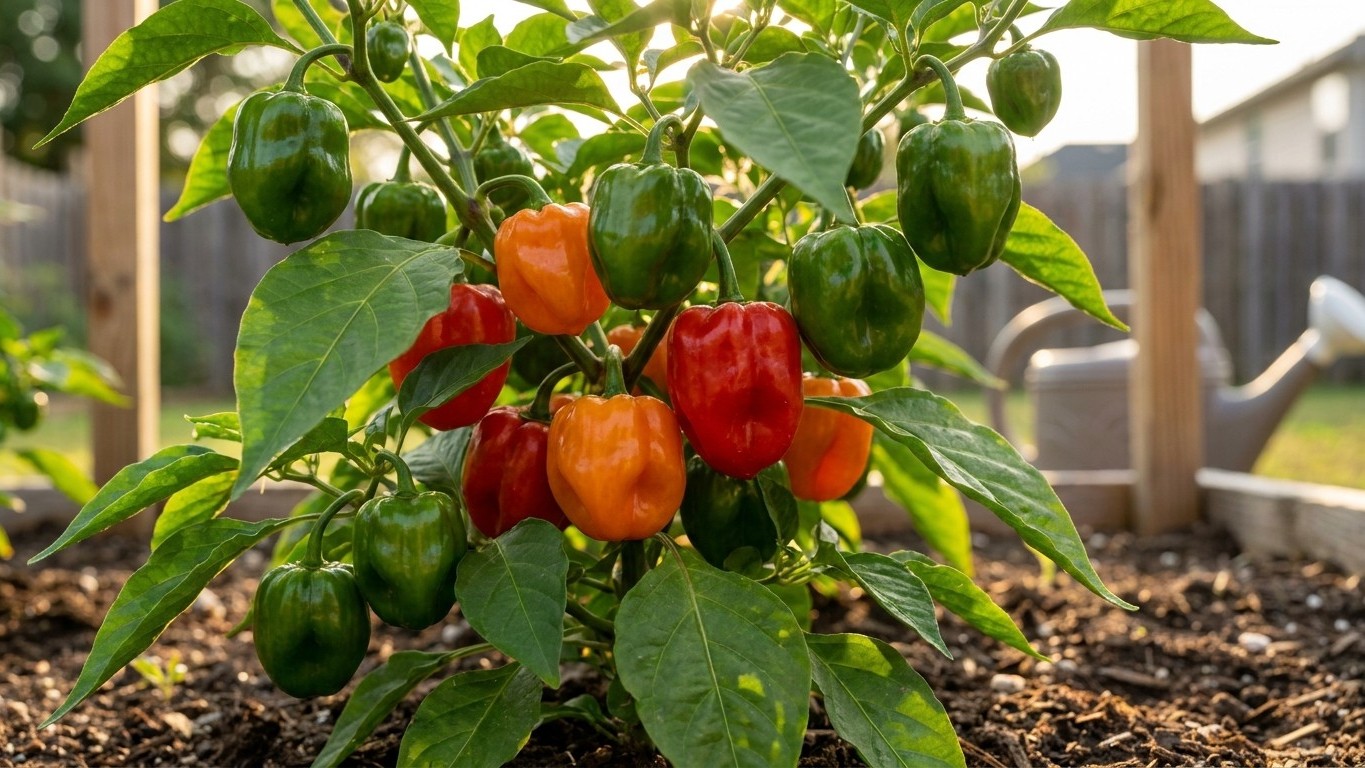

Tiger Paw NR is a habanero-type pepper included on Clemson Cooperative Extension’s list of recommended varieties for home gardens. It’s an edible fruiting plant, not one of the ornamental peppers grown for colorful foliage. Its heat, like every habanero, swings with the weather instead of sitting at a fixed number. No days-to-maturity figure is published for this cultivar, so the count on your own seed packet is the one that actually applies.
What Tiger Paw NR Actually Is
The “NR” in the name reads like a disease-resistance flag on a seed catalog page, but what the source material actually confirms is narrower than that. Clemson Cooperative Extension‘s list of recommended pepper varieties places Tiger Paw NR in the habanero category, the same family that produces some of the hottest fruit grown in home gardens. That single classification, habanero, tells a gardener more than the cultivar name ever could: a squat, lantern-shaped pepper harvested green and ripening to orange or red, bred for heat rather than size.
What Clemson’s entry doesn’t include is worth stating just as plainly. There’s no published days-to-maturity number for Tiger Paw NR, no listed fruit size, no yield estimate per plant. That’s common among varieties that appear on university recommended lists as a one-line mention rather than a full profile. Instead of filling that gap with a confident guess, the honest answer is simpler: those figures aren’t published for this cultivar, and a seed packet or supplier catalog is the place to look for growing specifics beyond what the extension service has recorded.
One distinction matters here. The compact, brightly colored pepper plants sold each fall as porch and patio decoration, often marketed as ornamental peppers, belong to a different category. Many of those are bred for foliage color, not flavor, and some aren’t meant to be eaten at all. Tiger Paw NR isn’t one of them. It made Clemson’s list because it’s grown for the kitchen, not the front step.
How Hot Is Tiger Paw NR, Really?
Habaneros sit at the extreme end of the pepper heat scale, the same general bracket that includes the Carolina Reaper, which averages 1.64 million Scoville heat units. A jalapeno, by comparison, typically runs 2,500 to 8,000 Scoville units, and that gap is what separates “moderate” from “extreme” in pepper terms. Tiger Paw NR falls into the extreme habanero bracket by classification alone. No Scoville measurement for this specific cultivar has been published by Clemson Cooperative Extension or NC State Extension, and any specific number attached to it here would be invented, not measured.
What NC State Extension does say about habanero-type peppers is worth quoting directly, because it’s more useful than a false-precision figure: fruits are edible “but spiciness is unpredictable in intensity.” That single word, unpredictable, explains why two peppers off the same plant, picked a week apart, can taste noticeably different from one another.
The mechanism behind that swing isn’t mysterious. Capsaicin, the compound behind pepper heat, concentrates under plant stress. A pepper that goes through a stretch of drought, poor soil, or a heat wave tends to run hotter than the same variety grown in a mild, well-watered season. The honest expectation for Tiger Paw NR is habanero-level heat that shifts from year to year, not a fixed rating you can plan a recipe around in advance.
Growing Conditions and Timing
Beyond its heat classification, the source material doesn’t spell out much about how Tiger Paw NR behaves in a bed: whether it’s compact enough for a container, how it handles disease pressure, or whether it tolerates heat better than other habaneros. Clemson’s recommended list works more as a shortlist of proven performers for South Carolina conditions than a detailed growing guide, and that’s the real limit of what can be said with any confidence.
Days to maturity is the number most gardeners actually plan a season around, and here again this cultivar has no published figure from either extension source. Only a handful of pepper varieties in university literature carry a stated maturity count; most, Tiger Paw NR included, don’t. The figure that will actually apply to a specific plant is the one printed on the seed packet from whichever supplier sold it, since that number reflects the breeder’s own testing rather than a university trial.
What does apply to Tiger Paw NR, and to every pepper regardless of type, is that it’s a warm-soil crop from seed to harvest. Peppers germinate slowly in cool soil and can stall for weeks if moved outdoors before both air and ground temperatures have caught up. A soil thermometer, not a calendar date, is the better guide for deciding when to move seedlings outside, since a warm spring in one region can lag weeks behind a warm spring in another. For the specifics on starting seeds indoors and timing the move outdoors, see our guides on starting pepper seeds and transplanting peppers into the garden.
Taste and How to Use It
Flavor conversations around peppers start with type, and habaneros carry a reputation distinct from milder categories. Unlike a bell pepper’s sweetness or a jalapeno’s grassy bite, habanero-type fruit is generally described as fruity, almost citrus-toned, underneath the heat, which is why it usually shows up in small amounts, a single pepper minced into a pot of salsa rather than a cupful diced fresh.
Neither Clemson Cooperative Extension nor NC State Extension publishes a cultivar-specific tasting note for Tiger Paw NR beyond its habanero classification, so claiming a signature flavor unique to this variety wouldn’t hold up. What can be said comes from the type itself: habanero peppers get used sparingly in hot sauces, marinades, and salsas, where a small amount goes a long way, and their heat tends to build after that fruity opening rather than hitting all at once the way a flatter cayenne burn does.
That makes Tiger Paw NR better suited to a cook after a few pods for sauce-making or small-batch pickling than someone looking for a mild pepper to stuff or roast whole. Given how much heat intensity can shift between a mild season and a stressed one, starting with a fraction of a pepper in a new recipe and adjusting upward is the safer approach for a first harvest.
Common questions
Is Tiger Paw NR pepper safe to eat straight off the plant?
Yes. It’s grown as a food crop and listed among Clemson Cooperative Extension’s recommended pepper varieties, unlike ornamental peppers sold for foliage, which aren’t meant for eating. Given how unpredictable habanero heat can be, tasting a small piece before committing a whole pepper to a dish is a reasonable first step.
How does Tiger Paw NR compare to a Carolina Reaper?
Both fall into the extreme end of the pepper heat range by type, but only the Carolina Reaper has a published Scoville figure, averaging 1.64 million heat units. No comparable measurement exists for Tiger Paw NR, so any side-by-side number would be a guess rather than a fact.
Can Tiger Paw NR be grown in a container?
Neither extension source specifies container performance for this cultivar. General pepper-growing guidance applies: a large enough pot with drainage and consistent watering, since containers dry out faster than garden beds, particularly during the hot stretches that also tend to intensify habanero heat.
When is the right time to plant Tiger Paw NR outdoors?
There’s no cultivar-specific date published, but the rule for all peppers holds: wait until soil temperature has warmed, not just the air. Transplanting into cold ground stalls growth for weeks regardless of variety, which is covered in more detail in our guide on transplanting peppers into the garden.