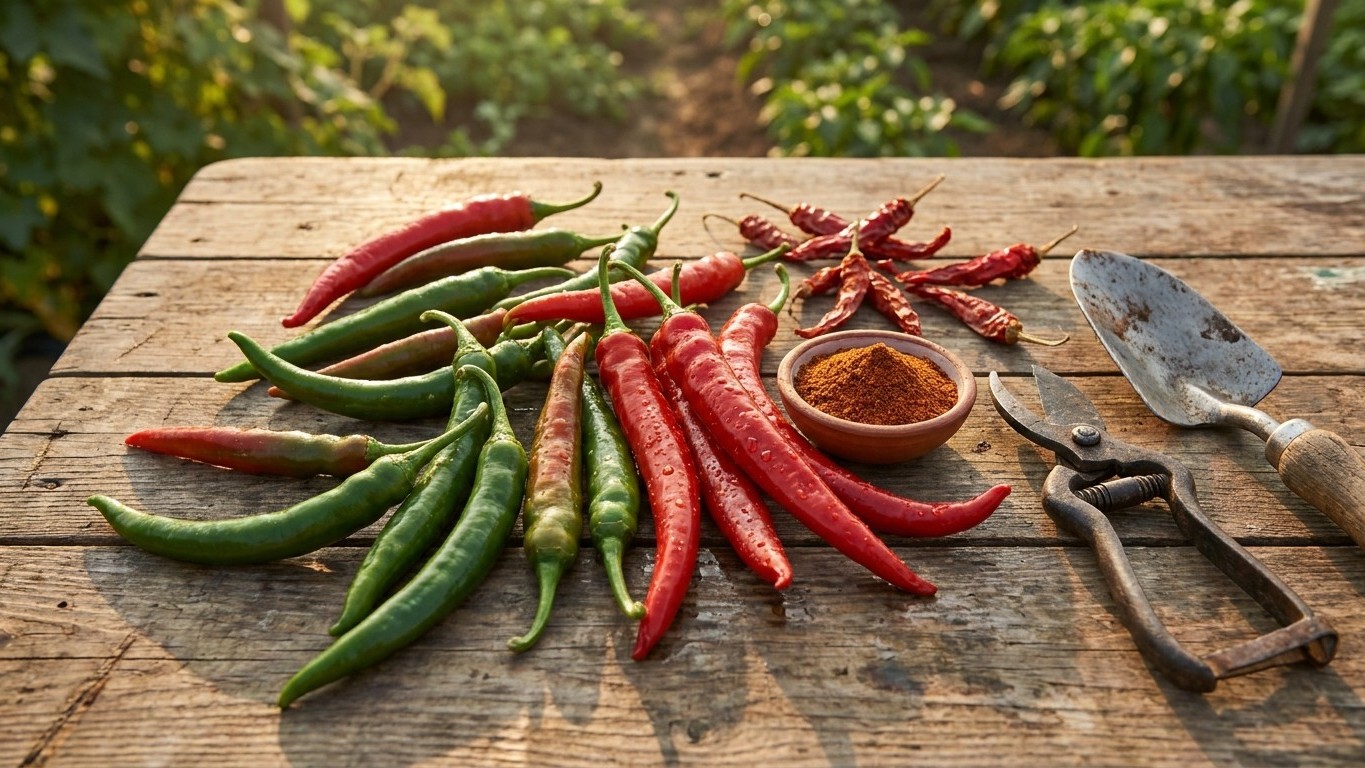

The Charleston Hot pepper is a cayenne-type pepper, listed among the recommended cultivars from Clemson Cooperative Extension’s Home & Garden Information Center. That single fact, cayenne, tells a grower more than the cultivar name ever will: long, slender, thin-walled pods meant for drying and grinding, not for stuffing or slicing into rings. Plant it once soil has warmed, the same rule that governs every pepper in the ground, and the rest of what matters comes down to what the source actually documents, and what it leaves out.
A Cayenne-Type Pepper on Clemson’s Recommended List
Clemson Cooperative Extension includes the Charleston Hot on its list of recommended pepper cultivars for South Carolina gardens, identifying it plainly as a cayenne type. That classification is the useful part. Cayenne peppers, as a category, produce thin, tapered pods that dry easily and are typically destined for powder or flakes rather than fresh eating, which already tells a gardener what to expect on the plant before a single fruit sets.
What the source does not give is worth saying out loud rather than papering over. Neither Clemson nor NC State Extension publishes a days-to-maturity figure for this specific cultivar, a fruit size, or a yield estimate. That gap is common across university extension recommendation lists, which exist to flag varieties suited to a region and a growing pattern, not to catalog every horticultural detail a seed catalog might promise. A reader who knows that the number simply isn’t published is better served than one handed a confident guess dressed up as fact.
One distinction matters enough to state once, clearly. Some pepper plants sold at nurseries are grown purely as ornamentals, prized for colorful foliage or clusters of decorative fruit, and those are not food. The Charleston Hot is an edible cultivar grown for its pods, distinct from that decorative category, but the label on a nursery pot is worth checking before anything from a pepper plant ends up on a plate.
How Hot Is the Charleston Hot Pepper, Really?
Heat in peppers tracks with type far more reliably than with cultivar name, and cayenne sits toward the hotter end of the everyday pepper lineup, well past a bell pepper (which carries essentially no heat) and past a jalapeno, which NC State Extension and other university sources place in the 2,500 to 8,000 Scoville Heat Unit range. Cayenne types run hotter than that as a category, which is exactly why they’re processed into powder rather than eaten fresh in quantity.
No Scoville figure is published specifically for the Charleston Hot cultivar, and giving one here would read as a measurement that simply doesn’t exist. Only two cultivars in university extension literature carry a documented number: jalapenos in that 2,500 to 8,000 range, and the Carolina Reaper, which averages 1.64 million Scoville units, an extreme outlier used mostly as a benchmark for how wide the pepper heat scale actually runs.
What NC State Extension does say, describing pepper fruits generally, is that they’re edible «but spiciness is unpredictable in intensity». That caution is the actually useful piece of information here. Capsaicin, the compound behind pepper heat, concentrates under plant stress, meaning a dry summer or a spell of high heat during fruit development can push the same cultivar noticeably hotter than it ran the year before. A Charleston Hot grown through a drought stretch will likely bite harder than one grown in a mild, well-watered season, and no packet number changes that variability.
Growing Habits and Timing: What This Cultivar Asks For
Beyond its cayenne classification and its spot on Clemson’s recommended list, the published record on the Charleston Hot’s growth habits is thin. There’s no documented note on whether it’s compact, container-friendly, disease-resistant, or bred for heat tolerance beyond what’s typical of the cayenne type generally. That’s a real gap, not an oversight to fill in with a guess.
Days to Maturity: Check the Packet, Not a Guess
No days-to-maturity figure is published for this cultivar. Across the broader set of pepper cultivars tracked by university extension sources, only a single one carries a documented maturity window; the Charleston Hot isn’t it. The number that will actually matter for a given garden is the one printed on the seed packet in hand, since seed lots and regional trial data vary by supplier even within the same named cultivar. That printed figure, not a category average, is the timeline worth planning around.
The One Rule That Applies Regardless
What does apply, without exception, is that peppers are a warm-soil crop. Transplanting into cold ground doesn’t just slow growth modestly, it can stall a plant for weeks while it waits for soil temperature to catch up, even if air temperatures look warm enough on paper. Timing transplants around soil warmth rather than the calendar date is the detail that most affects when a Charleston Hot actually starts producing. For the specifics of how to judge that timing and how to start seed indoors ahead of it, the transplanting and seed-starting guides on this site cover the mechanics in more depth than a single cultivar page can.
Taste and Kitchen Use
Flavor and use, for the Charleston Hot, come down to what its cayenne classification establishes rather than anything published specifically for this cultivar. Cayenne peppers as a type are grown primarily to be dried and ground, their thin walls and low moisture content making them well-suited to that process in a way a thick-walled bell pepper never would be. Fresh eating is possible, but it’s not the primary use the category is built around.
That’s a useful contrast against other pepper types on record from these same extension sources. A bell pepper is sweet and holds its shape well stuffed or roasted. A banana pepper, mild by nature, suits pickling. A jalapeno works fresh in salsa, stuffed as poppers, or pickled. A habanero, by contrast, brings a fruity note used in small quantities given its intensity. The Charleston Hot’s cayenne classification places it in the drying-and-grinding lane rather than any of those.
Neither Clemson Cooperative Extension nor NC State Extension publishes a cultivar-specific tasting note for the Charleston Hot, no description along the lines of a “sugary sweet flavor” or similar language sometimes attached to other named cultivars in extension literature. Inventing one here would be the kind of detail a reader could reasonably catch as unfounded, so the honest answer is that this cultivar’s flavor profile is described only through its type: a cayenne, meant for the spice rack more than the salad bowl.
Common questions
Is the Charleston Hot pepper the same as a Carolina Reaper?
No. The Charleston Hot is a cayenne type recommended by Clemson Cooperative Extension, while the Carolina Reaper is an entirely different, far more extreme cultivar averaging 1.64 million Scoville Heat Units. Comparing them by name alone is misleading; the type tells the real story.
Can I eat a Charleston Hot pepper fresh, or does it need to be dried?
It’s edible fresh, but cayenne types are grown mainly with drying and grinding in mind, given their thin walls and low moisture. Fresh eating is possible; it’s just not the main use the category was developed for.
Why does my Charleston Hot pepper taste hotter some years than others?
Because capsaicin, the compound behind pepper heat, concentrates under plant stress. A hot, dry growing season tends to push heat up, while a mild, well-watered one tends to mute it, which is exactly why NC State Extension describes pepper spiciness as unpredictable in intensity rather than fixed.
When should I transplant Charleston Hot pepper seedlings outside?
Once soil has warmed, not simply once the calendar suggests it’s safe. Cold soil stalls pepper transplants for weeks regardless of air temperature, so checking soil warmth directly is the more reliable approach for this cultivar and for peppers generally.