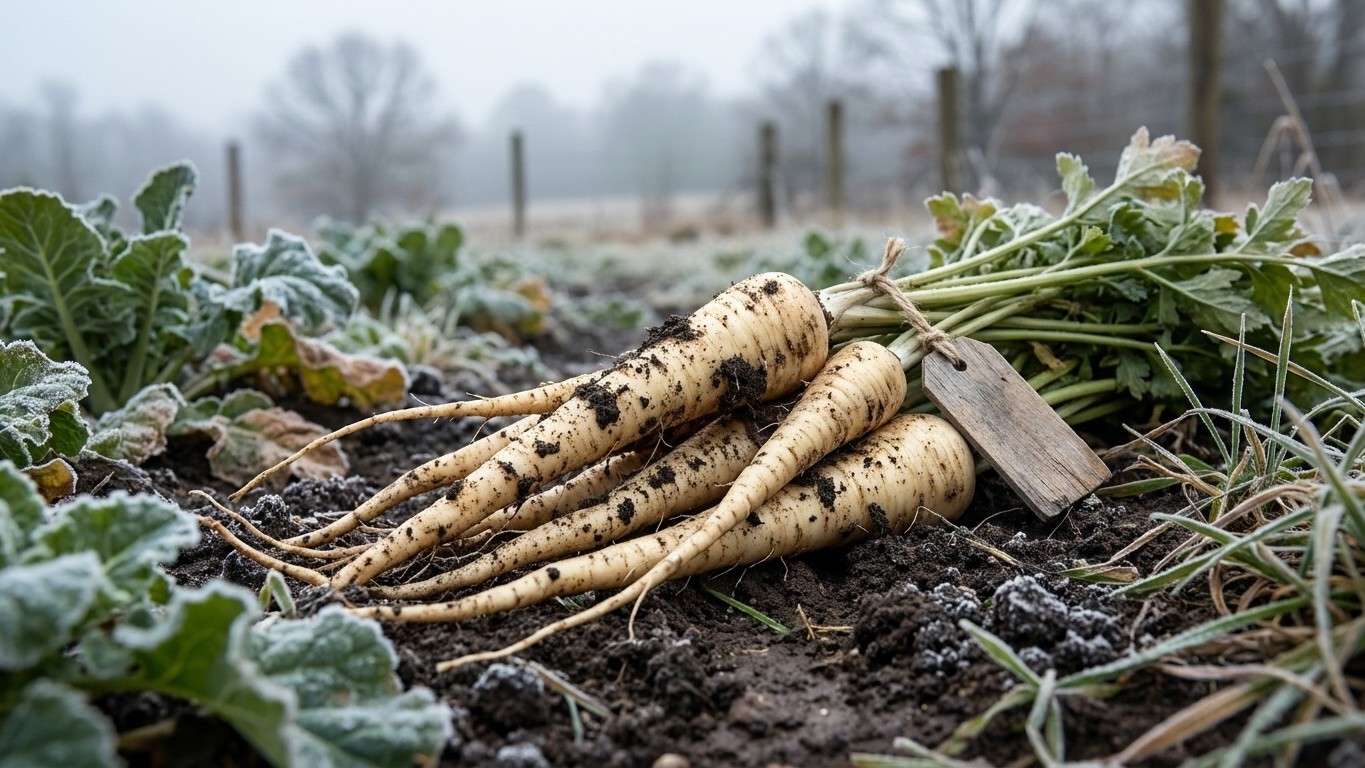

Yes, but only if you leave the roots in the ground long enough. Little Rock’s coldest month averages a nightly low of 30.9°F, and the region gets a real frost window stretching from early-to-mid November through mid-to-late March. That’s enough sustained chill to convert stored starch into sugar. The parsnip you dig on the first cold morning of fall will be bland. The one you leave until after several more freezes will taste sweet.
The short answer
The number that matters here isn’t a hardiness zone. It’s the mean daily minimum temperature for the coldest month, which for the Little Rock reference station sits at 30.9°F, based on NOAA NCEI Climate Normals covering 1991 to 2020. That figure describes an average night, not a record cold snap or a monthly average that blends warm days into cold ones. A mean minimum that low means the coldest month isn’t producing one or two token freezes. It’s producing a run of nights that regularly dip below 32°F, night after night, week after week.
That distinction matters because sweetening a parsnip isn’t about surviving winter. It’s about repeated exposure to cold. Utah State University Extension is blunt about the mechanism: parsnips taste best after several weeks of cool, frosty weather, because that cold converts the starch stored in the root into sugar. A single overnight frost won’t do it. A mild winter that hovers just above freezing won’t do it either, no matter how technically “cold” the season feels to a gardener bundled up on the porch.
Central Arkansas clears that bar. The frost-prone window here runs from around November 7 to November 20 in the fall through March 12 to March 28 in the spring, according to the same NOAA NCEI dataset, drawn from 32°F freeze-probability records at station USW00013963. That’s four to four and a half months where sub-freezing nights are common, not rare. Layer the 30.9°F coldest-month average on top of that window, and you get a picture of a winter that delivers exactly the kind of sustained, repeated frost exposure parsnips need to convert their starch reserves.
So the plant will grow here. It will also sweeten here, provided it stays in the ground through a real stretch of that frost window rather than getting pulled at the first cold snap. The soil is a separate question, and Arkansas gardeners working heavier clay or rocky ground will need to address that before they ever get to the sweetening stage. But on the climate question alone, this territory answers yes.
Does the season fit?
Parsnips are sown directly in the garden bed, not started indoors and transplanted, and the clock for root maturity starts the day the seed goes into the soil. Utah State University Extension puts that maturity window at 100 to 120 days from seeding, with the sowing itself timed for 2 to 3 weeks before the last spring frost. Here’s how that math plays out against Arkansas’s frost calendar.
- Find the sowing window. The last spring frost in this territory falls between March 12 and March 28. Counting back 2 to 3 weeks puts the seeding date somewhere in late February to mid-March, depending on how the soil is behaving that particular spring.
- Account for slow germination. Parsnip seed is notoriously slow to sprout, taking 14 to 21 days just to germinate. A gardener who sows in late February and sees nothing by mid-March hasn’t failed. That’s normal, and digging up the row to re-sow at that point usually just wastes a second batch of seed.
- Add the maturity window. From that seeding date, the root needs another 100 to 120 days to reach full size. Starting from an early March sowing, that puts harvest-ready roots somewhere in mid-June to early July.
- Check against the fall frost date. The first fall frost here arrives between November 7 and November 20. That leaves months of open calendar between a mature root in early summer and the first frost of autumn, which is actually the point where the real strategy kicks in.
- Hold for sweetening, not harvest. Rather than pulling parsnips the moment they’re technically mature in summer, the better move is leaving them in the ground until after the first fall frost, then continuing to leave them through several more frosty weeks before digging. The growing season here is long enough to hit maturity with room to spare, and the fall-into-winter window is long enough to deliver the cold exposure that makes the crop worth growing in the first place.
Measured against the 100-to-120-day requirement, this territory’s frost-free stretch, running from the last spring frost in mid-to-late March to the first fall frost in early-to-mid November, comfortably covers seven months or more. The season here doesn’t just fit. It fits with enough slack that a late sowing or a slow germination won’t put the harvest at risk.
What goes wrong here
- Forked or split roots in heavy ground. Parsnips send down a single long taproot, and anything that blocks that path, compacted clay, buried rocks, or a hardpan layer a foot down, forces the root to split around the obstruction. Arkansas gardens sitting on Delta clay or rocky Ozark soil are prone to this. Utah State University Extension’s remedy is to double dig heavy soil before sowing, breaking up the profile well below where the root will travel, or to work in enough organic matter to loosen the texture beforehand.
- Forked roots from overwatering. This is a separate cause from soil texture, and it’s easy to conflate the two. Excess water, especially inconsistent watering that swings between soggy and dry, can also cause the root to fork or grow stubby side roots even in decent soil. The fix is steady, moderate moisture rather than heavy watering followed by dry stretches.
- Pulling the crop before the cold has done its work. A gardener who digs parsnips right after the first light frost in November is harvesting the same starchy, bland root a mild-winter climate would produce. The remedy here isn’t a soil fix or a watering schedule. It’s patience: leave the roots in the ground through several more weeks of the frost window before digging, so the starch has time to convert to sugar.
- A season that runs out before maturity. This is less of a risk in central Arkansas given the length of the frost-free window, but a very late sowing, pushed well past the recommended 2-to-3-week-before-last-frost timing, can still leave a root undersized when fall cold arrives. Sowing on schedule, and accounting for the 14-to-21-day germination lag before counting the 100-to-120-day maturity clock, keeps the timeline on track.
Common questions
Can parsnips survive being left in Arkansas soil all winter?
The published figures here describe frost timing and the coldest month’s average minimum, not soil freeze depth, so a specific answer to how deep the ground freezes isn’t available in this data. What the numbers do show is a coldest-month mean minimum of 30.9°F, which points to frequent but not extreme cold, the kind of winter many gardeners in this region use to leave root vegetables in place for extended cold exposure.
Do I need to wait for a specific number of frosts before harvesting?
Utah State University Extension’s guidance is several weeks of frosty weather, not a fixed frost count. Given that this territory’s frost window runs from early-to-mid November through mid-to-late March, there’s ample room to let several weeks pass after the first fall frost before digging.
Does the 30.9°F figure mean every night in winter drops below freezing?
No. It’s a mean daily minimum for the coldest month, meaning it’s the average of many nights, some colder and some warmer. It signals that sub-freezing nights are common during that month, not that every single night falls below 32°F.
Should I sow parsnip seed differently because of Arkansas’s clay soil?
Utah State University Extension recommends deep, sandy soil for parsnips and advises double digging heavy ground before sowing. Given how common heavy clay is across parts of Arkansas, that soil preparation step is worth doing before seed goes in the ground, separate from any timing decisions tied to frost dates.