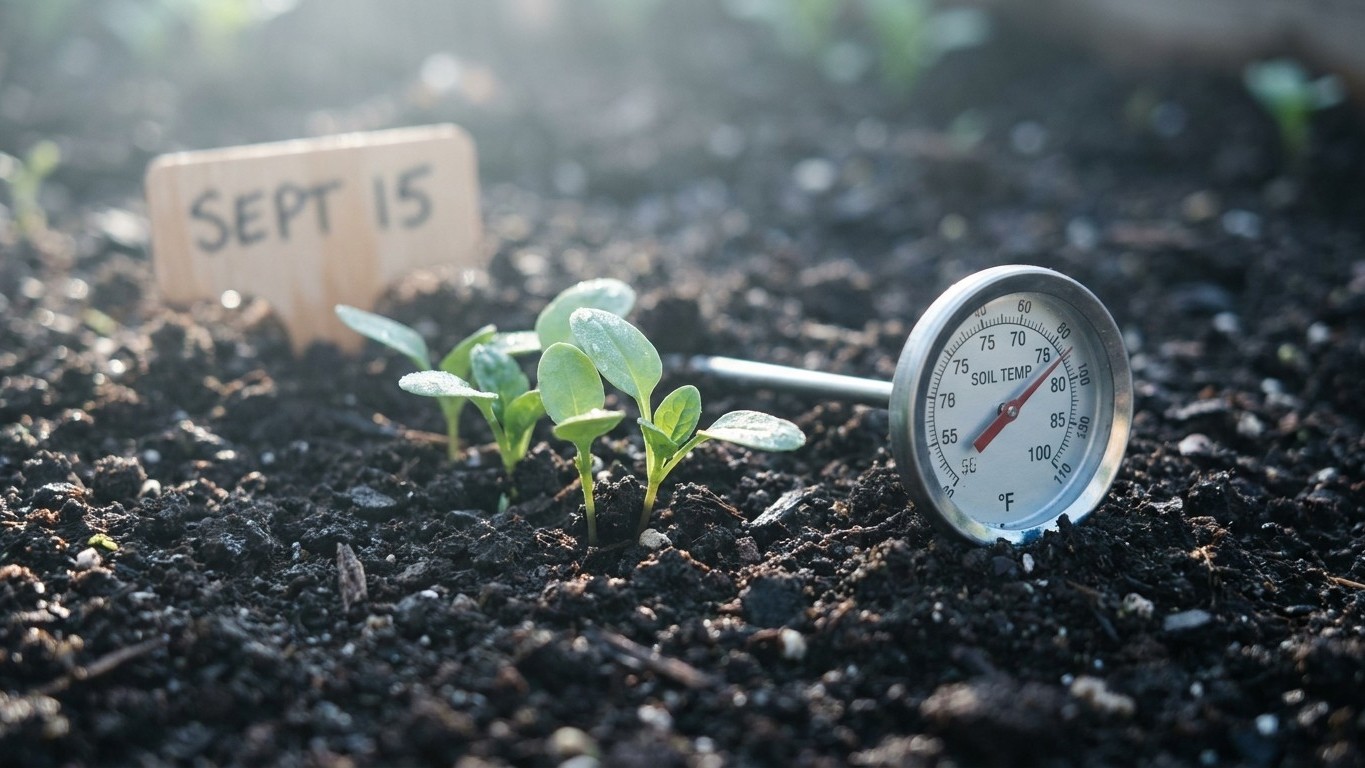

Autumn spinach in Arkansas goes into the ground once the soil cools below that 80°F germination ceiling, usually by mid-to-late September, timed so the plants get 50 to 75 days of growth before the first fall frost lands sometime between November 7 and November 20. Sow too early and the seed simply won’t sprout in hot dirt.
The short answer
Arkansas sits at a latitude where the longest day of the year brings 14 hours and 20 minutes of daylight. That number matters more than most gardeners realize, because spinach doesn’t wait for a calendar date to bolt. It bolts when days get long and temperatures climb, and 14 hours and 20 minutes is plenty long enough to flip that switch. A mild summer wouldn’t change this. Even if Arkansas summers stayed cool, which they emphatically do not, the day length alone would still push spinach toward flowering by early summer.
Two limits, not one
But day length is only half the story here. Arkansas also racks up an average of 69.2 days a year at 90°F or hotter, based on climate normals from the reference station near Little Rock. That’s a serious heat load, and it does two things to spinach. First, air and soil temperatures above 75°F stop the plant from growing well and start making the leaves bitter. Second, once soil temperatures climb past 80°F, germination itself drops off, which is a separate problem that shows up specifically in late summer when you’re trying to start the fall crop.
So the honest answer is that spinach in Arkansas is squeezed from both directions. Long days end the spring crop no matter how the weather behaves, and heat, both in the air and in the soil, narrows the windows on either side of summer. There isn’t one single obstacle to plan around. There are two, and they act at different points in the year, which is exactly why the spring sowing calendar and the fall sowing calendar look nothing alike.
What this means practically: gardeners in Arkansas should treat spinach as a two-season crop with hard stops on both ends, not a plant-it-and-forget-it green that tolerates a wide sowing range. Spring sowing has to happen early enough to finish before the days get too long and the heat too intense. Fall sowing has to happen late enough that the soil has actually cooled, but early enough that the plants have time to size up before frost shuts things down. Missing either target by a couple of weeks either wastes seed on poor germination or hands you a plant that bolts before it’s worth harvesting.
How long the spring window really is
Working out the spring window means starting from the frost data and moving forward, then checking where heat and day length cut it short. Here’s how it plays out for Arkansas gardeners:
- The last spring frost, at the 32°F threshold measured in the 30-70% probability band, falls between March 12 and March 28 at the reference station used for these normals.
- Spinach seed goes in the ground 2 to 3 weeks before that last frost date, which places the sowing window somewhere between roughly the third week of February and mid-March, depending on how early or late frost lands that particular year.
- From there, the plant grows well only as long as temperatures stay under that 75°F ceiling. Arkansas springs warm up fast, and with 69.2 days a year already crossing 90°F, the climb past 75°F on a sustained basis tends to arrive well before summer officially starts.
- Layered on top of the heat is the day length problem. As the calendar moves toward the June solstice and daylight stretches toward 14 hours and 20 minutes, spinach is pushed toward bolting regardless of how warm or cool the air happens to be that particular spring.
- Put together, sowing in late February to mid-March and losing good growth by late April to early May leaves a usable spring window of roughly eight to ten weeks, which is enough for baby leaves and modest harvests but not much more before the plants turn to seed stalks.
That’s a tighter window than warm-region gardeners often expect from a crop marketed as cool-season. Arkansas doesn’t get a long, gentle spring the way northern states might; heat and length arrive close together and end the crop fast.
The autumn crop, and when the soil lets you sow
Autumn flips the problem. Instead of racing against lengthening days, the fall crop is stalled at the starting line by soil that’s still too warm to sprout seed reliably.
Warm soil delays germination
Utah State University Extension is specific on this point: spinach seed germination drops once soil temperatures climb above 80°F. In a state averaging 69.2 days a year at 90°F air temperature, soil at seed depth stays well above that threshold through most of August and often into early September. Sowing during that stretch means gambling on a poor stand, patchy rows, or seed that simply sits in the ground without sprouting. The practical fix isn’t a calendar date so much as watching the soil cool, which in most Arkansas gardens tends to happen as September settles in and nighttime temperatures start dropping consistently.
The frost that ends the season
On the other end, the first fall frost arrives between November 7 and November 20, based on the same 32°F freeze-probability data used for spring. Utah State University Extension’s guidance for fall spinach is to sow 50 to 75 days before the date you want to harvest, not before a specific calendar date. Counting backward from that November frost window gives a sowing range of roughly late August through early October, depending on how close to frost you’re comfortable harvesting.
Overlap those two constraints, warm soil on one side and the 50-to-75-day countdown from frost on the other, and the realistic sowing window for Arkansas lands in mid-to-late September. Sow around the middle of the month and the 50-to-75-day math puts harvest right in that early-to-mid-November frost band, which is close to ideal: the plants get enough cool weather to size up and sweeten, and frost, when it finally arrives, tends to improve the flavor of the remaining leaves rather than end the crop outright.
Four varieties come up often in university guidance on fall spinach: Bloomsdale, Melody, Teton, and Olympia. The source material for this article doesn’t publish days-to-maturity or performance data for any of them, so no specific claims about speed or bolt-resistance can be made here. Choosing among them means checking seed packet information directly, since that detail simply isn’t part of the published extension data this article draws on.
Common questions
Can I sow spinach in August in Arkansas?
Not reliably. Soil temperatures in August routinely sit above the 80°F germination ceiling, given that the state averages 69.2 days a year at 90°F or hotter. Waiting until soil starts cooling, typically in mid-to-late September, gives seed a much better chance of sprouting evenly.
Why does my spring spinach bolt so fast in Arkansas?
Two things are working against it at once. Day length climbs toward 14 hours and 20 minutes by the June solstice, which triggers flowering on its own, and Arkansas’s heat, reflected in that 69.2-day average above 90°F, pushes temperatures past the 75°F growth ceiling early in the season. Either factor alone would shorten the crop; together they end it fast.
Does frost kill fall spinach in Arkansas?
The first fall frost, landing between November 7 and November 20 based on NOAA NCEI climate normals, doesn’t need to end the crop. Spinach tolerates cold well below freezing; the frost date matters mainly as the backward-counting point for the 50-to-75-day sowing rule, not as a hard kill date for already-established plants.
Is there a difference between spring and fall sowing rules for spinach?
Yes, and they’re based on different limits. Spring sowing counts backward from the last frost, 2 to 3 weeks ahead of it, and is cut short by rising heat and lengthening days. Fall sowing isn’t tied to frost at the start at all; it waits for the soil to cool below 80°F, then counts forward 50 to 75 days to land near the first fall frost.