
Michigan gardeners get one real shot at pumpkin timing, and for most of the Lower Peninsula that means sowing seed sometime between late May and the first week of June. Sow into soil that hasn’t warmed enough and the seed rots before it sprouts. Sow too late and the vine runs out of season before the fruit can color up for Halloween. The exact date shifts with your local frost pattern and how fast your particular patch of ground warms, but this window gives a Michigan-grown pumpkin enough time to flower, set fruit, and harden its skin before the first fall frost shows up.
The short answer
Michigan’s first fall frost lands somewhere between October 6 and October 21, depending on where you garden within zone 6a, according to MSU Extension’s Michigan Garden Calendar. That ten-day spread is the anchor for every pumpkin decision that follows, because a pumpkin’s internal clock doesn’t start when the seed goes into the ground. It starts when the flower opens.
Utah State University Extension puts pumpkin maturity at 45 to 55 days from flowering, not from sowing or transplanting. Count backward from the earlier edge of Michigan’s frost window, October 6, and 55 days lands on August 12. Count backward from the later edge, October 21, and 45 days lands on September 6. So the last flowers with any real chance of finishing into a ripe, orange pumpkin need to open somewhere between mid-August and the first week of September. That’s a wide spread, and it’s wide on purpose: a grower near the warmer end of zone 6a, closer to the October 21 frost date, has nearly a month more breathing room than a grower whose frost typically shows up October 6.
This is the calculation that gets skipped most often, and it’s why late-planted pumpkins turn up green and rock-hard on the vine every October. A vine that starts blooming in late August still needs those full 45 to 55 days of open, cooperative weather to finish a fruit, and Michigan’s fall doesn’t always deliver that. Cool nights slow ripening well before frost becomes a direct threat, which is why the truly safe flowering window sits closer to the early side of that mid-August-to-September spread rather than the late side.
None of this replaces a seed packet’s own days-to-maturity figure, since that number usually counts from sowing to first flower, a separate stretch of time that varies by variety and isn’t part of the 45-to-55-day flowering window itself. What the frost calculation gives you is the finish line and the deadline for crossing the halfway point. Sowing, covered next, has to happen early enough that the vine reaches flowering on schedule, but not so early that cold, wet soil kills the seed before it gets the chance.
When to sow here
- Start with the last spring frost, not the calendar date you remember from other years. MSU Extension’s frost-free dates put it around April 30 in the Detroit area, and early to mid-May across most of the rest of the Lower Peninsula. That date tells you when the air is reliably safe. It tells you nothing about the soil.
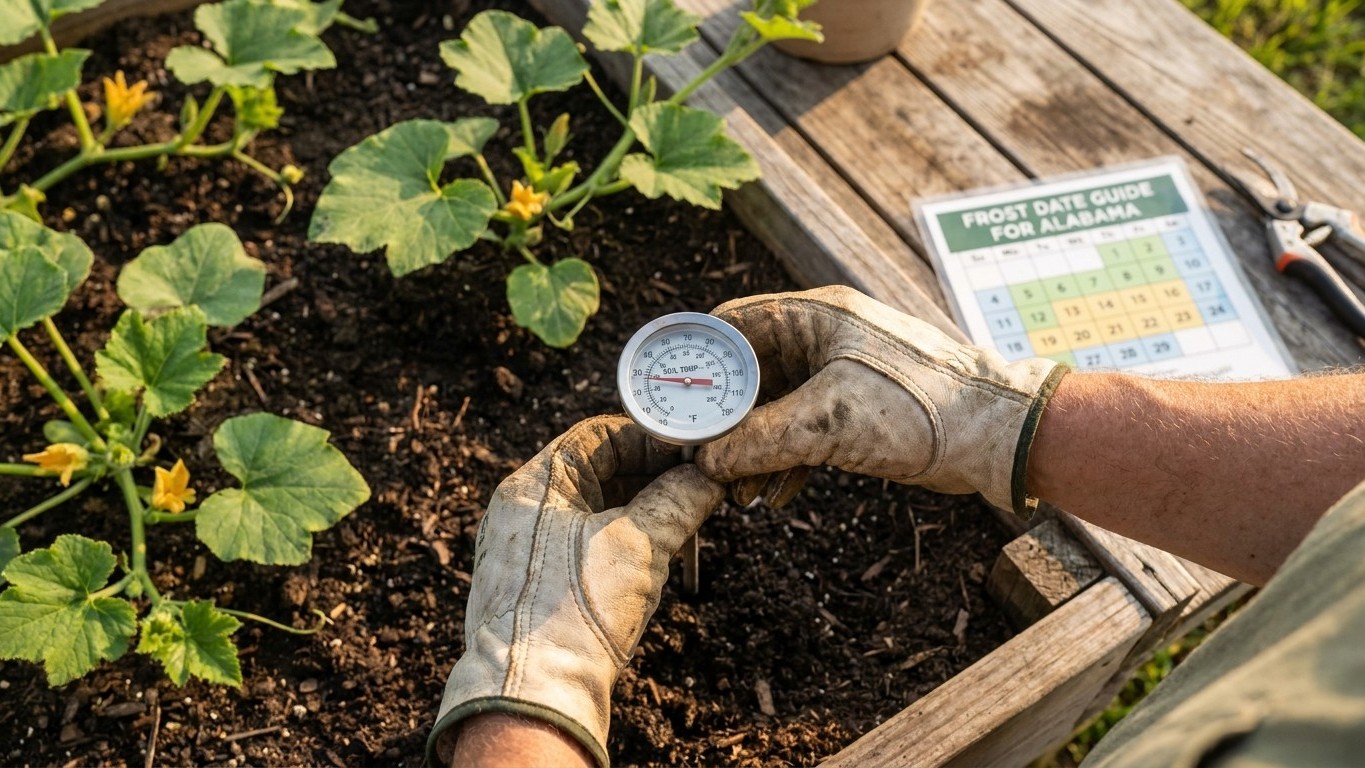
- Wait several more weeks for the soil itself to catch up. Pumpkin seed needs soil at 65 degrees Fahrenheit to germinate without simply rotting in the ground, and bare Michigan soil lags several weeks behind the air above it. Add roughly three to four weeks onto your local last-frost date before soil holds steady at that mark. For a garden with an early-May last frost, that arithmetic pushes reliable 65-degree soil into late May, and sometimes into the first days of June in cooler, shaded, or heavier-clay spots.
- Use row covers if you want to move earlier. A row cover trapped over freshly worked soil can buy you about two weeks against bare ground, warming the top few inches faster than open air alone would. That’s the difference between sowing in mid-May under cover and waiting until early June without it.
- Work backward from the flowering deadline, not just forward from the last frost. Whatever sowing date you land on, it needs to leave enough time for the vine to reach its first bloom well before the mid-August cutoff established in the frost calculation above. A late-June sowing leaves very little room for error if your local frost tends to arrive on the early side of the October 6 to October 21 window.
- Adjust for where you sit inside zone 6a. Gardeners closer to the October 21 end of the frost window have more slack to sow a bit later, or to recover from a rough spring, than gardeners whose frost typically lands closer to October 6.
What goes wrong here
- A late flower that never colors. Vines sown too late, or that stall out from stress, don’t put out their first blooms until late August or early September. With only 45 to 55 days left before frost, the fruit sets but stays green and hard-skinned. The remedy is tracking your own bloom dates through the season. If a vine hasn’t flowered by the first week of August, that fruit is already racing a short clock, and it’s worth deciding early whether to keep it or redirect the plant’s energy elsewhere.
- A fruit caught by frost before it’s done. Even a fruit that colored up nicely can still be short of full maturity when the first frost of the October 6 to October 21 window arrives. Frost damages the rind and shortens how long the pumpkin will keep afterward. Utah State University Extension is specific that pumpkins should be harvested with the stem attached and moved somewhere they will not freeze, though the source gives no exact storage temperature or keeping time beyond that guidance. The practical fix is watching the forecast closely in early October and cutting fruit a little early rather than losing it to a hard frost overnight.
- A vine that dies back before the skin hardens. Foliage collapse from disease or pest pressure can strip a vine of leaves weeks before the fruit’s rind has toughened enough for storage, leaving pumpkins exposed to sun scald and rapid rot. Squash bugs and cucumber beetles are common culprits behind that kind of early vine failure in Michigan gardens; both pests have their own dedicated pages on this site covering identification and management in more detail. The remedy here is monitoring foliage health from midsummer on, rather than waiting until the vine is already down to notice a problem.
Common questions
Can I still sow pumpkins in June in Michigan?
Yes, in many years, but the margin shrinks fast. A June sowing needs the vine to reach flowering by mid-to-late July for the fruit to have any realistic shot at finishing before the October 6 to October 21 frost window, working backward from the 45-to-55-day flowering-to-harvest figure. Gardeners closer to the later end of that frost window have more room to make a June sowing work than those whose frost typically lands in early October.
What happens if I sow before the soil reaches 65 degrees?
Seed sitting in cold, damp soil is prone to rotting before it ever germinates, which is why 65 degrees Fahrenheit soil temperature matters more here than the last frost date. A garden can be well past its last frost and still have soil too cold for pumpkin seed, particularly in shaded beds or heavier clay ground that warms more slowly than sandy or loose soil.
Do all pumpkin varieties in Michigan need the same 45 to 55 days from flowering?
That 45-to-55-day window comes from Utah State University Extension as a general figure for pumpkin maturity after flowering, and it’s the number to work backward from when planning your Michigan sowing date. Different varieties can still vary in how long they take to reach that first flower after sowing, which is a separate stretch of time not covered by the flowering-to-harvest figure itself.
How do I know if a specific pumpkin will Ripen Before Frost?
Note the date each fruit’s flower opened, then count forward 45 to 55 days and compare that to your local frost window of October 6 to October 21. A flower that opened in early August has clear room to finish. A flower that opened after the first week of September is running against the earliest edge of that frost window, and there’s no way around checking the calendar directly rather than guessing from the fruit’s appearance alone.