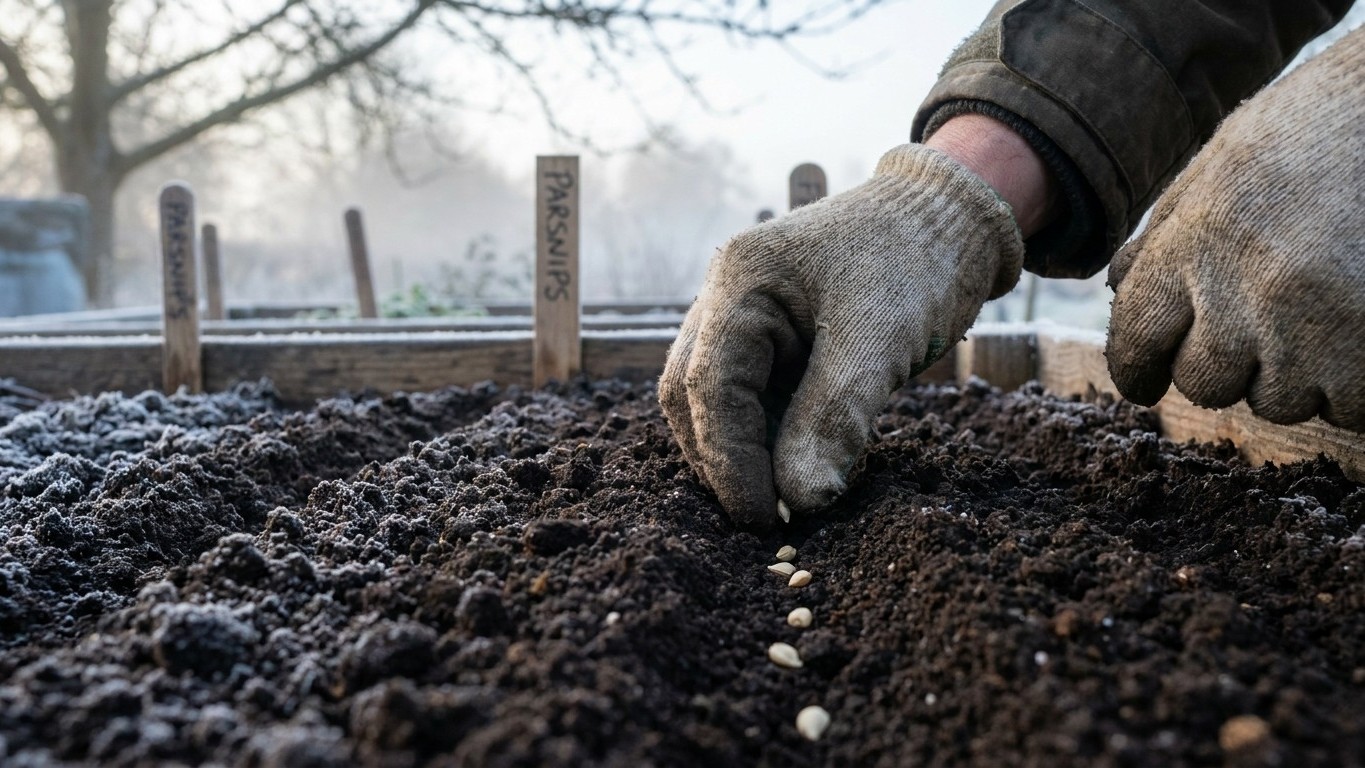

Sow parsnip seed directly in the garden bed 2 to 3 weeks before the last spring frost, which lands between April 17 and April 30 in the Twin Cities. That puts most southern Minnesota gardens in the ground from late March through mid-April, with northern growers waiting closer to the back end of that window, or later. Germination is slow, 14 to 21 days, so patience matters before anything green shows above the soil.
The short answer
Every parsnip question in a cold state comes down to one thing: does the ground here spend real weeks below freezing, or does it just flirt with frost and move on? In Minnesota, that question answers itself. The mean minimum temperature of the coldest month, measured at the Minneapolis reference station, sits at 8.8°F. That’s not a light frost brushing the leaves once and disappearing. That’s weeks on end where the thermometer regularly drops into single digits overnight.
For parsnips, that number is good news. The crop’s flavor depends on exposure to frost, not on how mild or comfortable a hardiness zone happens to be. Cold weather converts the starch stored in the root into sugar, and the longer the cold spell, the sweeter the harvest tends to taste. A gardener in a state where winter barely dips below freezing can grow a perfectly healthy parsnip that never develops that sought-after sweetness. Minnesota doesn’t run into that problem. With a coldest-month minimum under 9°F, frost exposure is not the limiting factor here.
So the timing question isn’t whether Minnesota gets cold enough. It’s whether the season gives the crop enough time to reach size before that cold arrives, and whether roots can stay in the ground afterward to soak up several frosty weeks before the soil locks up for good. The coldest-month figure above settles the sweetening side of the equation. The season-length question, covered next, is the one that actually decides success or failure here.
Worth noting too: the Twin Cities represent the mild south of the state. Northern Minnesota runs its frost dates 2 to 3 weeks tighter on both ends, which shifts the sowing calendar earlier in spring and the harvest deadline earlier in fall, without changing the basic fact that cold exposure is abundant statewide.
Does the season fit?
Run the numbers step by step and the picture gets clear fast.
- Start with the frost window. NOAA’s 1991-2020 climate normals put the last spring frost in the Twin Cities between April 17 and April 30. Northern Minnesota runs 2 to 3 weeks tighter, so growers there should expect their own last frost pushing into early or mid May.
- Back into the sowing window. Parsnip seed goes into the ground 2 to 3 weeks before that last frost date. For southern Minnesota, that lands roughly between March 27 and April 16. Northern gardens push their sowing into late April or even early May to match their later frost date.
- Budget for slow germination. Parsnip seed takes 14 to 21 days to sprout. Bare-looking soil at the two-week mark is normal, not a failed sowing, so resist the urge to till it under and start over.
- Count 100 to 120 days to maturity. From the seeding date, not from germination, parsnips need 100 to 120 days to size up. For a southern Minnesota sowing in late March to mid-April, that lands roots at mature size somewhere between early July and mid-August.
- Check where the first fall frost falls. The first fall frost across the reference station arrives between October 11 and October 23, again 2 to 3 weeks earlier in the northern part of the state.
- Look at the gap between the two. Between a root reaching mature size in midsummer and the first fall frost arriving in October sits two to three months of open growing time. That’s room for roots to keep sizing up, then sit in cold ground catching frost after frost before harvest.
Do that arithmetic honestly and southern Minnesota’s season fits comfortably, with weeks to spare between maturity and the first hard freeze. The far north compresses both ends of the calendar, but the 100 to 120 day range is generous enough that sowing at the early edge of the window still leaves a workable margin most years.
What goes wrong here
The climate itself isn’t the obstacle in Minnesota. What trips growers up is soil, timing, and what happens to the ground once real cold sets in.
- Forked roots in heavy or stony ground. Minnesota gardens often sit on clay-heavy or rocky soil, and parsnip taproots split the moment they hit resistance underground. Utah State University Extension recommends deep sandy soil for parsnips, and where the native ground is heavy, double digging the bed before sowing so roots can push straight down without hitting an obstruction.
- Forked roots from overwatering. This is a separate cause from soil texture, not the same problem in disguise. Waterlogged beds encourage roots to branch rather than grow straight. Keep moisture even and consistent rather than soaking the bed heavily and letting it dry out between waterings.
- A season that runs out before roots size up. This shows up most in northern Minnesota, where the compressed frost window leaves less runway. Sowing at the earliest safe edge of the window, and using fresh seed since parsnip seed loses viability fast, helps close that gap.
- Ground freezing too hard to dig before harvest. Minnesota’s deep winter cold isn’t a sweetening problem here, it’s a digging problem. Once several hard frosts have passed and the roots have sweetened, a heavy layer of mulch over the row keeps the soil workable a few extra weeks, buying time to get the harvest out before the ground locks solid.
Common questions
Can parsnip seed be started indoors and transplanted in Minnesota?
No. Parsnips are sown in place because the long taproot doesn’t tolerate transplanting well. The 100 to 120 day count runs from the seeding date directly in the garden bed, not from an indoor start.
Why hasn’t my parsnip seed sprouted after a week in Minnesota’s cool spring soil?
That’s normal. Germination takes 14 to 21 days even under good conditions, and cool spring soil can push that toward the longer end. Digging up the row and re-sowing before three weeks have passed usually just wastes a second batch of seed.
Should parsnips be left in the ground over a Minnesota winter?
The crop benefits from several weeks of frost exposure before harvest, since that’s what converts starch to sugar. Given how hard the ground freezes here, most gardeners harvest once the sweetening frosts have passed but before the soil turns unworkable, rather than leaving roots in through the full winter.
Does soil type really matter that much for parsnips in Minnesota?
Yes. Utah State University Extension points to deep sandy soil as the ideal, with heavy soil needing to be double dug first. A Minnesota garden’s native clay or rocky ground is a starting point to work with, not a diagnosis that rules parsnips out, but it does mean extra bed preparation before seed goes in.