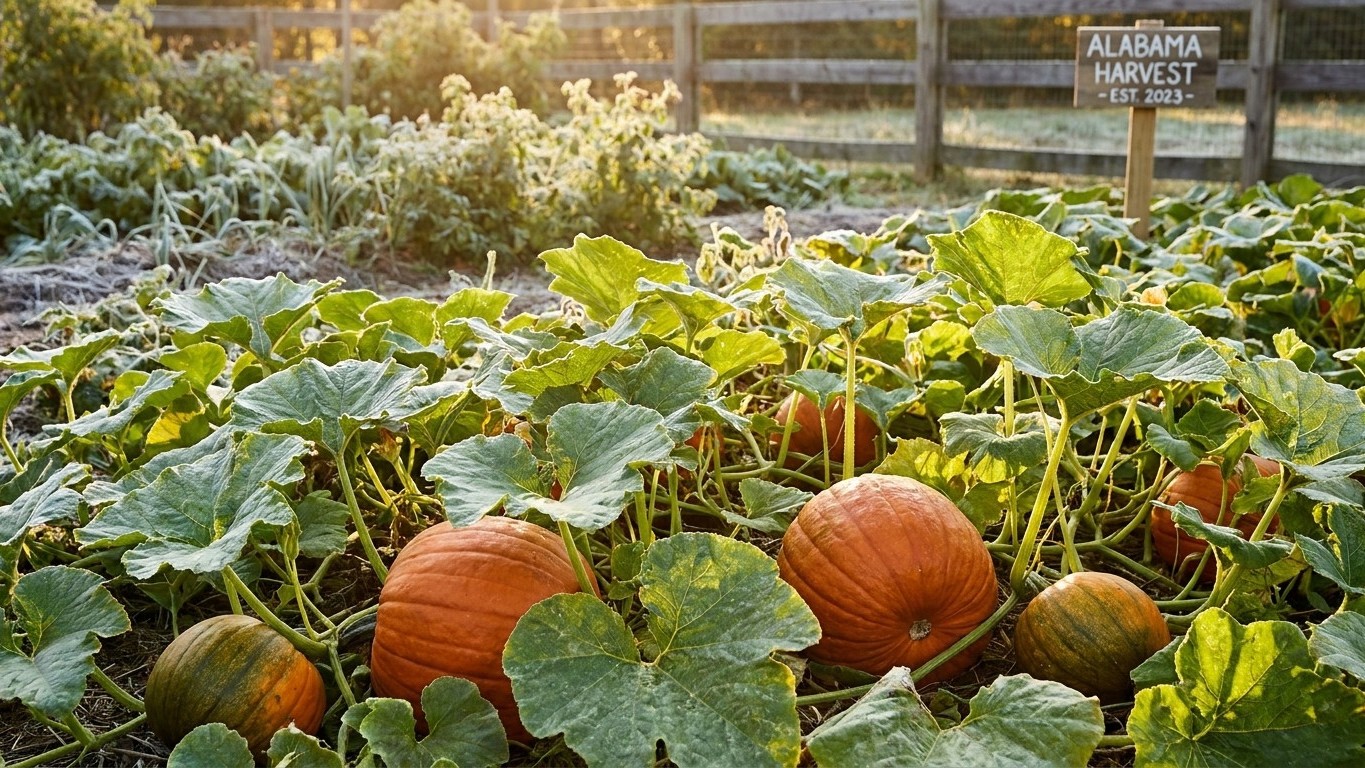

Yes, but only inside a specific window. Minnesota’s first fall frost lands somewhere between October 11 and October 23, and a pumpkin needs 45 to 55 days after its flower opens to reach a ripe, hard-skinned finish. That means the flower itself has to open by roughly mid-August to the first week of September, depending on your part of the state. Miss that flowering window and the countdown never really gets going.
The short answer
Here’s the arithmetic that actually decides the outcome, and it starts at the flower, not the seed packet. Utah State University Extension puts pumpkin maturation at 45 to 55 days after flowering. NOAA’s 1991-2020 climate normals put the first fall frost for this station at October 11 to October 23. Subtract the maturation window from the frost window and you get the latest safe flowering date: somewhere between mid-August and the first days of September. A flower that opens after that point is racing a clock it’s already losing.
Notice what this calculation does not depend on: the date you planted the seed. Sowing date matters only because it determines when the plant flowers, and that gap varies by variety, weather, and how the plant was started. Two gardeners who sowed on the same day can end up with flowers three weeks apart if one plant sat in cool soil and sulked while the other got a warm, even start. That’s why the honest answer to “will my pumpkin ripen” is never a single date on a calendar. It’s a window, and the window narrows the farther north you garden.
Why location inside Minnesota changes the math
The frost dates above describe the milder southern part of the state, the Twin Cities region. Northern Minnesota runs two to three weeks tighter on both ends: spring frost lingers longer, and fall frost arrives earlier. That squeeze eats into the season from both directions at once, which is a harsher trade than losing the same two weeks off just one end.
| Region | Last spring frost | First fall frost | Season pressure |
|---|---|---|---|
| Southern Minnesota (Twin Cities) | April 17 to April 30 | October 11 to October 23 | Baseline window |
| Northern Minnesota | Roughly 2-3 weeks later | Roughly 2-3 weeks earlier | Tighter on both ends |
For a northern garden, that latest-safe-flowering date can slide back by close to a month compared with the Twin Cities, which is why the same pumpkin variety can behave completely differently depending on which side of the state it’s grown on.
When to sow here
The mistake most gardeners make is treating the last spring frost date as the green light to plant. It isn’t. Pumpkin seed wants soil at 65°F, and soil warms far slower than air. In this climate, that threshold typically isn’t reached until well after the April 17-30 frost window closes, often not until late May stretches into early June across much of the state. Sowing into cold, wet soil before it hits that mark doesn’t get you a head start; it usually gets you rotted seed and a re-planting delay that costs more time than it saves.
- Let the last frost pass first. April 17 to April 30 is the earliest boundary, and it varies by exactly where in Minnesota you garden.
- Wait for the soil, not the air. 65°F soil generally arrives weeks after that frost date clears, commonly landing in the late May to early June stretch for most of the state.
- Use plastic mulch or row covers to buy time. Black plastic mulch or a floating row cover over the bed can warm the soil faster, effectively buying about two weeks and letting you sow earlier without gambling on cold-soil rot.
- Verify with a soil thermometer. Push it to seed depth rather than guessing from the calendar; soil temperature can differ by several degrees from one bed to the next depending on sun exposure and mulch.
- Work forward from sowing to flowering, then check against frost. Once seedlings are up, track when flowers actually open, then apply the 45 to 55 day rule against the October 11-23 frost window to see if there’s enough season left.
That last step is the one gardeners skip, and it’s the one that actually answers the question in this article’s title. Sowing date is a means to an end; flowering date is what the frost clock cares about.
What goes wrong here
- A late flower that never colors up. This happens when sowing was delayed (often because the gardener waited for last frost instead of 65°F soil, then waited again for warm-enough soil to actually arrive) and the plant doesn’t flower until early September or later. With 45 to 55 days needed and frost arriving October 11-23, there’s no runway left. The remedy is sowing as early as soil temperature honestly allows, using row covers to push that date up by roughly two weeks rather than waiting on bare soil alone.
- A fruit caught green by frost. A pumpkin that flowered on time but is still a few days short of full color when the first frost hits in the October 11-23 window can be damaged before it’s worth harvesting. Watch the forecast closely once you’re inside that date range, and harvest with the stem attached the moment a hard freeze is forecast, even if the color isn’t fully finished.
- A vine that dies back before the skin hardens. Disease or pest pressure can shut a vine down weeks before frost is even a factor, cutting the maturation clock short regardless of how well the flowering date was timed. Squash bugs and cucumber beetles are common culprits in Minnesota pumpkin patches; this site’s squash bug page and cucumber beetle page cover identification and control specific to this state.
- A northern-Minnesota planting timed for the southern frost dates. A schedule built around the Twin Cities’ October 11-23 frost and April 17-30 last frost will run out of season up north, where both dates shift two to three weeks against the gardener. The fix is building in that extra margin from the start rather than discovering it in October.
Common questions
Can I still Sow Pumpkins in June in Minnesota?
It depends entirely on the variety’s flowering habit and how far north you are. Run the math backward from the October 11-23 frost window using the 45 to 55 day post-flowering rule; if a June sowing still leaves room for the plant to flower by early September, it can work, especially in the milder southern part of the state.
Does soil temperature or air temperature matter more for sowing?
Soil temperature is what the seed actually experiences. The 65°F soil threshold, not the last spring frost date, is the real green light, and it typically arrives weeks after frost clears.
Should I cover my pumpkins the night before the first fall frost?
Utah State University Extension’s guidance is to harvest with the stem attached before frost and store the fruit where it will not freeze. No storage temperature or keeping time is published beyond that, so treat “before frost” as the operative deadline rather than trying to shield fruit still on the vine.
Why did my pumpkin vine stop producing fruit in late summer?
Often it’s a timing problem, not a disease problem: flowers that open too close to the frost window simply won’t have the 45 to 55 days needed to mature, so the plant may keep flowering while nothing ripens. Check pest pressure too, since a vine weakened early by squash bugs or cucumber beetles can lose the energy to finish fruit it already set.