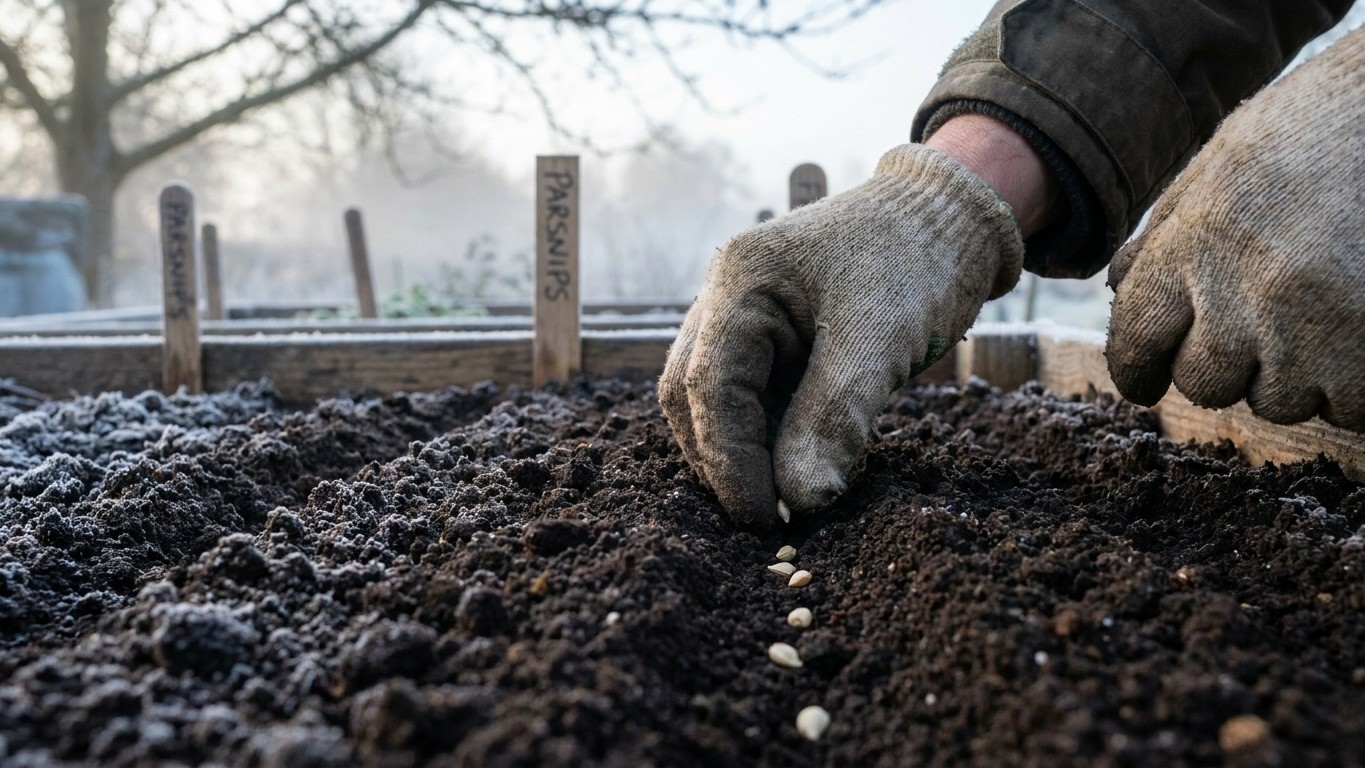

Nevada’s answer depends entirely on where you garden. In the low desert around Las Vegas, sow in fall or late winter for a mild-season crop that grows well but may never truly sweeten. At elevation, in Reno, Carson City, and rural valleys, the classic spring sowing after the last frost works, and the colder, longer winter gives the crop the frost exposure it needs to convert starch to sugar.
The short answer
Does this territory deliver several frosty weeks? For Las Vegas and the low desert basins, not reliably. The reference station data for Las Vegas puts the mean daily minimum of the coldest month at 39.6°F. That’s a mild number. It means a typical winter night in the coldest stretch of the year dips into the high 30s on average, not the sustained sub-freezing cold a parsnip root wants sitting in the ground for weeks on end. A root grown and left in that kind of winter will size up fine, form a long, clean taproot in loose soil, and be perfectly edible. What it likely won’t do is develop the deep sweetness parsnips are grown for, because that sweetness is triggered specifically by extended exposure to frost, not by a mild dip below 40°F here and there.
This is the point where hardiness zone talk leads people astray. A zone number describes whether a plant survives winter in a given place. It says nothing about whether a root vegetable sitting in cold soil gets enough sustained frost to turn starch into sugar. Those are two different questions, and in low-desert Nevada they pull in opposite directions: the zone is comfortable enough that plants and roots survive easily, but comfortable is exactly the problem when what you want is discomfort, several straight weeks of real cold working on that root underground.
Move up in elevation and the picture flips. Reno, Carson City, and the higher rural valleys across the state see winters that are colder and longer than anything the Las Vegas reference figure suggests. Sustained hard frost is common, and multiple weeks of it are the norm rather than the exception. A parsnip crop timed to mature going into that kind of winter has a real shot at the sweetness gardeners are after. The tradeoff is a shorter, more classic growing season to work around on the front end, which is the subject of the next section.
Because Nevada spans thousands of feet of elevation change over fairly short distances, there’s no single “Nevada answer” here. A gardener in Clark County and a gardener in Washoe County are effectively working with two different climates under one state name. The mild-winter reference figure above applies to the low desert specifically. It should not be read as describing conditions at elevation, where winter behaves very differently.
Does the season fit?
Parsnips are sown directly in place, not started indoors and transplanted, and the clock that matters starts the day seed goes into the ground. Two things stretch that clock further than most vegetables: a slow germination of 14 to 21 days before seedlings even break the surface, and a long 100 to 120 days from that seeding to a mature root. Add it up and a parsnip crop occupies a garden bed for the better part of four months before it’s ready, and that’s before counting any extra weeks left in the ground for frost sweetening.
Here’s how that arithmetic plays out against Nevada’s frost calendar:
- Sow seed 2 to 3 weeks before your local last spring frost date. Note the word local: the state’s frost timing swings by months between the low desert and higher elevations, so this date has to come from your own area, not a statewide average.
- Expect nothing visible above ground for 14 to 21 days. This is normal for parsnips and one of the most common reasons gardeners give up and re-sow a bed that was actually fine, just slow.
- Count 100 to 120 days from the sowing date, not from germination, to estimate a maturity window.
- Compare that maturity window against your local first fall frost date. In higher, colder parts of the state, this comparison is the classic fit-check every root crop needs: does the growing season run long enough before hard cold shuts things down?
- In the low desert, the frost-free window itself is generous, too generous. The arithmetic on days-to-maturity fits easily. What’s tighter is whether enough consecutive frosty weeks exist afterward for the roots to sweeten before the ground warms back up.
- At elevation, plan the reverse check: sow early enough after the last frost that the crop reaches maturity with weeks to spare before the ground freezes solid, then leave roots in place through several hard frosts before harvest.
Because published frost-date figures for this state come from a single desert reference station and describe an urban-heat-island extreme, they aren’t a usable stand-in for Reno, Carson City, or rural elevation gardens, where frost arrives months earlier in fall and lingers months later in spring. The county extension office covering your area is the right source for a frost date you can actually plan a sowing around.
What goes wrong here
- Forked or split roots from heavy or stony ground. Parsnips want deep, loose soil to run a long taproot straight down. Nevada’s mineral, often compacted or rocky ground stops that root cold, and it forks around the obstruction instead. Double dig the bed to loosen and clear stones well below where the root will reach, or grow in a raised bed filled with a sandy, well-drained mix.
- Forked roots from overwatering. This is a separate cause from heavy soil and shows up even in decent ground. Inconsistent, heavy watering encourages the root to branch rather than run straight. Water evenly and moderately through the season rather than swinging between dry spells and soaking.
- A season that runs out before maturity. The combination of slow 14- to 21-day germination and a full 100 to 120 days to maturity leaves little slack in shorter, higher-elevation growing seasons. Sow at the earliest safe date after the local last frost, and treat any delay in sowing as a direct subtraction from harvest size.
- A winter too mild to sweeten. In the low desert, where the coldest month’s mean minimum sits well above true hard-freeze territory, roots can finish the growing season perfectly formed and still taste flat. There’s no substitute published here for actual sustained frost exposure; leaving roots in the ground through whatever cold snaps do arrive, and harvesting only after those, is the only lever available.
Common questions
What is the best time to sow parsnips in Nevada?
It depends on elevation. In the low desert, sowing timed 2 to 3 weeks before the local last frost fits an easy, mild-winter schedule. At elevation, that same 2-to-3-week-before-last-frost rule applies, but the frost dates themselves are considerably later in spring and earlier in fall, so check with a local county extension office rather than using a low-desert date.
Can parsnips grow well around Las Vegas?
They can grow well there, forming clean, well-sized roots in the region’s mild winters. What’s less certain is sweetness, since that trait depends on several consecutive weeks of real frost, and the area’s coldest month runs mild on average rather than delivering sustained hard freezes.
Why haven’t my parsnip seeds come up yet?
Germination normally takes 14 to 21 days, considerably slower than most garden vegetables. A bare-looking bed at the two-week mark is often still on schedule, not a failed sowing.
Do parsnips need special soil preparation in Nevada?
Deep, loose, sandy soil is the goal, since it’s what lets the taproot run straight instead of forking. Given the state’s tendency toward heavy or stony ground in many areas, double digging the bed before sowing is a practical starting step, adjusted based on what your particular plot actually needs.