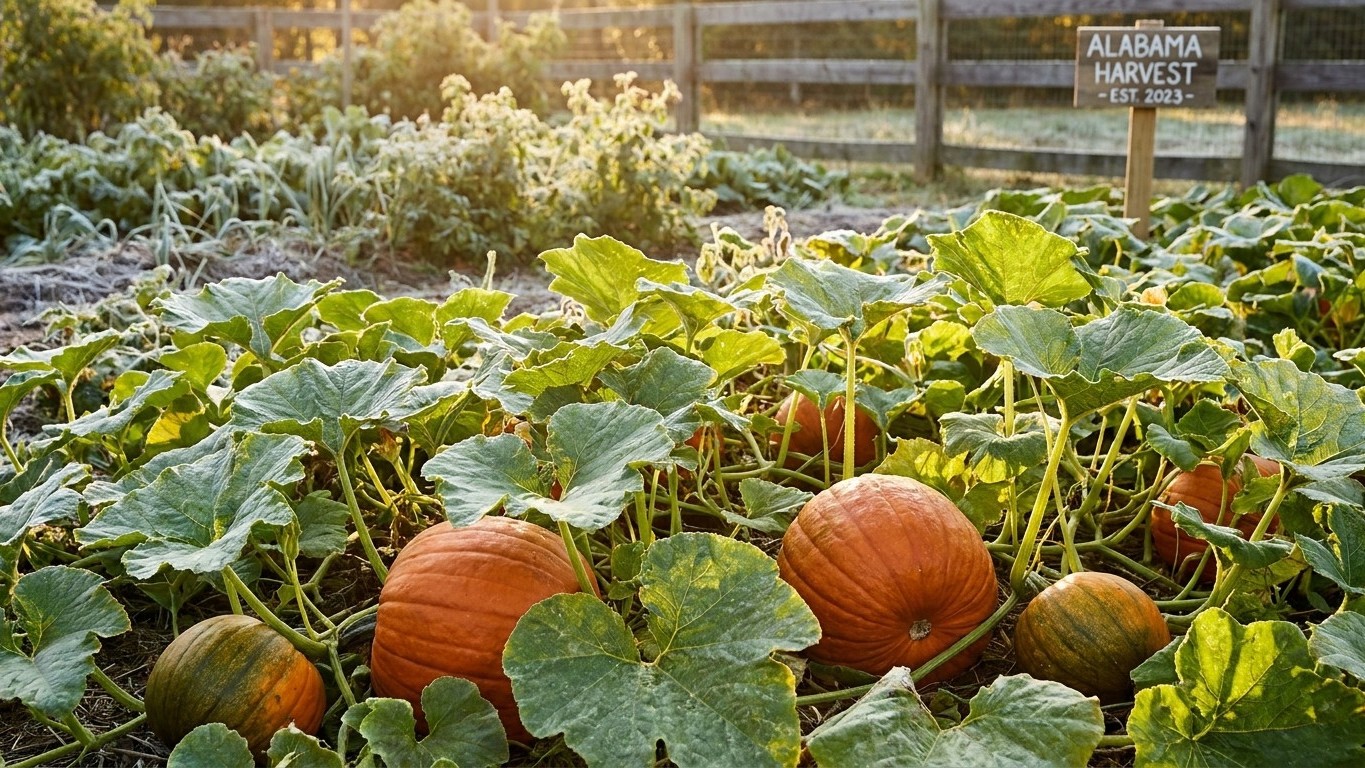

In New York City, the first fall frost typically lands between November 14 and November 27. Counting back the 45 to 55 days pumpkins need after their flowers open, the last safe flowering window falls somewhere between late September and mid-October. If your vines are still opening new blossoms after that, the fruit behind them likely won’t finish coloring before the cold arrives.
The short answer
Start with the frost date, because everything else in this calculation hangs off it. NOAA’s 1991-2020 Climate Normals for Central Park put the first fall freeze somewhere in the range of November 14 to November 27. That’s a two-week band, not a single day, and it reflects the probability curve for a 32°F reading, not a hard cutoff that arrives on schedule every season.
Pumpkins need 45 to 55 days from the moment a female flower opens and gets pollinated to the moment the fruit is ripe and ready to cut. That’s the figure Utah State University Extension publishes, and it’s worth repeating because it’s easy to get wrong: the clock starts at flowering, not at seeding, not at transplanting. A vine can look enormous and healthy in August with no fruit set yet, and that vine is already running out of runway.
Do the subtraction against the earlier end of the frost window, November 14, and 55 days back lands you around September 20. Do it against the later end, November 27, and 45 days back lands you around October 13. That gives you the real answer: the last flowers with a realistic shot at ripening need to open somewhere between late September and mid-October, depending on how mild the fall turns out to be and how fast that particular fruit matures.
That’s a wide window, and it cuts both ways. In a year when frost holds off until the tail end of NOAA’s range, a flower opening in the second week of October can still finish. In a year when frost arrives on the early side, anything that opened after the third week of September is at risk. Since nobody knows in July which kind of fall they’re going to get, the practical move is to treat the earlier date, roughly late September, as the real deadline and treat anything later as a bonus.
One more thing the Central Park data doesn’t tell you: it’s a single, dense urban weather station. Frost forms later there in fall and retreats earlier in spring than it does almost anywhere else in the state. If you’re gardening upstate, in the Finger Lakes, the Southern Tier, or anywhere near the Adirondacks, your actual frost dates arrive earlier in fall and linger later in spring than these numbers suggest, which pulls your entire flowering deadline earlier too.
When to sow here
The last spring frost in the same Central Park dataset falls between March 23 and April 3. That date tells you when the air stops freezing. It does not tell you when the soil is warm enough to sow pumpkin seed, and treating those two dates as the same thing is one of the more common mistakes home gardeners make with this crop.
Pumpkin seed needs soil at 65°F to germinate reliably, and ground temperature lags air temperature by weeks, not days. A calendar that says frost is over in late March or early April doesn’t mean the dirt has caught up. Cold soil sits there absorbing heat slowly even after the air has warmed, especially in clay-heavy or poorly drained beds that hold moisture and stay cool longer than sandy ground does.
- Track soil temperature directly, not the calendar. A simple soil thermometer pushed a few inches into the bed, checked at the same time each morning, tells you more than any frost-date chart. Wait for a consistent 65°F reading rather than guessing from the last frost date.
- Expect the wait to run well past last frost. Because soil warms more slowly than air, the gap between “frost is done” and “soil is ready” typically stretches into weeks. Sowing on the last-frost date itself, rather than waiting for the soil to actually hit 65°F, is a common way to end up with seed that rots in cold ground instead of germinating.
- Use row covers to close the gap. A floating row cover over freshly sown ground traps daytime heat and can buy roughly two weeks against the calendar, letting you sow a little earlier than bare soil would allow without risking a cold, slow germination.
- Pull the covers once seedlings are up and the heat is reliable. Pumpkins are vigorous once established; the cover’s job is only to get them through the cold-soil stretch, not to shelter them for the season.
- Count forward from the actual sowing date, not an ideal one. Whatever day the seed actually goes into 65°F soil is the day that starts the season-length clock working toward that late-September to mid-October flowering deadline.
What goes wrong here
New York’s growing season is long enough for pumpkins in most years, but the margin isn’t huge, and a few specific failures show up again and again when the timing slips.
- A late flower that never colors. When pollination happens after that mid-October cutoff, the fruit behind it may size up but stay green or pale, because it simply runs out of the 45 to 55 days it needs before frost. The remedy is upstream: sow as soon as soil hits 65°F, and pinch off new blossoms once the calendar moves past the safe flowering window so the plant channels energy into fruit that still has time, instead of ones that don’t.
- A fruit caught by frost before it finishes. Even fruit that’s most of the way there can be damaged by an early freeze if the season runs shorter than the NOAA range suggests. Utah State University Extension’s guidance is to harvest with the stem attached and move fruit somewhere it won’t freeze rather than gambling on one more week of vine time once frost is forecast.
- A vine that dies back before the skin hardens. Foliage disease, drought stress, or an early cold snap can kill the vine while the pumpkin is still soft-skinned. A pumpkin cut before its rind has hardened won’t store, no matter how orange it looks. Watch the stem and skin, not just the color, and don’t rush the harvest just because a frost warning is a week out if the vine is still upright and green.
- Insect pressure that shortens the vine’s working life. Squash bugs and cucumber beetles both weaken vines mid-season, which pushes fruit maturity later right when the calendar has the least room to spare. Both have their own state-specific pages on this site covering identification and control in New York conditions.
Common questions
Can I still plant pumpkins in New York if it’s already July?
It depends entirely on the variety’s typical maturity window and how fast the soil warmed that year. Working backward from a late-September to mid-October flowering deadline and counting the days a given variety needs to go from sowing to first bloom is the only reliable way to check, rather than relying on a fixed calendar date.
Does upstate New York have less time than New York City?
Yes. The Central Park frost dates reflect a dense urban site that stays warmer than surrounding rural areas. Upstate regions, the Adirondacks, and higher elevations see frost arrive earlier in fall and last frost linger later in spring, which shrinks the safe flowering window on both ends.
How do I know if my pumpkin is actually ripe versus just orange?
Color alone isn’t proof. Check that the rind has hardened enough to resist a fingernail press and that the stem is starting to dry and harden. Utah State University Extension recommends harvesting with the stem attached, which helps the fruit keep longer once it’s off the vine.
Where should I store pumpkins after harvest?
The published guidance from Utah State University Extension is simply to keep harvested pumpkins somewhere they won’t freeze. No specific storage temperature, humidity level, or keeping-time figure is given, so beyond avoiding frost exposure, there’s no additional published number to go on here.