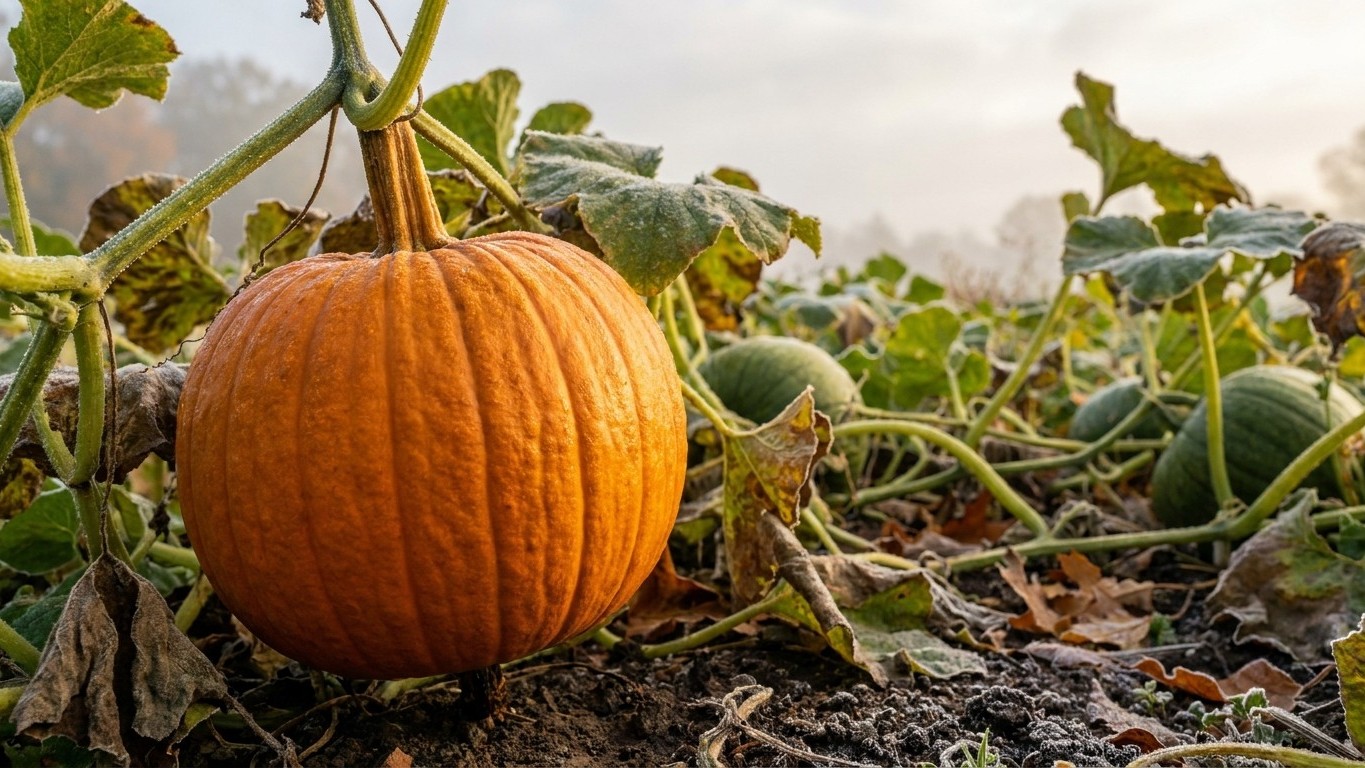

Will Pumpkins Ripen Before Frost in New York? Yes, but only if the flowers open early enough. New York City’s growing season runs from late March into mid-to-late November, and that gap is usually wide enough for pumpkins planted on a normal spring schedule to ripen before the first hard frost. The catch: that window comes from one weather station in a warm, paved part of the state, and it narrows fast once you move upstate or into the Adirondacks. The real deadline isn’t the planting date. It’s the day the first flower opens.
The short answer
New York City’s first fall frost, the date the temperature first drops to 32°F, lands somewhere between November 14 and November 27, based on three decades of freeze-probability data from the National Centers for Environmental Information. That’s a 13-day window, not a fixed date, and it’s the anchor for every pumpkin calculation that follows. Utah State University Extension puts pumpkin maturity at 45 to 55 days after the flower opens, not after the seed goes into the ground. Count backward from either end of that frost window and the true flowering deadline comes into view.
Subtract 45 days from November 14 and the calendar lands on September 30. Subtract 55 days from November 27 and it lands on October 3. Those two dates mark the tightest version of the safe flowering window: a flower open on either side of that narrow band still has a reasonable shot at a ripe, hard-skinned pumpkin before the ground freezes.
The honest range is wider than four days, though, because both the frost date and the maturity time are ranges of their own. Pair the earlier frost date (November 14) with the longer maturity window (55 days) and the safe cutoff moves back to around September 20. Pair the later frost date (November 27) with the shorter window (45 days) and it stretches out to around October 13. Somewhere in that stretch, from September 20 to October 13, is when the last usable flower needs to open.
That’s a wide enough window that most New York City gardens, along with much of the Hudson Valley and Long Island, comfortably support a full pumpkin crop planted on a normal spring schedule. For a closer look at When to Sow Pumpkins in New York, timing still matters: a flower that opens in early October still has room to mature into a colored, hard-skinned pumpkin before a typical late-November freeze. A flower opening in late October is betting on the later end of that frost window holding.
Two cautions matter here. This frost data comes from a single station in Central Park, a dense, heat-retaining site that runs warmer than most of the state; anywhere upstate or in the Adirondacks will see its first frost weeks earlier in fall and its last frost weeks later in spring, which tightens the whole calculation. And the 45-to-55-day figure from Utah State University Extension counts from the day the flower opens, not the day the seed goes into soil and not the day a transplant goes into the ground. Confuse those starting points and every date after this one is wrong.
When to sow here
The last spring frost in New York City falls between March 23 and April 3, but that date has almost nothing to do with when it’s actually time to put pumpkin seed in the ground. Air warms fast in spring; soil lags behind it by weeks, not days. Utah State University Extension sets the sowing threshold at 65°F soil, measured a few inches down, and that mark typically doesn’t arrive until well after the frost window closes, once the ground itself has had time to shed its winter cold.
- Let the frost window pass first. Treat March 23 to April 3 as the earliest the air stops threatening seedlings, not as a sowing date on its own.
- Track soil temperature, not air temperature. A simple soil thermometer pushed a few inches down tells the real story. Air can hit 70°F on a sunny April afternoon while the soil underneath still sits in the 50s, and pumpkins germinate on soil heat, not sunshine.
- Wait for a consistent reading near 65°F. One warm afternoon doesn’t count. The soil needs to hold close to that mark across several days before seed goes in, since cold, damp soil rots pumpkin seed faster than it germinates it.
- Use a floating row cover to buy roughly two weeks. Trapping ground heat under a cover can move the effective sowing date up by about two weeks compared to bare soil, which matters most in a state where the flowering deadline runs from September 20 to October 13.
- Pick a variety without expecting it to change the math. Utah State University Extension’s own list of pumpkin varieties includes names like Connecticut Field, Jack Be Little, Small Sugar, Big Max, Howden, Lumina, Autumn Gold, Cinderella, and Atlantic Giant, but the source attaches no day count, size, or color to any of them. The 45-to-55-day flowering rule applies the same way no matter which name goes in the ground.
What goes wrong here
- A late flower that never colors. If the first female flower doesn’t open until mid-October, the fruit behind it may still be sizing up when the ground goes hard. The fix is timing, not luck: sow as soon as soil hits 65°F rather than waiting for a calendar date, and give the plant full sun and well-drained soil so flowering isn’t delayed by cool, wet ground in early summer.
- A fruit caught by frost before the skin hardens. A pumpkin can look orange and still have a soft, thin rind that a freeze will collapse. Check the stem and skin as the November 14 to November 27 frost window approaches, and if a hard freeze is forecast early in that range, cut fruit that’s colored but not fully hardened and finish it indoors, somewhere it won’t freeze, rather than leaving it on a dying vine.
- A vine that dies back before the skin hardens. Powdery mildew, borers, and simple exhaustion late in the season can kill the foliage weeks before the fruit is ready, cutting off the plant’s ability to keep feeding sugar and firmness into the rind. Watch the vines through September, and don’t assume a green, leafy plant in August guarantees a hard-shelled pumpkin in October.
- Insect pressure eating into the calendar. Squash bugs and cucumber beetles don’t just chew leaves; they slow the plant down at exactly the point in the season when there’s no slack left in the 45-to-55-day clock. Both pests already have dedicated New York pages on this site covering identification and control, so treat early rather than letting an infestation add weeks to a flowering schedule that’s already tight against a mid-November frost.
Checking this against your own county
Every date in this article comes from a single weather station in Central Park, which runs warmer than almost anywhere else in New York. A garden in the Hudson Valley, the Finger Lakes, or the Adirondacks can see its first fall frost two, three, even four weeks earlier than the November 14 to November 27 window used here, with its last spring frost weeks later. That shift moves the entire flowering deadline earlier too, sometimes well into September rather than early October.
The fastest way to get numbers specific to a particular address is Cornell Cooperative Extension, the land-grant extension network for New York State. County offices track local frost patterns, soil temperature trends, and pest pressure that a single-station figure can’t capture, and staff can usually give a straight answer on whether a given planting date leaves enough runway before frost. Anyone gardening outside the five boroughs, in particular, should treat the numbers above as a starting point to check, not a final answer.
Common questions
Can I still plant pumpkins in New York City in June?
Usually, yes. Counting back 45 to 55 days from the November 14 to November 27 frost window puts the safe flowering cutoff between September 20 and October 13, so a June sowing typically leaves plenty of margin. Sowing much past the Fourth of July starts cutting into that cushion.
Do pumpkins ripen after picking if frost hits first?
Utah State University Extension’s guidance is to harvest with the stem attached before frost and store fruit somewhere it won’t freeze. The source doesn’t publish a storage temperature, humidity level, or keeping time beyond that instruction.
Does soil temperature matter more than air temperature for sowing?
Yes. The 65°F sowing threshold from Utah State University Extension is a soil measurement, not an air reading, and New York City soil typically reaches that mark well after the last spring frost window of March 23 to April 3 has already passed.
Will a pumpkin variety change the 45-to-55-day rule?
Not according to the published guidance. Utah State University Extension names varieties such as Connecticut Field, Jack Be Little, Howden, and Big Max without attaching a different day count to any of them, so the flowering-to-harvest window applies across the whole list.