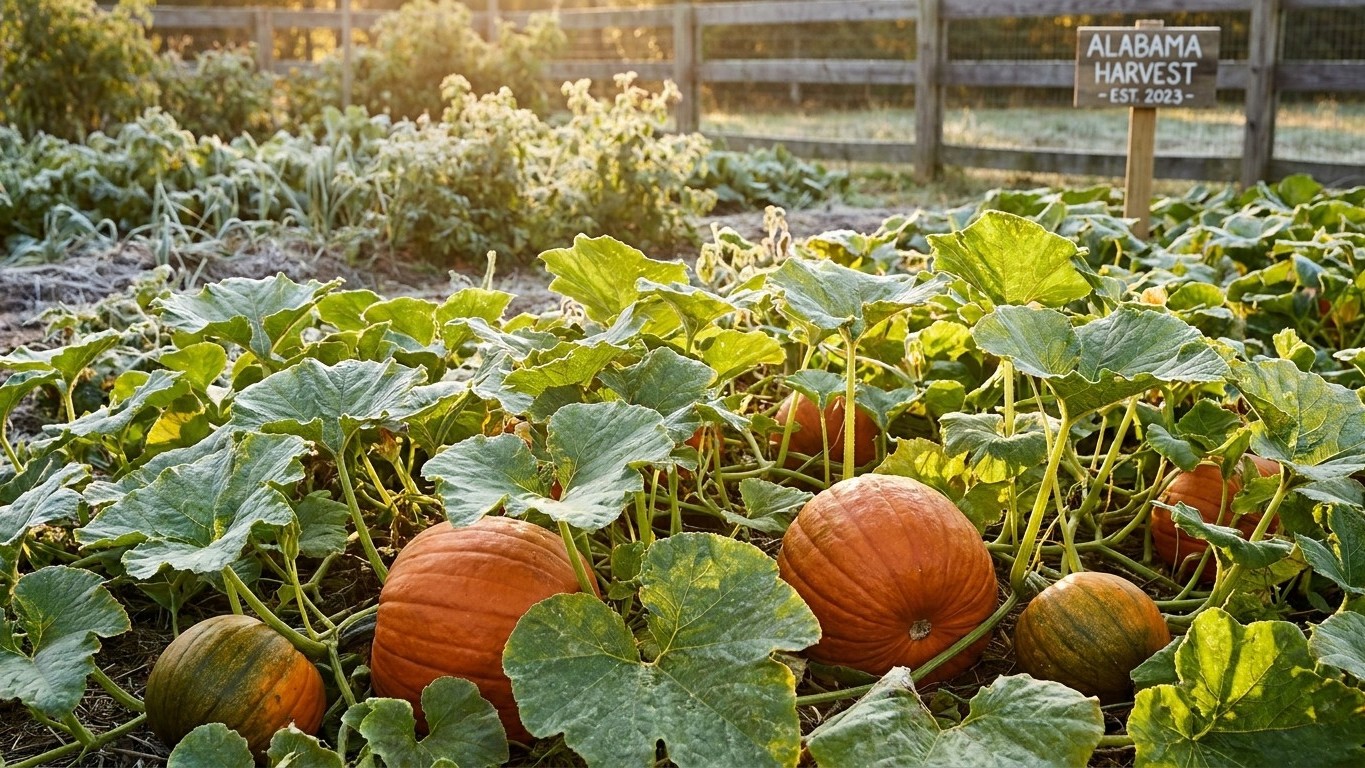

Yes, but the margin is thin. Newfoundland and Labrador’s growing season gives pumpkin flowers only a narrow window, roughly the last week of August into the first days of September, to open and still finish before the average first fall frost. Miss that window and the vine runs out of time to turn a fertilized flower into a ripe, storable pumpkin.
The short answer
Start from the end of the season, not the beginning. Environment and Climate Change Canada’s climate normals put the average first fall frost at ST JOHN’S A at October 17. That’s the date the countdown runs backward from, because it marks the point past which a pumpkin vine is likely to be damaged and stop developing fruit.
Utah State University Extension’s guidance on pumpkin timing is specific on one point that trips up a lot of gardeners: the 45 to 55 days a pumpkin needs to mature is counted from flowering, not from the day the seed goes into the ground. That distinction changes everything about how this province’s calendar works. Count 45 days back from October 17 and you land on September 2. Count 55 days back and you land on August 23. That gives a flowering window of roughly August 23 to September 2, after which an opening blossom is racing a clock it probably can’t win.
A flower that opens on September 10, for instance, needs until sometime between late October and early November to finish sizing and coloring, well past the average frost date. The fruit may still be green, or pale orange at best, when the first hard cold hits the vine. That’s the mechanism behind every failed pumpkin patch in this province: not bad luck, but a flowering date that landed too late in the calendar for the 45-to-55-day clock to run its course.
One caution matters here. October 17 is a mean date drawn from 1981-2010 normals, not a guarantee. In one year out of two, the real frost arrives later than that average, which can rescue a late-flowering vine some seasons. But in the other half, it arrives earlier, which tightens the window further. The ST JOHN’S A station also represents one location; inland, upland, or northern parts of Newfoundland and Labrador run their own clock, typically colder and later in spring, earlier in fall, than the coastal capital. Treat August 23 to September 2 as a target to aim ahead of, not a deadline to sneak in under.
When to sow here
The temptation is to plant the moment the last frost has passed, but pumpkin seed doesn’t care about air temperature. It cares about soil temperature, and the two move on different timelines. Newfoundland and Labrador’s average last spring frost falls around May 30, but the soil in a home garden bed typically takes weeks longer to climb into the 65 F range that pumpkin seed needs to germinate reliably. Seed sown into cold, damp soil below that mark tends to rot or sit dormant rather than sprout, which burns calendar days the plant doesn’t have to spare later.
- Wait past the last frost date, then wait longer. May 30 marks the average end of spring frost risk, but it says nothing about soil warmth. In this province’s cool, ocean-moderated climate, soil often needs several additional weeks after that date before it holds steady at 65 F.
- Check the soil directly rather than the calendar. A simple soil thermometer pushed a few inches into the bed, checked in the morning before the sun has warmed the surface, gives a truer answer than counting days from frost.
- Use row covers to buy roughly two weeks. Utah State University Extension notes that row covers warm the soil and air enough to move the safe sowing date up by about two weeks compared to bare, uncovered ground. In a season this tight, two weeks is not a minor convenience, it’s often the difference between a flower opening inside the safe window and one that opens after it.
- Work backward from the flowering deadline once soil is ready. With soil at 65 F and row covers in place, the goal is to get the plant established quickly enough that flowering happens before September 2, and ideally closer to August 23 to leave a buffer against an early frost year.
- Treat covers as removable, not permanent. Once pollinators need access to open flowers, covers need to come off during the day, then can go back over young fruit later in the season if an early cold snap threatens before the vine has finished its work.
What goes wrong here
- A late flower that never colours up. This is the single most common failure in a short-season province like this one. A flower opening in mid-September simply doesn’t get its 45 to 55 days before October 17 arrives. The remedy isn’t a different variety, it’s an earlier sowing date paired with row covers, so flowering happens in the August 23 to September 2 window rather than after it.
- A nearly-ripe fruit caught by frost. Because October 17 is only an average, some years bring frost earlier, catching fruit that was on track to finish. Watching the forecast in early October and having old sheets or blankets ready to throw over vines on a predicted cold night can protect fruit through a light frost long enough to finish coloring.
- A vine that dies back before the skin hardens. Even if the fruit has sized up and colored, the rind needs time to cure and harden on the vine. A vine killed by frost before that hardening finishes leaves a pumpkin with a soft shell that won’t store well. Harvesting with the stem attached as soon as color is set, rather than waiting for a “perfect” moment that frost may cut short, protects what curing time is left.
- Insect pressure slowing the plant down mid-season. Squash bugs and cucumber beetles both weaken vines at exactly the point in the season when every week of growth matters most. Because this province’s window is already tight, an infestation that stunts the plant in July can push flowering past the safe date all on its own. Specific identification and control steps for each pest are covered on this site’s dedicated pages for squash bugs in Newfoundland and Labrador and cucumber beetles in Newfoundland and Labrador.
Common questions
Can I still get pumpkins if I sow later than the ideal window?
It’s possible in a mild year, but risky. Since October 17 is only an average and frost can arrive earlier, a late sowing that pushes flowering past early September is gambling on a warmer-than-normal fall. Row covers and choosing the earliest practical sowing date once soil hits 65 F give better odds than sowing late and hoping.
Does covering the plant with a sheet during a frost warning actually help?
A light covering can protect against a mild frost by trapping ground heat overnight, which may buy a vine a few more days to finish coloring or hardening. It won’t help against a hard, prolonged freeze, and the source material for this page doesn’t specify a temperature threshold for what counts as protectable versus not.
How do I know if a pumpkin is ripe enough to pick before frost hits?
Look for fully developed color across the whole fruit and a rind that resists denting with a fingernail. Utah State University Extension’s guidance is to harvest with the stem attached and to move fruit somewhere it won’t freeze once cut, though it doesn’t publish a specific storage temperature or keeping time beyond that.
Is the frost date the same everywhere in Newfoundland and Labrador?
No. The October 17 average comes from the ST JOHN’S A weather station specifically. Inland, upland, and more northern parts of the province tend to see frost earlier in fall and later in spring than that coastal reading, which shrinks the safe flowering window further for gardeners outside the immediate St. John’s area.