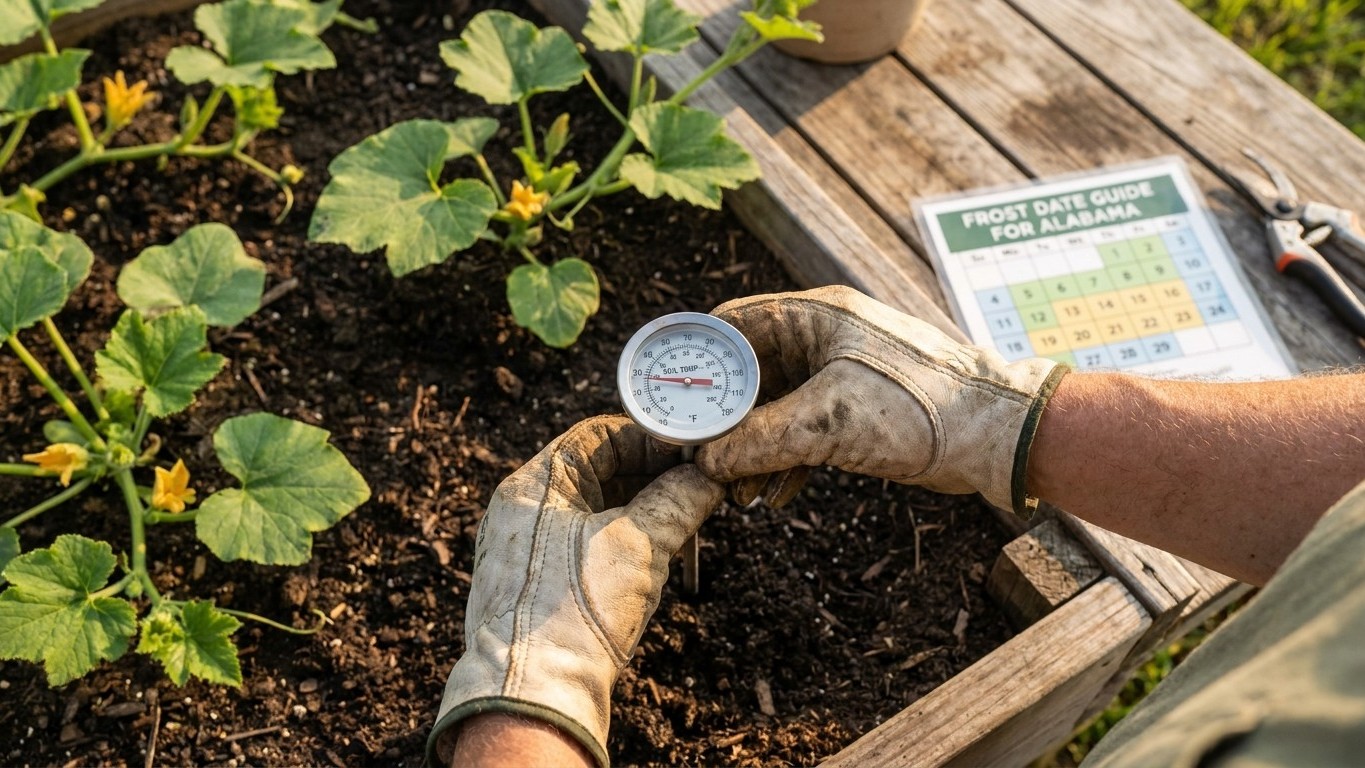

Sow pumpkin seeds directly outdoors once the soil consistently reads 65°F, which in most of Newfoundland and Labrador falls somewhere in June, weeks after the average May 30 last frost. But sowing date is only half the equation. Because the average first fall frost lands October 17, the real limit on a Newfoundland and Labrador pumpkin crop is when the vine flowers, not when the seed goes in the ground.
The short answer
Start from the frost end of the calendar and work backward. Environment and Climate Change Canada’s 1981-2010 normals for the ST JOHN’S A station put the average first fall frost at October 17. Utah State University Extension’s guidance on pumpkin development says a pumpkin needs 45 to 55 days after flowering, not after seeding, to finish ripening. Run that math against October 17 and the last flowers with any real chance of producing a ripe pumpkin need to open between roughly August 23 and September 2.
That’s a narrow window, and it deserves a second look before anyone treats it as settled. October 17 is a mean date pulled from three decades of records, which means in about half of those years frost showed up later than that, and in the other half it showed up earlier. Nothing in the data promises frost will hold off until the 17th in any single season. A cautious grower in Newfoundland and Labrador treats that flowering window as the optimistic edge, not the target, and aims to have fruit set closer to mid-August so there’s slack if frost arrives on the early side of the average.
There’s also a geography problem baked into that one number. The normal comes from a single station, St. John’s, sitting on the Avalon Peninsula in one of the milder coastal pockets of the province. Inland districts, the west coast, and especially Labrador run their own clocks, typically colder and often weeks behind what St. John’s records. A gardener working land away from that immediate coastal strip should assume their own effective flowering deadline lands earlier than August 23, sometimes considerably earlier, since a shorter frost-free season simply eats into both ends of the calendar at once.
What this means in practice is that the flowering date, not the planting date, is the number to protect. A vine that sets its last usable blossom in early September in St. John’s is cutting it close against the mean frost date and gambling against the years frost comes sooner. The same vine blooming that late farther inland is very likely planting a pumpkin that never finishes.
When to sow here
Soil temperature and air temperature are not the same clock, and treating May 30 as the pumpkin-planting date is the most common miscalculation gardeners make here. Bare or unmulched soil in this province typically needs real time after that last-frost average before it holds a steady 65°F, since soil is slow to shed the cold stored in it over winter and spring. Sowing into cooler soil doesn’t kill the seed outright as often as it just stalls it, wasting days the region’s short season can’t spare.
- Treat May 30 as a midpoint, not a guarantee. Frost can and does arrive after that date in roughly half of past years, so don’t let a mild stretch in late May push a sowing date forward on its own.
- Track soil temperature directly with a thermometer pushed a few inches down, rather than counting days on a calendar. Air can feel warm on a June afternoon while the soil underneath is still well below 65°F.
- Expect the true 65°F mark to arrive well into June across most of the province, and later still away from the immediate coast or in Labrador, since soil there starts colder and warms more slowly through the season.
- Use row covers or a dark mulch over the planting area ahead of sowing. Warming the soil this way can effectively buy about two weeks, moving the real sowing date earlier than it would otherwise land and giving vines more of the season to reach flowering before the late-August deadline established above.
- Sow once 65°F holds steady, not on the first warm reading, then count forward mentally toward the flowering window rather than toward any fixed calendar date, since the deadline that matters is when blossoms open, not when seed goes in.
None of this changes the fact that Newfoundland and Labrador’s growing season is short by any national standard. Buying two weeks with row covers narrows the gap between a realistic sowing date and a safe flowering date, but it doesn’t erase the risk built into a season bookended by a late spring frost average and an equally uncertain fall one.
What goes wrong here
- A late flower that never colors. Blossoms that open after the early-September edge of the window are racing a 45-to-55-day clock they’re unlikely to win before frost. Once past the flowering deadline, pinch off new blossoms so the plant stops spending energy on fruit that has no realistic finish line, and puts that energy into the pumpkins already set.
- A fruit caught by frost. Vines still holding green or partially colored pumpkins when frost lands, whether that’s the average October 17 or, in roughly half of years, sooner, lose those fruit to cold damage fast. Watch the forecast rather than the calendar, and harvest ahead of any frost warning, keeping the stem attached and moving the fruit somewhere it will not freeze to finish curing.
- A vine that dies back before the skin hardens. Cool, damp stretches common in this province favor foliage disease and give pests like squash bugs and cucumber beetles more time to weaken plants before fruit is done. See this site’s Newfoundland and Labrador guides on squash bugs and cucumber beetles for what to watch for. Keep foliage as dry as practical by watering at the base rather than overhead, since wet leaves invite the problems that take vines down early.
- Seed planted before the soil is ready. Sowing on a calendar date rather than a soil-temperature reading often means seed sits in cold, wet ground below 65°F, where it can rot or germinate weakly. That lost time is expensive in a province where the flowering deadline is already tight. Wait for a thermometer reading, not an optimistic guess about the weather.
Common questions
Can I start pumpkin seeds indoors instead of direct-sowing in Newfoundland and Labrador?
Many gardeners here start seed in pots indoors rather than sowing straight into cold ground, then move seedlings out carefully once soil is reliably at 65°F. Pumpkins resent having their roots disturbed, so transplant gently and only after outdoor conditions are truly ready, not on a hopeful early date.
What’s the absolute last date I can plant pumpkins here?
There’s no published cutoff date to hand over, because the limiting factor isn’t the sowing date itself, it’s the flowering deadline of roughly August 23 to September 2 described above. Count backward from that window using your variety’s typical time to first bloom, and treat any plan that pushes flowering past early September as a real gamble against the average frost date.
Does Labrador or interior Newfoundland have a tighter window than St. John’s?
Almost certainly, yes. The frost figures here come from a single coastal station at St. John’s, and inland or northern districts, including Labrador, typically run colder and see frost arrive earlier in fall and linger later in spring. Growers away from the immediate Avalon coast should shift both the sowing and flowering deadlines earlier than the numbers above and build in extra margin.
How do I know a pumpkin is actually ready to harvest?
Utah State University Extension’s guidance is to harvest with the stem attached and to do so before frost hits, moving fruit somewhere it will not freeze rather than leaving it exposed. No specific storage temperature or keeping time is published in that guidance, so plan on a cool, dry spot protected from freezing rather than any exact number.