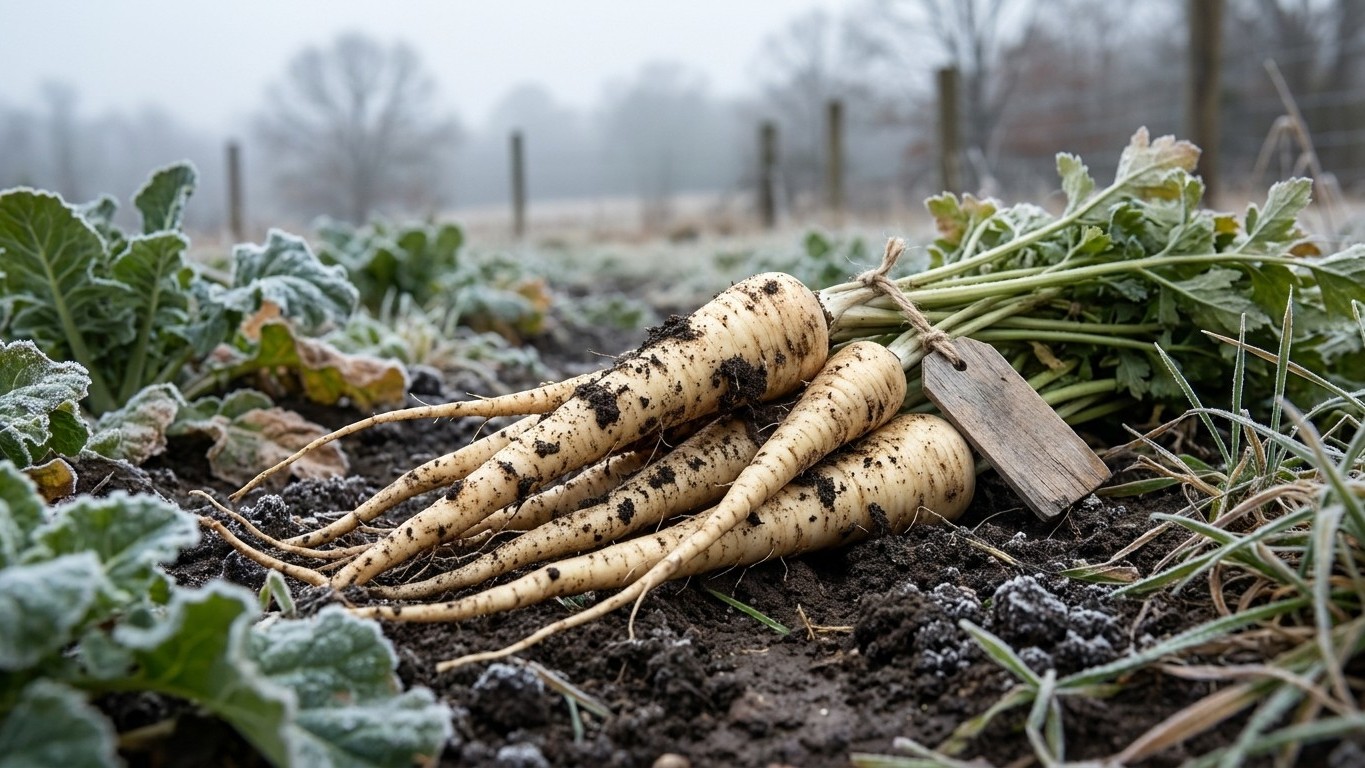

Yes, parsnips grown in Oklahoma should sweeten, and the reason is written right into the winter numbers. Oklahoma City’s coldest month averages a nightly low of 27.0°F, which means the freezing snaps that convert starch to sugar in the root show up reliably most winters. The bigger question isn’t whether frost arrives, it’s whether the calendar gives a spring-sown crop enough time to grow a root worth freezing. On that front, Oklahoma’s long frost-free stretch does the heavy lifting.
The short answer
Does this territory deliver several frosty weeks, or just the occasional overnight dip that melts by 9 a.m.? That’s the question that actually decides whether a parsnip pulled from Oklahoma soil tastes like a parsnip or tastes like sweet candy. Sweetening isn’t a matter of surviving winter. It’s a matter of sitting in cold ground while enzymes break stored starch into sugar, a process that needs sustained cold, not a single frost warning.
The figure that answers this is the mean daily minimum of the coldest month, not the USDA hardiness zone printed on seed packets. In Oklahoma City, that figure sits at 27.0°F, according to NOAA NCEI Climate Normals for 1991-2020. A mean minimum that low tells you the coldest month isn’t flirting with freezing on rare nights. It’s routinely below 32°F after dark, which is exactly the kind of repeated, sustained chill that pushes a parsnip root past “edible” into “sweet.”
Compare that to a hardiness zone number, which only tells you what a plant can survive without dying. A zone rating says nothing about how often the ground actually freezes overnight during the coldest stretch of the year. A gardener could live in a zone comfortable enough for a dozen vegetables and still get parsnips that never sweeten, because the winter simply doesn’t deliver enough cold nights in a row. Oklahoma doesn’t have that problem. A 27.0°F average minimum for the coldest month means frost is not a rare event here, it’s the norm for weeks at a stretch.
That distinction matters because it’s the single most common misunderstanding in root vegetable growing: assuming that “cold enough to grow” and “cold enough to sweeten” are the same threshold. They aren’t. A parsnip can grow to full size in a climate that never delivers a real freeze, and it will taste starchy, almost woody, with none of the nutty sweetness the crop is known for. Oklahoma’s winter minimums put it on the favorable side of that line. The plant will grow here, and if the roots are left in the ground through the cold snaps that routinely bring nighttime lows into the high 20s, they’ll sweeten the way the crop is supposed to.
None of that guarantees a good crop on its own. Timing the sowing date and managing the soil still decide whether there’s a root worth waiting on. That’s where the calendar comes in.
Does the season fit?
Parsnips are sown directly in the ground where they’ll grow, never transplanted, and the 100 to 120 days Utah State University Extension gives for maturity start counting from the day the seed goes into the soil, not from any later date. Working out whether that timeline fits Oklahoma’s frost calendar takes a few steps.
- Start with the sowing window. Parsnip seed goes in the ground 2 to 3 weeks before the last spring frost. For the Oklahoma City reference station, that last frost falls between March 28 and April 10, which puts a typical sowing date somewhere around mid-to-late March.
- Add germination time before anything visible happens. Parsnip seed is notoriously slow, taking 14 to 21 days just to sprout. A gardener who sows in mid-March may not see a single seedling until early April, and that’s normal, not a sign of failed seed.
- Count 100 to 120 days from the sowing date, not from germination. Starting from a mid-to-late March sowing, the 100-day mark lands around late June to early July, and the 120-day mark lands roughly two to three weeks after that.
- Compare that maturity window to the first fall frost. The Oklahoma City reference station sees its first fall frost between October 29 and November 8. That leaves a wide gap, often four months or more, between the crop reaching harvestable size in summer and the first freeze that starts the sweetening process.
- Read the gap as room to leave roots in the ground. Because parsnips don’t need to be pulled the moment they mature, that gap works in the gardener’s favor here. Roots can sit through the heat of late summer and into the cool, frosty stretch of fall, picking up the sugar conversion once temperatures start dropping toward that 27.0°F coldest-month average.
Taken together, the arithmetic says the season fits comfortably in most of Oklahoma, not tightly and not with a scramble to beat the frost. The one caveat worth repeating: the frost dates above come from a single airport weather station. Gardens in the surrounding countryside, especially at elevation or in low-lying frost pockets, often see the last spring frost run later and the first fall frost arrive earlier, sometimes by one to two weeks. That shifts the whole calculation a little tighter, so checking a county-level frost record before committing to a sowing date is worth the five minutes it takes.
What goes wrong here
- Forked or split roots from heavy, stony ground. Parsnip roots push straight down through loose soil, and Oklahoma’s clay-heavy ground in many counties resists that. When a taproot meets compacted clay or a buried rock, it splits into two or three legs instead of growing as one straight root. Utah State University Extension recommends deep, sandy soil for this crop, and where the native ground is heavy, double digging the bed before sowing, working it loose to at least 12 to 15 inches, removes the obstruction before the root ever meets it.
- Forked roots from a second, unrelated cause: overwatering. Even in soil that’s been properly loosened, roots that get too much water too often will branch and fork as they chase moisture in erratic directions instead of growing straight down after a steady, deep supply. This is a separate problem from heavy soil, not the same one, and the fix is different too: water deeply but less frequently, letting the top few inches dry between waterings rather than keeping the bed constantly damp.
- A season that runs out before the roots size up. This isn’t the typical Oklahoma problem given the wide gap between spring sowing and fall frost, but it shows up when sowing gets delayed well past the recommended 2-to-3-week-before-last-frost window, or in a county where local frost dates run noticeably earlier than the reference station’s. Sowing promptly once the soil can be worked, rather than waiting for warmer weather, keeps the 100-to-120-day clock from bumping into an early freeze.
- A winter too mild to trigger sweetening. Oklahoma’s statewide winter isn’t uniformly cold, and areas that run consistently warmer than the Oklahoma City reference figure of 27.0°F for the coldest month may not deliver the sustained frost exposure the crop needs. The remedy is patience rather than a different growing method: leave mature roots in the ground through several real cold snaps before harvesting, rather than pulling them at the first hint of cool weather. A single light frost isn’t enough; it’s the repeated exposure over multiple cold weeks that does the conversion.
Common questions
Can parsnips be sown in fall in Oklahoma instead of spring?
The 100-to-120-day maturity window and the need for a cold finish both point toward spring sowing here. A fall-sown crop would face winter before reaching size, which risks losing the planting to cold before it ever develops a harvestable root.
How long should parsnips stay in the ground after the first frost?
Utah State University Extension notes the flavor improves after several weeks of cool, frosty weather, not after a single overnight freeze. Given Oklahoma’s gap between maturity and the first fall frost (October 29 to November 8 at the reference station), there’s typically room to leave roots in place through multiple frost events before digging.
Does mulching help after the ground starts to freeze?
A layer of mulch over the bed keeps the soil workable enough to dig roots even after hard freezes set in, which matters in a state where the ground can freeze solid for stretches during the coldest month.
What soil type gives the straightest roots in Oklahoma?
Deep, sandy soil is what Utah State University Extension points to as ideal. Where the native ground runs heavy or clay-based, as it does across much of Oklahoma, double digging to break up compaction before sowing is the direct fix, separate from any watering adjustments.