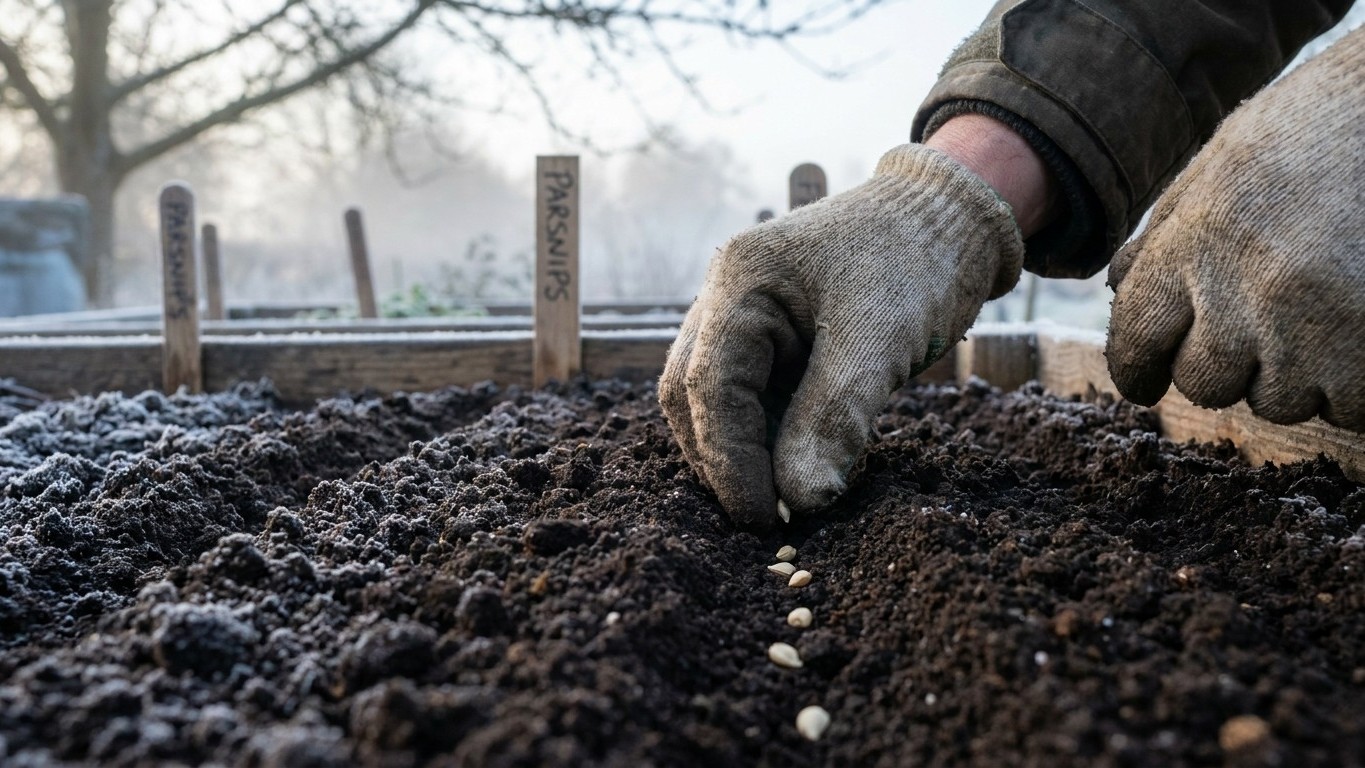

West of the Cascades, near Portland, the sowing window sits between mid-February and mid-March, roughly two to three weeks ahead of the last spring frost, which typically falls between March 6 and March 21. Seeds go directly into the row where they’ll grow, since parsnips don’t transplant. Germination is slow, 14 to 21 days, so patience matters before anything shows above the soil.
The short answer
Before picking a sowing date, ask a more basic question: does this stretch of Oregon actually hand parsnips the several weeks of frost they need to turn sweet? That’s not the same question as whether the plant will survive here. It’s about flavor, and the two get confused constantly.
In the Portland area, the mean daily minimum temperature during the coldest month sits at 36.2°F. That’s a mild number. It means an average night in the coldest stretch of winter barely brushes the freezing mark, and plenty of nights don’t touch it at all. Compare that to a continental climate where coldest-month lows regularly sit in the teens or 20s for weeks on end, and the difference in frost exposure becomes obvious.
What does that mean for a parsnip sitting in the ground? Sweetening happens when frost converts stored starch into sugar, a process that needs repeated, sustained cold exposure, not a single overnight dip. A coldest-month average minimum of 36.2°F tells us this region gets frost, but it’s a maritime kind of frost, mild and inconsistent rather than the deep, weeks-long cold snap that pushes flavor development hard.
The practical verdict: parsnips grown in western Oregon will grow well. The soil, the season length, the rainfall pattern all cooperate. But sweetening here tends to be moderate rather than dramatic. Growers who leave roots in the ground through November and into the coldest part of winter will get some conversion, some improvement in flavor, but not the pronounced sweetness reported in colder inland or continental gardens. This is a case where the region satisfies the growing requirement but only partially satisfies the flavor requirement, and no hardiness zone rating changes that fact. Zone numbers describe whether a plant survives winter, not how many frosty weeks it actually experiences, and those are different measurements answering different questions.
So the honest answer is this: sow here, expect a fine crop, but don’t expect the candy-sweet parsnip that a harsher winter produces further inland or at higher elevation. If sweetness is the priority, cold storage after harvest or seeking out a spot with more exposed, colder microclimate can help close some of that gap.
Does the season fit?
Parsnips need 100 to 120 days from seeding to reach harvestable size, and that clock starts when the seed goes into the ground, not when it germinates. Since germination itself eats 14 to 21 days before a single leaf appears, the full cycle from sowing to a usable root is longer than the raw number suggests if you’re impatient watching bare soil.
- Start point: Sow two to three weeks before the last spring frost, which in the Portland reference area runs March 6 to March 21. That puts the earliest safe sowing around mid-February and the latest comfortable start around early March.
- Germination lag: Add 14 to 21 days before seedlings even emerge. A sowing in late February won’t show green until mid-to-late March, and that’s normal, not a failed stand.
- Growth period: From there, count 100 to 120 days to reach a mature root, which lands harvest readiness somewhere in the June-to-July range for an early sowing.
- Frost window at the other end: The first fall frost arrives between November 11 and November 27. That leaves several extra months beyond the minimum 120-day requirement, months most growers use to let the roots sit in the ground rather than to keep growing them larger.
- Verdict: The season fits comfortably here. Western Oregon’s frost-free stretch, running from mid-March to mid-November, gives well over 200 days, far more room than the 100-to-120-day requirement demands. The extra time isn’t wasted; it’s exactly the window needed to let a few frost events pass over the crop before digging.
That comfortable margin is unusual. Many parts of the country sow parsnips right at the edge of what their season allows, racing the first hard freeze. Western Oregon growers don’t face that pressure, which is precisely why the earlier point about mild sweetening matters more here than the point about whether the crop will mature at all.
What goes wrong here
- Forked roots from heavy or rocky ground. The Willamette Valley carries plenty of clay-heavy soil, and a taproot forking around clumps or stones splits into two or three legs instead of growing straight. The remedy is deep sandy loam if you have it, or double-digging a bed to at least 12 to 15 inches before sowing so the root meets no resistance on its way down.
- Forked roots from overwatering. This is a separate cause from soil texture, and mixing the two up leads to the wrong fix. Waterlogged soil encourages roots to branch rather than push straight down. Keep moisture consistent but not saturated, especially once the taproot is established past the seedling stage.
- A stand that never emerges. Because germination takes 14 to 21 days, soil that dries out during that stretch kills the seed before it ever breaks the surface. Keep the seedbed lightly moist the entire germination period, and resist the urge to dig around and re-sow after just a week of bare soil.
- A season that ran too late. Sowing well past mid-March, chasing warmer soil for easier germination, eats into the buffer between the 100-to-120-day requirement and the first fall frost. It still usually works given the wide window here, but it narrows the margin for error and pushes harvest closer to the first frost date rather than well past it.
- A mild winter that never delivers real sweetness. With a coldest-month average minimum of only 36.2°F, some winters simply won’t hand the crop the sustained cold it needs. There’s no fix for the climate itself, but leaving roots in the ground as long as possible, through as many frost events as the season offers, maximizes whatever sweetening the winter does provide.
Common questions
Can parsnips be sown in fall for a winter harvest in Oregon?
The standard approach is a spring sowing, two to three weeks ahead of the last frost, so the crop matures through summer and sits in the ground for frost exposure heading into winter. The 100-to-120-day requirement and the germination lag make a true fall sowing impractical in most of the state, since there isn’t enough remaining season before the first fall frost arrives in mid-to-late November.
Does eastern Oregon follow the same sowing window?
No. The dates given here reference the Portland area, west of the Cascades. Central and eastern Oregon sit in high desert conditions with a shorter frost-free season, and no specific sowing window for those regions is published in the data behind this article. Gardeners there should check their own local frost dates rather than apply the Portland window statewide.
Can parsnip seedlings be started indoors and transplanted?
Not successfully. Parsnips grow a long taproot that resents disturbance, and transplanting typically causes forking or stunted growth. Seeds go directly into the row where the crop will mature, which is why the sowing date matters so much more here than it does for crops that tolerate transplant shock.
How long can parsnips stay in the ground after the first frost?
Many growers leave them through multiple frost events and into the coldest weeks of winter, digging as needed rather than harvesting all at once. Given the mild coldest-month minimum in western Oregon, extending that time in the ground is the main lever available for improving sweetness, since no single frost event does the job on its own.