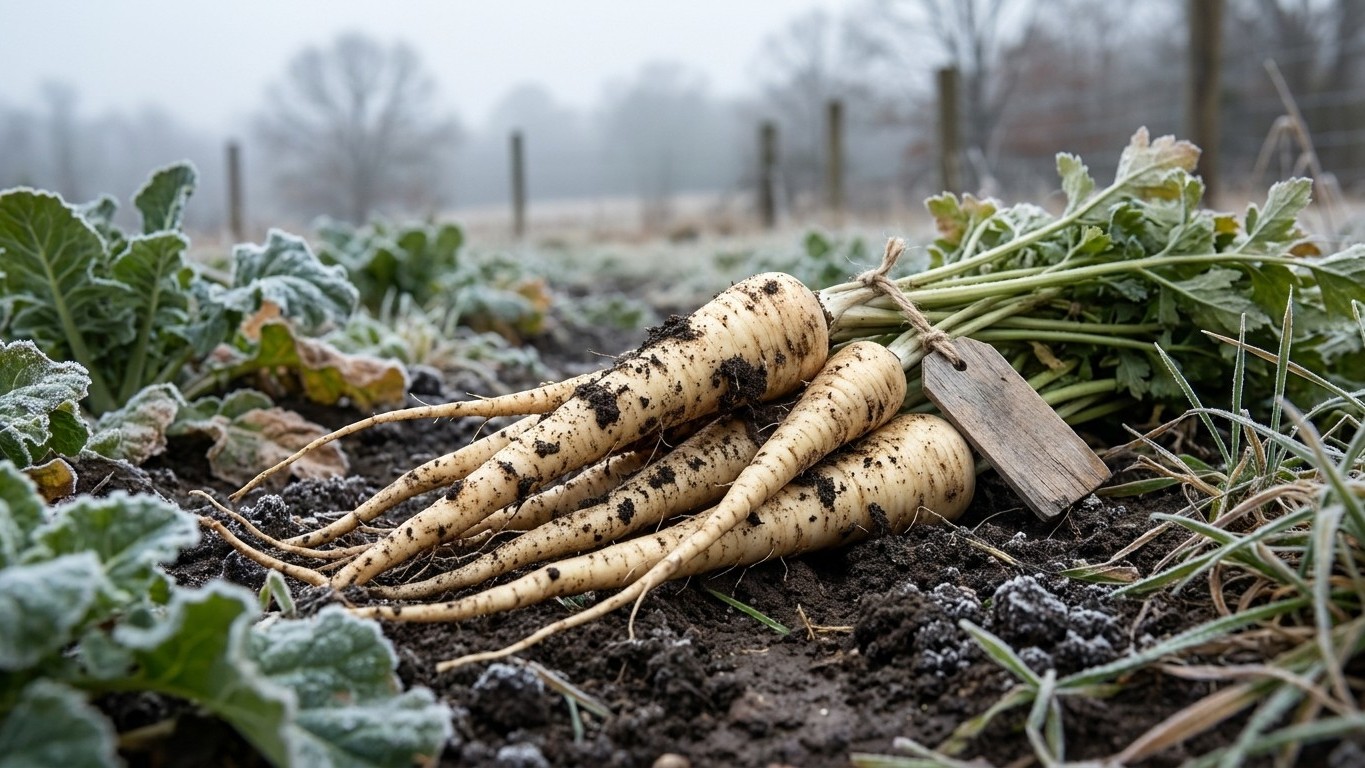

Yes, but the sweetness depends on timing, not luck. Providence’s coldest month averages a nightly low of 22.1°F, a genuine stretch of freezing weather, which is exactly the exposure parsnips need to turn stored starch into sugar. Rhode Island’s frost-free stretch runs long enough to grow the root to full size well before that cold sets in, so a gardener here can get both halves of the equation right: enough days to grow the parsnip, and enough frost afterward to sweeten it. What changes the outcome is when you sow and when you dig, not whether the state can support the crop at all.
The short answer
The question that actually decides this isn’t how mild or severe Rhode Island’s winter feels in general. It’s whether the coldest month here reliably delivers several weeks of freezing nights, because that’s the mechanism that converts a parsnip’s stored starch into sugar. A root sitting in ground that never drops much below freezing will grow just fine and taste flat, no matter how deep the soil or how careful the gardener. Providence’s coldest month averages a mean daily minimum of 22.1°F, a full ten degrees below freezing on an average night. That’s not a marginal number. It means the ground around an unharvested parsnip spends weeks, not days, exposed to hard cold, which is the condition Utah State University Extension points to when it explains why parsnips taste best after frost exposure.
This distinction matters because hardiness zone numbers and frost exposure are not the same thing, and conflating them is the single most common mistake gardeners make with this crop. A hardiness zone tells you what perennial plants can survive winter here. It says nothing about how many frosty weeks a root vegetable sitting in the soil will actually experience before you dig it up. Rhode Island’s zone rating doesn’t answer the sweetening question. The coldest-month minimum does, and 22.1°F is cold enough, for long enough, to do the job.
So the practical answer for a Rhode Island garden is that parsnips left in the ground into late fall and early winter will sweeten, provided they’ve had time to mature first. The crop doesn’t need a brutal winter. It needs a reliably cold one, with several weeks of nights well below 32°F, and that’s what the climate data here shows. Where things can go sideways isn’t the climate itself. It’s the calendar: sowing too late, digging too early, or losing track of how long a parsnip actually takes from seed to sweetness. That’s the part worth walking through in detail, because it’s where most disappointment actually comes from, not from any shortage of frost.
Does the season fit?
- Start with the last spring frost. Around Providence, that date falls somewhere between April 7 and April 17, based on the 1991-2020 NOAA NCEI climate normals for that station. Gardens outside the city, especially inland or at any elevation, typically see frost linger a week or two later than that, so treat this as a reference point to check against your own county rather than a fixed date.
- Sow parsnips 2 to 3 weeks before that last frost. Using the Providence window, that puts seeding somewhere in the second half of March to the first days of April for most Rhode Island gardens, adjusted for local conditions.
- Expect germination to take 14 to 21 days. Parsnip seed is notoriously slow and uneven to sprout. Don’t disturb the bed or assume a failed sowing before three full weeks have passed, or you risk digging up seed that simply hasn’t come up yet.
- Count 100 to 120 days from that seeding date to maturity. Parsnips are sown directly in place, so the clock starts at seeding, not at germination or transplant. From a late March sowing, 100 to 120 days lands the root at full size somewhere in early to mid July.
- Compare that to the first fall frost. Around Providence, that arrives between October 24 and November 3, again based on the same NOAA NCEI normals, and again likely to come a bit earlier in outlying gardens.
- Measure the gap. A root that reaches maturity in July has months of margin before the first frost even shows up in late October. That gap is what lets a gardener leave the parsnip in the ground on purpose, through the early frosts, so it has time to sweeten before harvest.
Add it up and Rhode Island’s season fits this crop comfortably, not tightly. There’s enough length between a typical sowing date and the first fall frost to grow the root fully and still leave weeks of cold exposure afterward, which is exactly the sequence parsnips need.
What goes wrong here
- Forked or split roots from heavy or stony ground. Parsnips send a single taproot straight down, and any obstruction, compacted clay, rocks, or a hardpan layer, splits it into forked branches. Utah State University Extension recommends deep, sandy soil, and where the native ground is heavy, double digging the bed to at least 12 to 15 inches before sowing removes the obstruction rather than fighting it after the fact.
- Forked roots from overwatering, a separate cause entirely. Even in loose soil, inconsistent or excessive watering can cause the taproot to branch as it searches for moisture unevenly. The fix here isn’t deeper digging, it’s steadier watering: even, moderate moisture rather than heavy soaking followed by dry stretches.
- A sowing date pushed too late. Because parsnips need 100 to 120 days from seed, and germination alone eats up 14 to 21 of those days, a sowing delayed into May can leave the root undersized by the time cold weather sets in. Sowing 2 to 3 weeks before the local last frost, and not later, protects the full growing window.
- A winter too mild to sweeten. This isn’t the typical Rhode Island problem, given a coldest-month average of 22.1°F, but a harvest pulled too early, before several weeks of frost exposure have passed, produces the same flat, starchy result as a genuinely mild winter would. The remedy is patience: leave mature roots in the ground through multiple frosts before digging, rather than harvesting at the first cold snap.
Common questions
How long can parsnips stay in the ground after frost hits?
The Utah State University Extension guidance points to leaving roots in place for several weeks of frosty weather to let the sugar conversion happen. A thick layer of mulch over the row can help keep the ground workable for digging even after hard freezes set in.
Can I sow parsnips later if I missed the spring window?
Given the 100 to 120 day maturity window and the 14 to 21 days germination takes on top of that, a late sowing risks running out of season before the root sizes up. Sticking close to 2 to 3 weeks before the local last frost date gives the crop its best chance.
Does soil type matter as much as climate for sweetness?
Soil affects root shape, not sugar content. Deep, loose ground prevents forking; the sweetening itself comes entirely from frost exposure. A gardener can have perfect soil and still get a bland parsnip if it’s harvested before the cold weeks do their work.
Why did my parsnip roots fork even though my soil seems fine?
Forking has two separate causes here, and it’s worth ruling out both. Check first for compaction, rocks, or a hardpan layer below the topsoil; if the ground is genuinely loose, look instead at watering consistency, since uneven moisture can split a taproot even in good soil.