
Yes, sweet corn can ripen in most of Colorado’s populated valleys and plains, but the calendar is tighter than the frost dates alone suggest. Soil needs to sit above 60°F before seed goes in, and that mark lands well after the last spring freeze. Once planted, the crop still needs 60 to 90 days to fill an ear before the first fall frost shuts things down.
The short answer
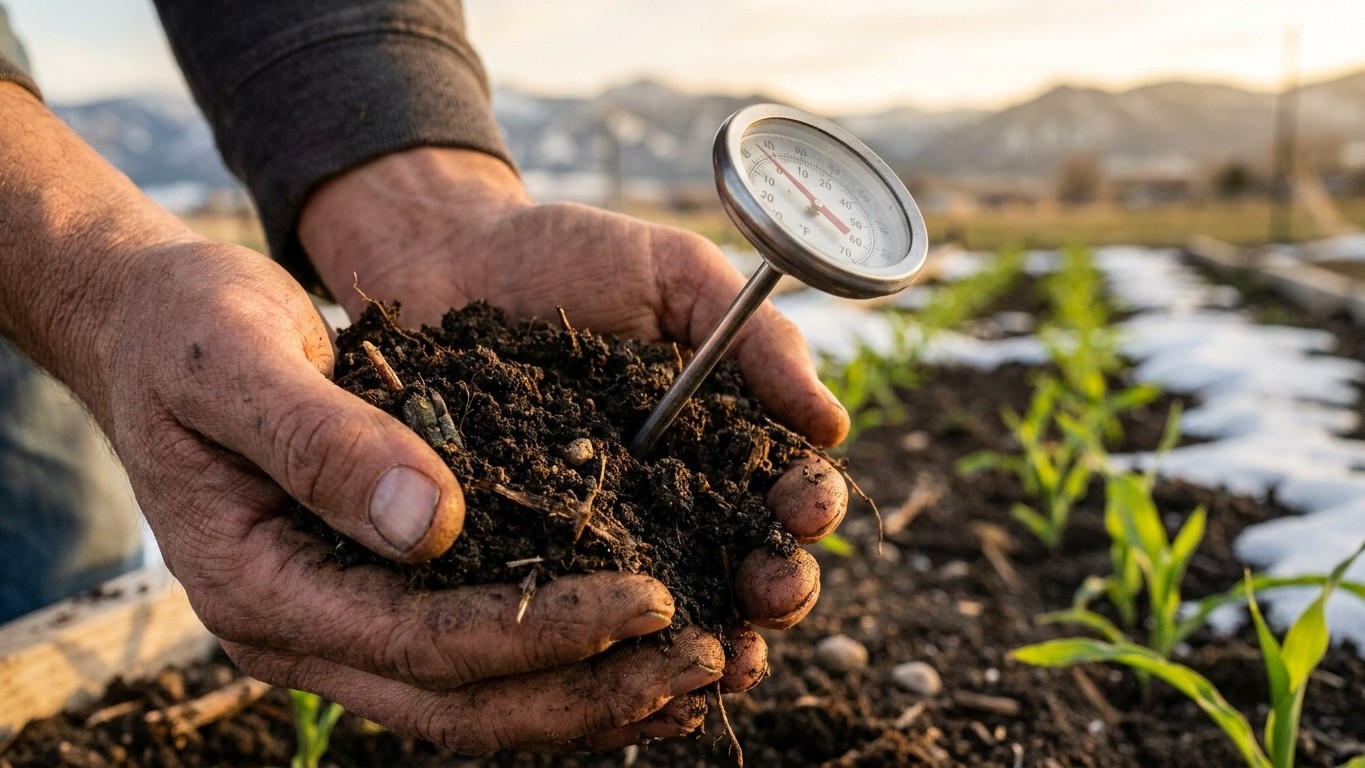
Here’s the mechanism that trips people up: the last spring frost at the Denver-area reference station falls somewhere between May 1 and May 11, but that date tells you almost nothing about when you can plant corn, or about Will Sweet Corn Ripen in Colorado? in your area. Soil temperature lags well behind air temperature, and the ground rarely climbs into the 60s until later in the month, sometimes not until early June. A gardener who plants corn seed the week after the last frost is usually still weeks too early. Cold, wet soil just rots the kernel or leaves it sitting dormant, waiting for warmth that hasn’t arrived yet.
Once the soil clears that 60°F threshold, the clock that matters starts running: 60 to 90 days from planting to maturity, depending on the variety. For a closer look at When to Sow Sweet Corn in Colorado, push planting into early June and a 60-day type is ready by the end of July, with the whole month of August still in hand before frost. A 90-day type finishes closer to the end of August, which still leaves a real cushion, since the first fall frost at the reference station doesn’t typically arrive until September 30 at the earliest, and sometimes not until October 12.
That gives a frost-free window of roughly 142 to 164 days at the reference station, depending on where the season falls within the normal range. Subtract the weeks the soil spends too cold for planting, and you’re still left with enough time for either maturity class to work in most years, on the plains and in valley towns at similar elevation to the reference point.
Summer heat helps here more than it hurts. The reference station averages 39.6 days a year at or above 90°F, and that kind of heat load pushes corn through its growth stages fast. The tradeoff is water. Heat that speeds up ripening also drains soil moisture faster, so consistent watering through tasseling and ear fill matters more in a hot, dry stretch than it would in a milder climate. Skip irrigation during a heat spike and the plant will abort kernels rather than push through it.
The caution that matters most is elevation. The reference numbers above describe conditions near Denver, at 5,280 feet on the plains. Mountain towns run a much shorter season, and some can see frost even in July. The western slope runs on its own pattern again. None of the math above holds once you’re well above the reference elevation, or west of the Divide.
Does a late variety fit here?
A 60-day variety
A 60-day sweet corn is the safer bet almost anywhere in the state’s lower-elevation valleys and plains. Planted once soil has warmed into the 60s, typically late May into early June, it matures by late July. That leaves roughly two full months before the earliest end of the fall frost range, September 30. Even in a cool, late year, or on a site a bit higher than the reference station, a 60-day type has enough slack in the calendar to finish and still allow for a slightly delayed planting if a wet spring pushes soil warming back a week or two.
A 90-day variety
A 90-day variety is a tighter fit. Planted at the same time, early June, it matures around the end of August, which still lands about a month before the earliest fall frost date at the reference station. That’s a workable margin on the plains, but it’s a much smaller cushion than the 60-day type carries, and it disappears fast if the soil warms late or the season runs cool. Move up into the foothills or into mountain valley towns, where the season compresses and frost can arrive as early as July, and the 90-day variety plainly does not fit. There isn’t enough season left to carry it to maturity in those locations, and growers there should stick to the shorter maturity class instead.
| Maturity class | Typical planting | Typical harvest | Buffer before earliest fall frost (Sept 30) |
|---|---|---|---|
| 60-day variety | Late May to early June | Late July | About two months |
| 90-day variety | Early June | Late August | About one month |
What Goes Wrong here
- Soil sown too cold. Planting right after the last spring frost, instead of waiting for the ground to reach 60°F, is the most common failure. The fix is patience: check soil temperature directly rather than counting days off the frost date, and hold off until it’s consistently above that mark.
- A variety too late for the season. A 90-day type planted late, or grown at higher elevation where the frost-free window shrinks, can run out of season before the ear fills. The fix is matching maturity class to elevation: shorter varieties for anywhere above the plains, and even on the plains, treat a 90-day type as needing an on-time planting with no delays.
- Sweetness lost to cross-pollination. This one has nothing to do with climate. Standard sweet (su), sugary-enhanced (se), and supersweet (sh2) types cross-pollinate readily, and if two types tassel at the same time nearby, the sh2 or se ears lose their sweetness and turn starchy. There’s no published isolation distance to rely on here. The fix is timing, not distance: stagger plantings so the different types don’t tassel in the same window, or grow only one type per season. Corn should still be planted in blocks of three or more rows rather than a single line, since that shape is what lets each plant pollinate reliably regardless of which type is grown.
Checking this against your own county
The numbers above come from a single reference station and describe plains conditions at roughly 5,280 feet. Colorado’s growing seasons vary enormously by elevation and by which side of the Divide a garden sits on, so the same corn strategy that works in a Denver-area valley can fail outright in a mountain town forty miles away. Before committing a season to a 90-day variety, check local frost data and planting guidance through Colorado State University Extension, which maintains county-level offices with growing-season information specific to each area of the state. A quick call to the local office, or a look at their published planting charts, will confirm whether the window described here actually matches conditions at a given address.
Common questions
Can I speed things up by starting corn seed indoors?
Corn doesn’t transplant well; its root system resents disturbance. Most growers direct-seed once soil temperature is right, rather than starting indoors.
How do I know an ear is actually ripe?
Check three signs together, not just one: the silks should be dry and brown, the husk should still feel moist and green, and a puncture into a kernel should release milky juice rather than clear liquid or a dry paste.
Does the 60 to 90 day range include time from silk emergence to harvest?
No. That figure counts from planting to maturity. It’s a separate window from the shorter stretch between silk emergence and picking, which isn’t detailed here and shouldn’t be confused with the planting-to-harvest count.
What happens if I plant su and sh2 corn in the same yard?
If they tassel at the same time, pollen drifts between them and the sh2 ears lose their sweetness. Stagger the planting dates so the two types tassel in different weeks instead.