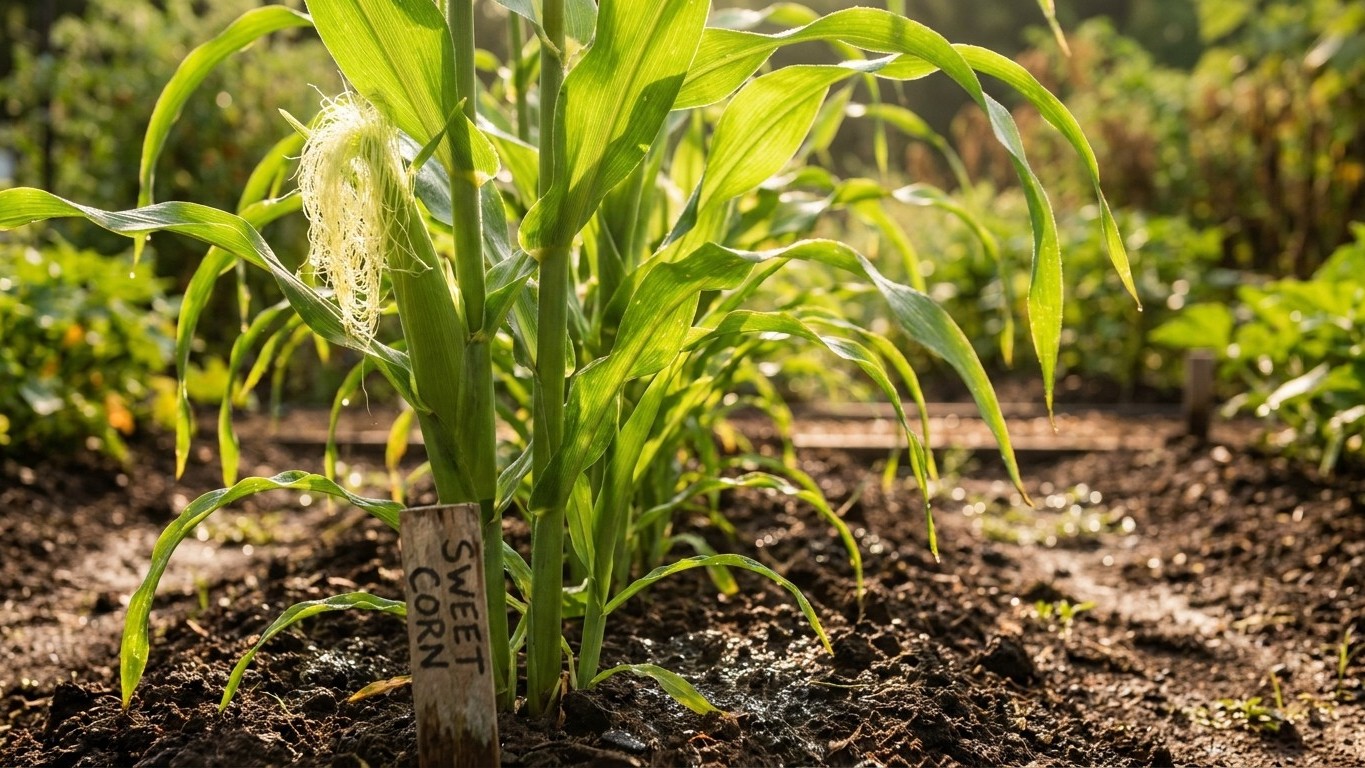

Sweet corn can ripen in Massachusetts, but the state’s calendar leaves less room than most gardeners assume. Soil warms to the required 60°F well after the last spring frost, and that lag, combined with when the first fall frost typically shows up, decides which varieties actually have time to mature before the season ends.
The short answer
Start with the number that trips people up: soil temperature, not air temperature, is what sweet corn actually needs. NOAA’s climate normals put the last spring frost across Massachusetts between April 1 and April 8, but that date only tells you when the air stops freezing. The soil itself takes considerably longer to catch up. It has to shed the cold it absorbed all winter, and that process runs weeks behind the thermometer readings that declare frost season over. Sweet corn needs the ground above 60°F before germination even begins, so the planting window for corn opens noticeably later than the window for frost-tender flowers or early lettuce.
That delay matters less than it sounds, because Massachusetts compensates on the other end of the season. The first fall frost, according to the same NOAA dataset, doesn’t arrive until somewhere between November 3 and November 14. Stack that against an early-April last frost and you get a frost-free stretch running roughly seven months, from about 210 to 225 days depending on where in the state you’re measuring. Even after losing several weeks to the soil’s slow warm-up, gardeners are left with a growing season that comfortably clears the 60 to 90 days sweet corn needs from planting to harvest, according to Utah State University Extension’s guidance on the crop.
The margin isn’t infinite, though, and it isn’t the same everywhere. NOAA’s frost data for this region comes from a waterfront urban station, which happens to be the mildest reporting point in the state. Coastal and urban gardens close to that kind of moderating water influence get the full benefit of the late fall frost and the early spring one. Inland valleys, higher elevations, and especially the Berkshires run on a different clock: frost shows up earlier in autumn and lingers later into spring, which shrinks the window from both directions at once. A gardener in a river valley or hill town should treat the November dates as optimistic and plan for an earlier cutoff.
Summer heat plays a supporting role too. The reference station averages 10.2 days a year at 90°F or hotter, which is a moderate heat load, not a scorching one. That’s enough warmth to keep corn’s growth steady through July and August without pushing plants into the kind of heat stress that stalls pollination in hotter climates. So the real constraint here isn’t summer heat. It’s the length of the window between a soil that warms late and a frost that, in many parts of the state, arrives sooner than the coastal average suggests.
Does a late variety fit here?
Sweet corn varieties are commonly grouped by the number of days from planting to harvest, and Massachusetts gardeners typically have to choose between something quick and something that pushes the season.
A 60-day variety
A variety needing about 60 days from planting fits this climate with room to spare. Even accounting for a planting date pushed back until the soil reliably clears 60°F, a 60-day corn can go in the ground, mature, and get harvested well before midsummer ends, let alone before any fall frost. This is the safer bet for anyone gardening inland, at elevation, or in the Berkshires, where the frost-free window runs shorter than the statewide average. It’s also the practical choice for a second, later planting if a gardener wants two harvests instead of one long single crop.
A 90-day variety
A 90-day variety asks more of the calendar. Along the coast and in the warmer, more urbanized parts of the state, where fall frost tends to hold off until closer to mid-November, a 90-day corn generally still fits: planting after the soil warms, then counting forward 90 days, lands well ahead of frost even with a few weeks of buffer. But that math gets tighter the further inland or higher up you garden. In the Berkshires and other cooler pockets where frost arrives earlier and the soil takes longer to warm in spring, a 90-day variety can run out of runway, especially in a cool, wet spring that delays planting past its usual window. For those gardens, the 90-day corn is a gamble rather than a safe bet, and a shorter-season variety is the more dependable choice.
What goes wrong here
- Soil sown too cold. Planting by the calendar instead of by the thermometer is the most common mistake. Seeds pushed into soil still below 60°F sit and rot instead of germinating, or come up weak and stunted. The fix is simple: check soil temperature directly with a soil thermometer a few inches down, rather than assuming the last frost date means the ground is ready.
- A variety too late for the season. Choosing a 90-day corn in a cooler inland or Berkshire location, especially after a slow spring delays planting, can leave the crop caught by an early fall frost before it finishes maturing. The remedy is matching the variety to the location: shorter-season corn for shorter-season gardens, and the longer varieties reserved for the milder coastal and urban parts of the state.
- Sweetness lost because two types tasselled together. This one has nothing to do with weather. Sweet corn’s flavor depends on which pollen reaches which silk, and Utah State University Extension notes that su, se, and sh2 types lose their sweetness if they tassel at the same time nearby. There’s no published isolation distance to fall back on here, so the fix has to be about timing and layout: stagger planting dates so the varieties tassel weeks apart, and plant each type in its own block of three or more rows rather than scattered single rows, so cross-pollination has less chance to happen in the first place.
Common questions
When should I test soil temperature for planting sweet corn in Massachusetts?
Start checking a few inches down in the soil once the last frost date has passed for your area. Because soil lags behind air temperature, waiting for a thermometer reading of 60°F is more reliable than counting days from the frost date alone.
How many days before the first fall frost should I count backward to plant?
Count the variety’s days-to-maturity (60 to 90 days) backward from your area’s expected first fall frost, using November 3 to November 14 for milder coastal areas and an earlier estimate for inland and Berkshire locations where frost historically arrives sooner.
Can I grow sh2 and su corn in the same garden without losing sweetness?
Only if they don’t tassel at the same time. Stagger planting dates between the types and keep each variety in its own block of rows, since simultaneous tasseling nearby is what causes the sweetness loss, not the climate.
How do I know when sweet corn is actually ripe?
Look for all three signs together: silks that have turned dry and brown, husks that are still moist and green, and juice that runs milky when a kernel is punctured. Any one sign alone isn’t a reliable indicator on its own.