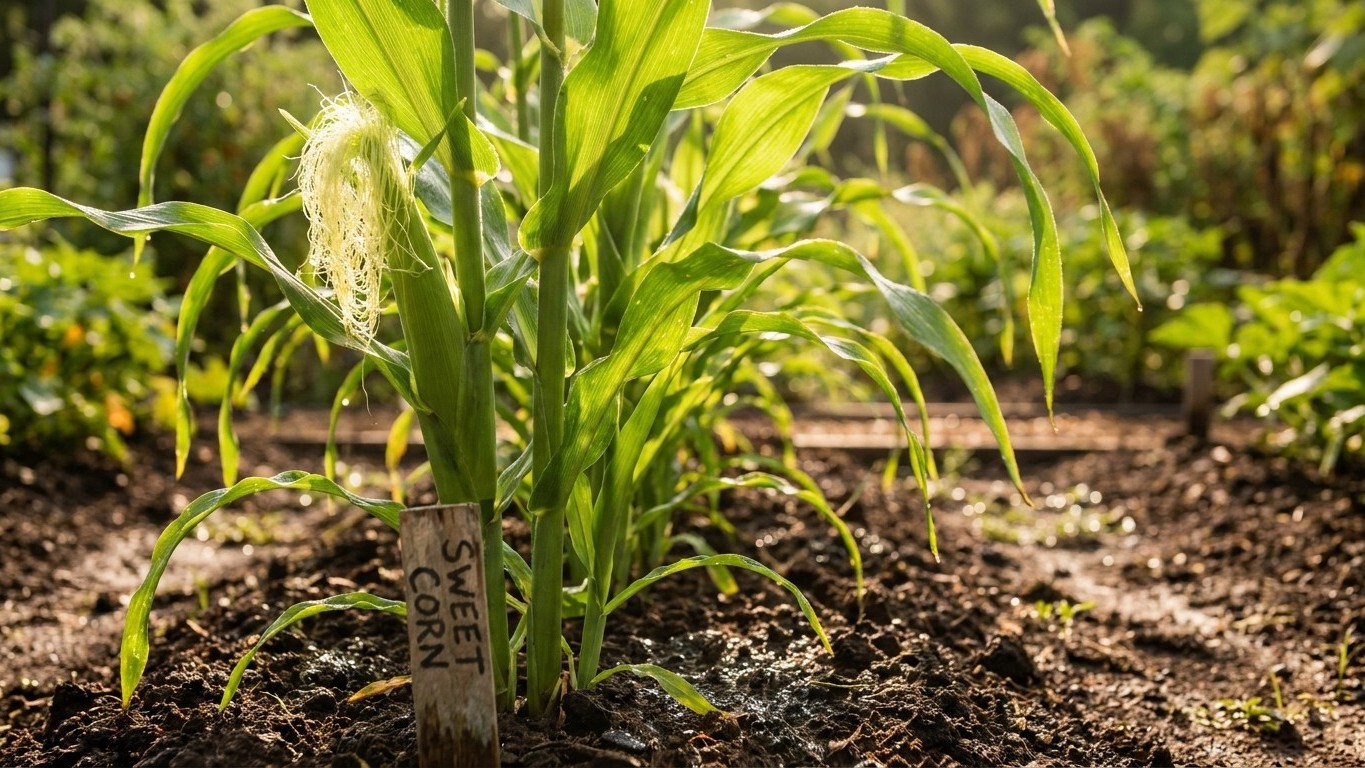

Yes, in most of Minnesota, sweet corn has enough season to ripen fully, but the window is tighter than gardeners assume. The soil has to hit 60°F before you plant, and that day lands well after the last frost, not on it. From there, a 60 to 90 day variety needs to close out before the first fall frost arrives. In the Twin Cities area, that math works. Farther north, it gets thin.
The short answer
Start with the number that trips people up: the last spring frost across the reference period runs April 17 to April 30, but that is not when you plant sweet corn. Sweet corn seed wants soil at 60°F or warmer, and soil temperature lags well behind the air. A calendar that says “frost is over” on April 25 does not mean the ground is ready. It usually takes additional weeks of steady sun before the top few inches of soil catch up to that 60°F mark. That gap between frost-free and soil-warm-enough is the first thing that decides whether a planting succeeds or just rots in cold, wet dirt.
Once the soil clears 60°F, the clock that matters is the 60 to 90 days to maturity printed on the seed packet. Count forward from your real planting date, not from the frost date, and see where that lands against the first fall frost, which runs October 11 to October 23. For most of the state, that gives a stretch of several months between a realistic planting window and the first freeze risk in fall. It’s a comfortable enough margin for a 60 to 90 day crop, provided the soil warmed on schedule and the season didn’t start with a cool, wet spring that held the ground back.
Summer heat matters too, though not in the way people expect. Minnesota averages 10.6 days a year at 90°F or hotter. That’s a modest heat load, meaning growth is steady rather than explosive. Corn planted in cool soil doesn’t get bailed out by a scorching July; it just runs later than the packet promises. That’s the second reason the 60-to-90-day figure should be treated as a minimum, not a guarantee, especially in a spring that’s slow to warm.
Put together, the short answer holds for the bulk of Minnesota: soil warms up in time, the frost-free stretch runs long enough, and a 60 to 90 day variety, planted when the ground is actually warm rather than when the calendar says frost has passed, will ripen before autumn closes the door. The caution built into the state’s own climate record is that the far north runs two to three weeks tighter at both ends, spring and fall alike, which shrinks that margin considerably.
Does a late variety fit here?
Not every packet marked “sweet corn” runs the same length. The days-to-maturity number changes everything about whether a given planting has room to finish, and the answer looks different depending on where in Minnesota you’re standing.
A 60-day variety
This is the safe choice almost anywhere in the state. Even accounting for soil that’s slow to reach 60°F and a planting date pushed into May, a 60-day crop has weeks of slack before the first fall frost arrives in mid-October in the milder south, or in the tighter late-September-to-October window up north. That slack matters, because seasons don’t always run to plan; a cool June or a wet spell that delays planting by a week or two won’t sink a 60-day crop the way it would a longer one. For northern Minnesota gardeners working with a spring that arrives two to three weeks later and a fall frost that arrives two to three weeks earlier, this is the length of season that reliably closes out.
A 90-day variety
Here the math gets tight, and the answer depends heavily on location. In the milder south, where the season stretches longer at both ends, a 90-day variety still has enough runway between a realistic soil-warm planting date and the October frost window, though the margin is thinner than with a 60-day crop and leaves little room for a slow spring. In northern Minnesota, where both the frost-free window and the soil-warming timeline are compressed, a 90-day variety does not reliably fit. Between the delayed start (soil warming even later against an already later last frost) and the earlier fall freeze, there simply isn’t consistent room for the full 90 days to play out before cold weather threatens the crop. If you’re gardening in the northern part of the state, a late-season variety is a gamble the climate normals don’t support.
What goes wrong here
Most sweet corn failures in Minnesota trace back to a handful of repeatable mistakes, and none of them require bad luck to explain.
- Soil sown too cold. Planting on the calendar date rather than the soil condition is the most common error. Seed dropped into ground still below 60°F sits, rots, or germinates unevenly and weak. The remedy is simple: check the actual soil temperature before planting, not the frost date, and wait until it holds at or above 60°F rather than guessing from the calendar.
- A variety too late for the season. Choosing a 90-day variety in a part of the state where the frost-free window doesn’t support it leaves the crop racing a fall frost it can’t win. The fix is matching the days-to-maturity number to your actual location: a 60-day variety for northern Minnesota, and even in the milder south, treating 90 days as the outer edge rather than the safe middle.
- Sweetness lost because two types tasseled together. This one has nothing to do with weather. Sweet corn varieties fall into different sugar-retention types, and if two different types tassel and release pollen at the same time, cross-pollination turns the sweeter type starchy and tough. The remedy isn’t a distance you plant apart; it’s timing. Stagger planting dates so the different types don’t tassel in the same window, and grow each variety in its own block of three or more rows rather than a single thin line, so pollen from one block doesn’t dominate the other while they’re both shedding at once.
Common questions
Does the last frost date tell me when to plant sweet corn in Minnesota?
Not on its own. The last frost date (April 17 to April 30) tells you when freezing air is unlikely, but sweet corn needs soil at 60°F or warmer, and soil warms up well after that frost date passes. Treat the frost date as a floor, not a planting signal.
Can I grow a 90-day sweet corn variety in northern Minnesota?
Not reliably. Northern Minnesota’s frost season runs two to three weeks tighter at both ends than the milder south, and combined with a later soil warm-up, that leaves too little room for a full 90-day crop to finish before the first fall frost. A 60-day variety is the safer bet there.
Why did my sweet corn taste starchy instead of sweet?
This usually isn’t a climate problem. If two different sweet corn types tasseled at the same time nearby, cross-pollination can turn a sweeter variety starchy. Stagger planting dates between types and keep each variety in its own block of three or more rows to avoid the overlap.
Does Minnesota get hot enough in summer to speed up sweet corn?
Not dramatically. The state averages only 10.6 days a year at 90°F or hotter, a modest heat load. That means growth stays fairly steady through the season rather than accelerating in a hot stretch, so a slow, cold spring start isn’t offset by summer heat later on.