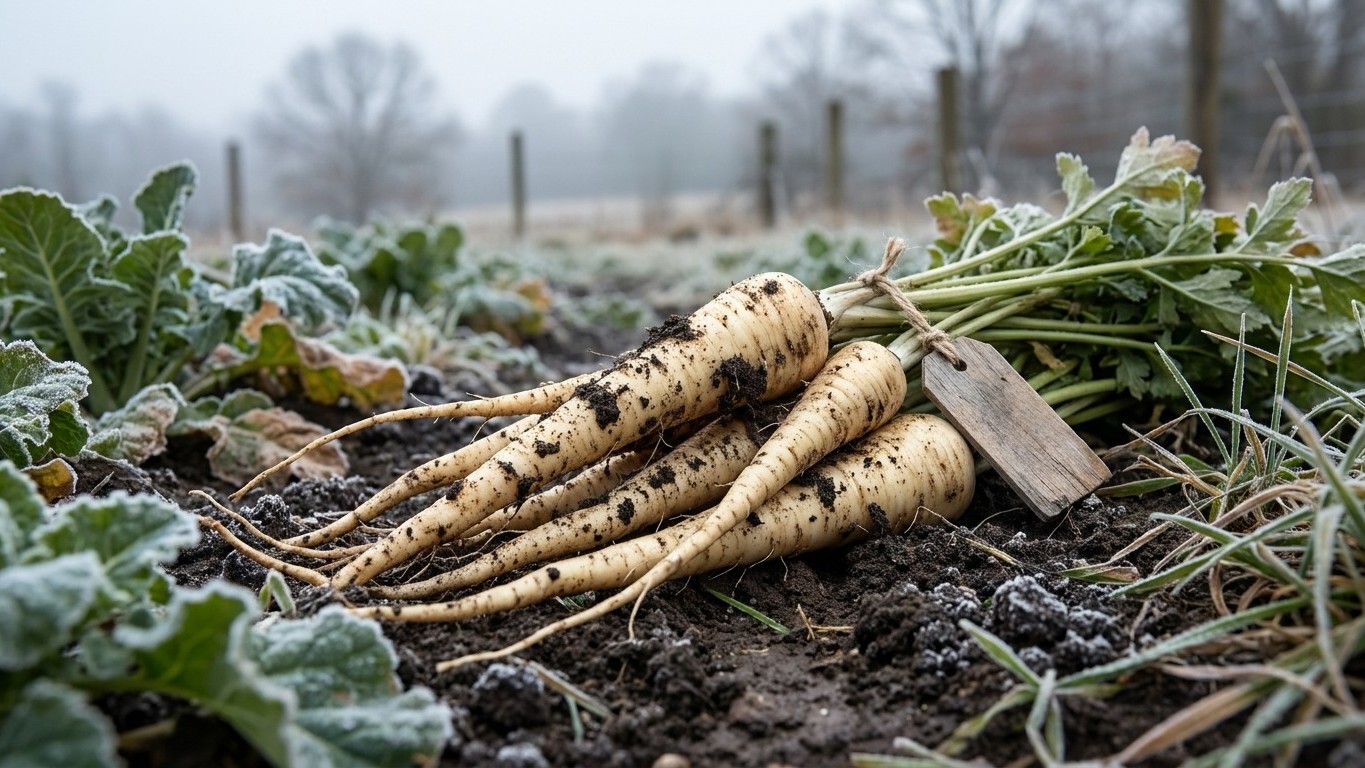

Answer: In the Houston area, the climate data says no. The coldest month here averages a minimum of just 43.7°F, well above freezing, which means the sustained frost exposure parsnips need to convert their starch to sugar just isn’t reliably present. You’ll grow a full, healthy root. Whether it tastes sweet is another matter entirely, and one that depends on how far north or inland you garden within the state.
The short answer
Start with the number that actually decides this, not the zone map. NOAA’s 1991-2020 climate normals put the mean daily minimum for Houston’s coldest month at 43.7°F. That’s not a record low or some rare cold snap. It’s the average low across the entire coldest stretch of winter, and it sits more than 11 degrees above freezing.
That gap matters more than most gardeners realize. Parsnip sweetening isn’t triggered by cold weather in general. It comes from repeated exposure to actual frost, several weeks of temperatures dropping to or below 32°F, which slowly breaks down stored starch into sugar inside the root. A mild winter can grow a perfectly fine parsnip, tall tops, thick roots, no complaints from the soil, and still hand you a root that tastes flat, starchy, almost bland compared to the same variety pulled after a hard northern winter.
Why the hardiness zone doesn’t answer this
It’s tempting to check a hardiness zone map and call it settled. Don’t. Hardiness zones describe the coldest extreme a perennial plant can survive over winter. Parsnip sweetening asks a completely different question: how many weeks does this ground spend at or below freezing? A location can sit in a zone that technically allows frost and still deliver too few frosty nights, too inconsistently, to sweeten a root sitting in the soil. Houston’s 43.7°F average minimum for its coldest month tells you directly that frost here is the exception on any given night, not the rule.
Texas is a big state, and this figure comes from a single reference station near Houston, representing the mild Gulf Coast end of the state. Move north toward the Panhandle, or into North Texas and the Hill Country, and winter behaves very differently, with longer, more consistent freezes that make frost sweetening far more plausible. If you’re gardening outside the Gulf Coast, treat this 43.7°F figure as a baseline for how mild things can get in Texas, not as a description of your own backyard.
Does the season fit?
Timing a parsnip crop means working backward and forward from two fixed points: the last spring frost and the days a parsnip needs from seed to maturity. In the Houston area, that first fixed point falls between February 4 and March 1, based on NOAA’s 30-70% freeze probability window for the IAH station. Here’s how the arithmetic plays out.
- Sowing window: Parsnips go into the ground in place, 2 to 3 weeks before the last spring frost. With a last frost falling between February 4 and March 1, that puts the sowing window somewhere around mid-January to mid-February.
- Germination lag: Parsnip seed is slow. Expect 14 to 21 days before anything visible breaks the soil surface. Don’t dig up the bed and re-sow at day 10 assuming failure; this is normal for the crop.
- Days to maturity: Count 100 to 120 days from the original seeding date, not from germination. Starting in mid-January to mid-February, that puts harvest-readiness somewhere between late April and mid-June.
- Compare against fall frost: The first fall frost here arrives between December 1 and December 19. That’s six to seven months past the spring-sown crop’s maturity date, an enormous buffer if all you need is length of season.
- The real constraint: A spring-sown parsnip matures and sits ready during the hottest stretch of the Houston year, nowhere near the cool weeks it needs for sweetness. Gardeners chasing flavor rather than just a harvestable root generally shift the sowing date later, aiming for maturity to land closer to that December frost window instead.
So the season fits, comfortably even, with more than double the days needed between the two frost dates. The catch isn’t length. It’s alignment. Growing a parsnip here is easy. Timing it to actually meet frost while it’s still in the ground takes deliberate planning around that December window, not the default spring calendar.
What goes wrong here
The failures tied to this soil and this climate
- Forked roots from heavy ground. Gulf Coast Texas soil runs heavy and clay-rich in many areas, which splits a taproot as it hits resistance and forces it sideways or into branches. Utah State University Extension recommends deep, sandy soil for parsnips; where the native ground is heavy, double dig the bed to at least 12 to 15 inches before sowing, working in enough organic matter to loosen the profile all the way down.
- Forked roots from overwatering. This is a separate cause from soil texture, and it’s easy to confuse the two. Consistently soggy soil encourages the root to branch as it searches for the path of least resistance. Water deeply but infrequently once the crop is established, letting the top inch or two dry between waterings rather than keeping the bed constantly wet.
- A crop that bolts or stalls in summer heat. Sow too late in the spring window and Houston’s early summer heat arrives before the root has finished sizing up, sometimes pushing the plant to bolt instead of storing sugar into the root. Stick to the mid-January through mid-February sowing window, or shift to a later summer sowing timed for a winter maturity instead.
- A winter too mild to sweeten. Even a well-grown, unforked root can come out of the ground bland if the coldest month never delivers sustained frost, and a 43.7°F average minimum means many nights won’t touch freezing at all. There’s no fix for the climate itself, but leaving mature roots in the ground through every cold snap the season does offer, rather than pulling them early, gives whatever frost does arrive the maximum chance to do its work.
Common questions
Can I speed up sweetening by refrigerating harvested parsnips?
The sweetening process described here happens in the ground, through the plant’s own response to cold soil and air. Refrigeration after harvest doesn’t reproduce that biological process; it just slows spoilage. If frost exposure in the ground has been limited, storing the roots in a cold refrigerator afterward won’t recover the sweetness a longer frost period would have produced.
Should I plant a different variety for a mild Texas winter?
The sourced guidance for this crop doesn’t name specific varieties, so no particular one can be recommended over another here. The sweetening mechanism, frost converting starch to sugar, applies to parsnips generally, not to one variety versus another.
Is Houston’s climate the same as the rest of Texas for this crop?
No, and this is worth repeating. The 43.7°F coldest-month minimum and the frost dates cited here come from a Gulf Coast reference station. North Texas, the Panhandle, and the Hill Country all see colder, longer winters, which changes both the season-fit arithmetic and the odds of getting real frost sweetening. Treat these figures as specific to the Houston area, not as a statewide answer.
How long can parsnips sit in the ground after they mature?
The sourced guidance emphasizes that the crop needs several weeks of cool, frosty weather after maturity to develop its best flavor, which is the reason gardeners often delay harvest rather than pulling roots the moment they’re technically ready. Beyond that general point, no specific maximum storage-in-ground period is given here, so treat ongoing cold weather, not a fixed calendar date, as the signal for when to harvest.