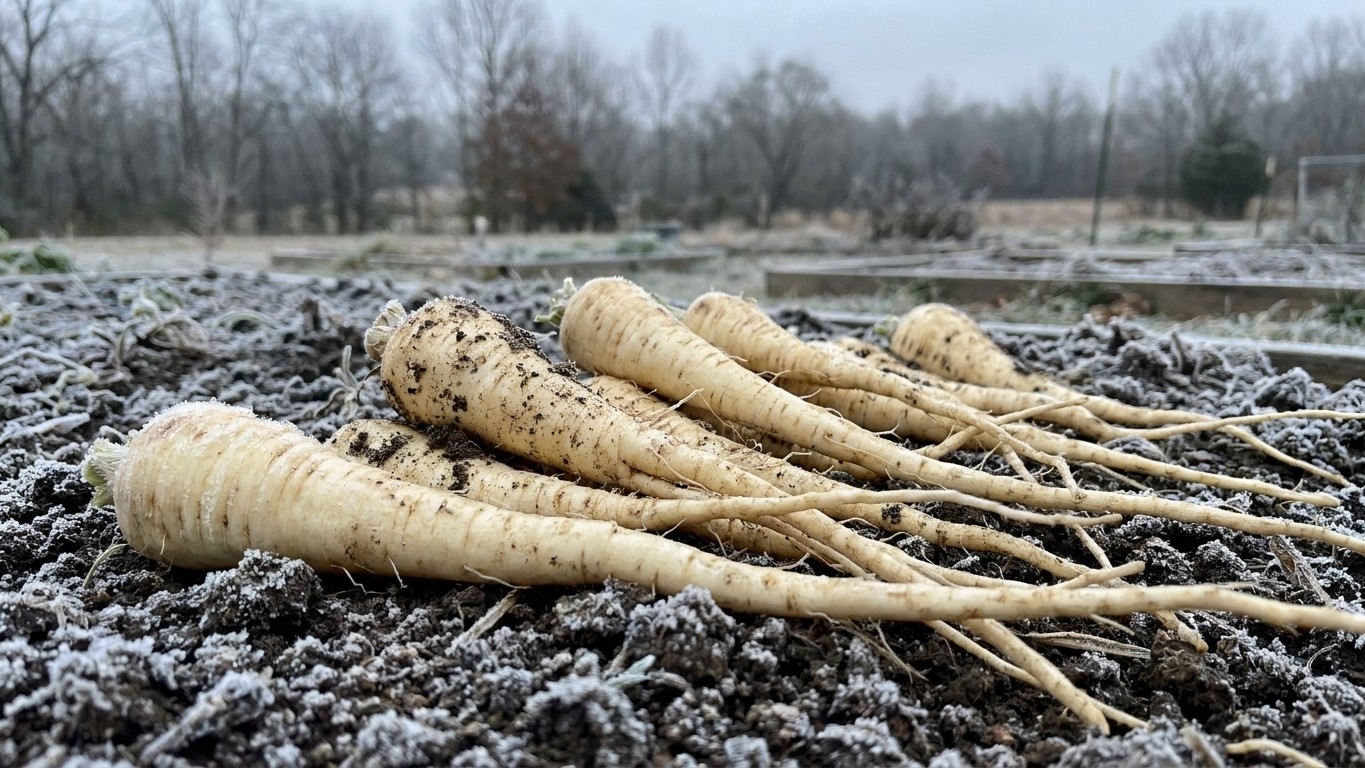

In Houston, the coldest month averages a nightly low of 43.7°F, a temperature that barely brushes frost, let alone delivers the sustained freezing spells parsnips need. That means Texas soil can absolutely raise a parsnip root to full size, but the deep, nutty sweetness gardeners chase after a hard winter is a different question, and the numbers below explain why the two outcomes split apart.
The short answer
Start with the one number that decides everything here: does this part of Texas hand a parsnip several weeks of genuine frost, or does it just flirt with cold and move on? At the Houston reference station, the mean daily minimum for the coldest month sits at 43.7°F, a figure pulled from NOAA’s 1991-2020 Climate Normals. That’s not a record low and not a seasonal average temperature. It’s the typical overnight floor during the coldest stretch of the year, and 43.7°F is well above freezing.
Utah State University Extension is specific about what parsnips actually need to sweeten: several weeks of cool, frosty weather, cold enough to convert the root’s stored starch into sugar. A single cold snap doesn’t do it. The process depends on repeated exposure, night after night, to temperatures at or below freezing. A coldest-month average minimum of 43.7°F describes a mild winter with occasional cold fronts passing through, not a stretch of weeks where the ground regularly freezes.
So the parsnip itself isn’t the problem. Given loose, deep soil and a reasonable growing window, a Texas gardener near the Gulf coast can grow a perfectly respectable parsnip root, full-sized, pale, tapered. What that root won’t reliably get is the flavor payoff northern gardeners describe, the sweetness that shows up after the first hard freezes of late fall and deepens through winter storage in the ground. Without that frost exposure, the sugars stay locked up as starch, and the harvested root tends to taste more starchy and mild than sweet.
This is worth separating clearly from hardiness zone talk. A hardiness zone tells you what a plant can survive over winter. It says nothing about how many frosty nights actually occur, which is the number that governs sweetening. Two locations can share a hardiness zone rating and still see very different frost totals depending on humidity, elevation, and distance from open water, so the zone number isn’t the one to lean on here. The frost data is.
Does the season fit?
Parsnips are direct-sown, never transplanted, and Utah State University Extension puts their time to maturity at 100 to 120 days from the day the seed goes into the ground, with sowing recommended 2 to 3 weeks before the last spring frost. Laid against Houston’s frost calendar, here’s how that plays out.
- The last spring frost at the Houston reference station falls somewhere between February 4 and March 1, based on NOAA’s 30-70% freeze probability band.
- Sowing 2 to 3 weeks ahead of that puts seed in the ground roughly mid-January through mid-February, depending on exactly where in that window the season lands.
- Parsnip seed is notoriously slow to germinate, 14 to 21 days is normal, so a gardener sowing in mid-January may not see a single sprout until early February.
- From that sowing date, 100 to 120 days of growth carries the root to maturity somewhere between late April and mid-June.
- The first fall frost at the same station arrives between December 1 and December 19.
- That leaves roughly six months of open, frost-free time sitting between a root that’s already mature and the first cold snap of the following winter.
That gap is the story. The season doesn’t run out here, it runs long. A spring-sown parsnip following the standard timeline reaches full size well before summer even peaks, months ahead of any frost. The frost-free window is generous enough that timing the sowing and harvest isn’t the challenge. The mismatch is that the crop’s biology (mature root, ready to store sugar) and the region’s cold snaps (arriving in December, sparse and mild) never line up on the calendar the way they do farther north, where a spring sowing matures right as autumn frost sets in.
What goes wrong here
- Forked, split roots in heavy or rocky ground. Parsnip taproots push straight down, and anything that blocks that path, clay, compacted soil, buried rock, sends the root branching around the obstruction. Utah State University Extension notes that heavy soil must be double dug before sowing, and that deep sandy soil is the crop’s natural preference. Working the bed 12 to 18 inches deep and removing stones before seeding solves this one.
- Forked roots from overwatering. This is a separate cause from soil texture, and it happens even in well-prepared beds. Inconsistent, heavy watering encourages the root to chase moisture unevenly, splitting rather than growing as a single taproot. Deep, even watering on a steady schedule, rather than frequent shallow soaking, keeps the root growing straight.
- A season that runs shorter than expected. Because germination alone takes 14 to 21 days, any delay in sowing, waiting for soil to warm, or gardening in a cooler pocket of the state where the last frost lags later than the Houston dates above, eats directly into the 100 to 120 day window. Sowing at the earliest safe date rather than waiting is the only real fix.
- A winter too mild to sweeten the crop. With a coldest-month mean minimum of 43.7°F, the region simply doesn’t deliver the several weeks of hard frost the sweetening process depends on. There’s no reliable remedy for this one within the facts available. Leaving roots in the ground through the coldest weeks the region does get, rather than harvesting early, is the only lever a gardener has, and it isn’t a guarantee.
Handling parsnip foliage safely
Parsnips carry a risk that most garden guides skip entirely. According to the North Carolina Extension Gardener Plant Toolbox, “All parts of this plant contain furocoumarins which can make skin sensitive to light causing burns so be sure to wear gloves, long sleeves and long pants when dealing with it.” That’s the entire warning as published, and it deserves to be read exactly that way, not softened.
The mechanism is what makes this catch people off guard. The burn doesn’t come from the sap touching skin alone. It comes from sap on the skin combined with sunlight. That two-part trigger is why the injury tends to show up after a bright afternoon spent pulling tops or digging roots, and why it often doesn’t appear until hours later, once the skin has had time in direct sun. A gardener working in shade or on an overcast day with sap on bare arms may see nothing at all; the same exposure on a sunny afternoon is a different story.
Because the reaction depends on sunlight exposure after contact, the practical protection is covering skin before handling the plant, not washing up afterward. Gloves, long sleeves, and long pants cover the mechanism at its source. And since the source specifies all parts of the plant, not just the leafy tops, that protection applies to pulling roots and handling foliage alike.
Checking this against your own county
Everything above is anchored to a single reference station near Houston, and Texas is too large a state for one station to speak for it. The Panhandle sees its last spring frost and first fall frost months apart from the Gulf coast timeline, and Hill Country and North Texas fall somewhere in between. Even within the Houston area, the Hobby airport station runs about two weeks milder than the IAH station used here.
Texas A&M AgriLife Extension (agrilifeextension.tamu.edu) maintains county-level offices across the state, and a call or visit to the local county office is the fastest way to get frost dates and planting windows specific to a given property rather than a regional average. Given how much frost timing varies across Texas, that local check is worth doing before locking in a sowing date.
Common questions
Can parsnips grow in Texas at all?
Yes. Given loose, deep soil (sandy is ideal, heavy soil needs double digging) and a sowing date timed 2 to 3 weeks before the local last frost, parsnips will germinate and mature over the following 100 to 120 days. Growing a full-sized root isn’t the issue in most of the state.
Why won’t my Texas parsnips taste sweet?
Sweetness depends on several weeks of frosty weather converting the root’s starch to sugar. With a coldest-month average minimum around 43.7°F near Houston, that sustained frost exposure rarely happens, so the root matures without the flavor conversion that colder-winter regions get.
Should I leave parsnips in the ground over winter in Texas?
Leaving roots in place through the coldest weeks the region does get is the only way to expose them to whatever frost does arrive. It’s not a guaranteed fix given how mild the winter minimum runs, but harvesting early removes any chance at sweetening entirely.
Do I need to worry about handling parsnip tops?
Yes. All parts of the plant contain furocoumarins that can sensitize skin to sunlight and cause burns, per NC State Extension. Wear gloves, long sleeves, and long pants whenever handling the plant, especially on a sunny day.