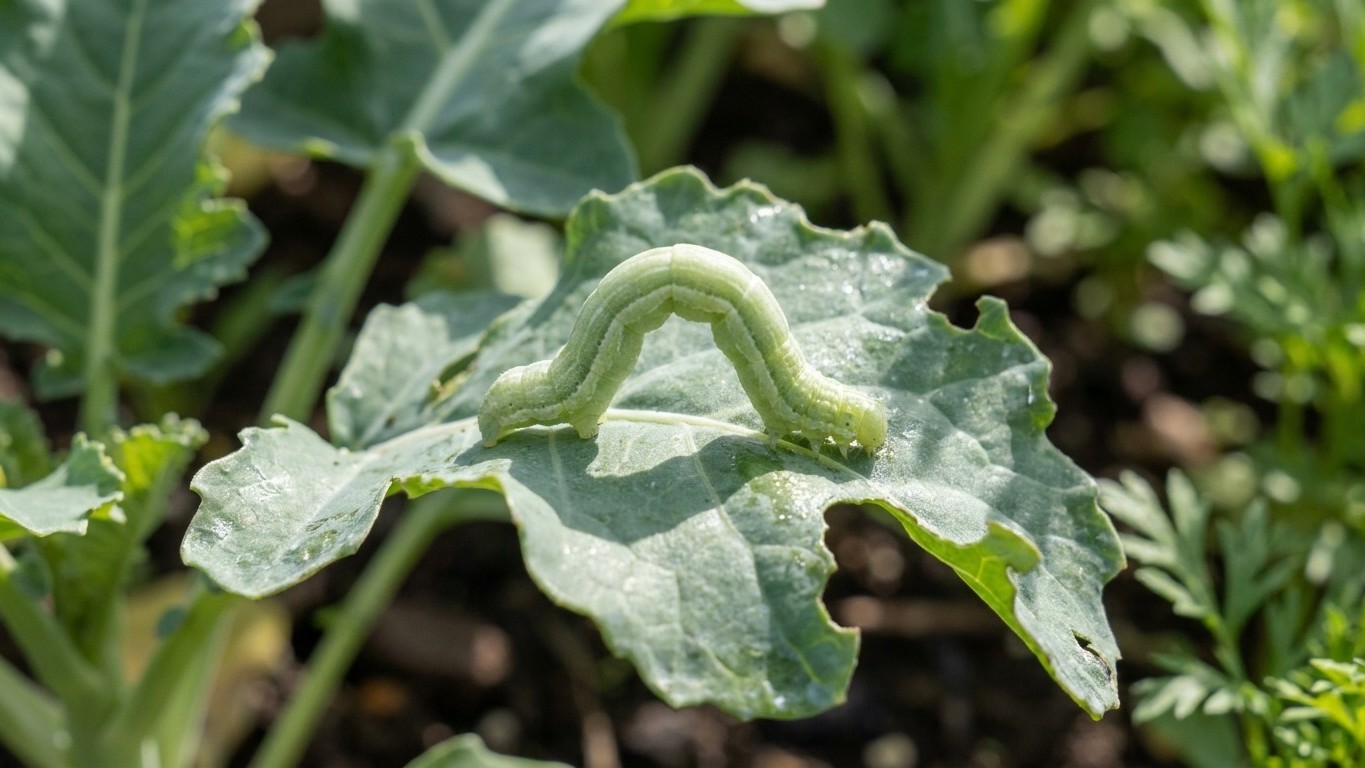

Only three of the pests documented for this region actually feed on summer squash: the striped cucumber beetle, the squash vine borer, and the seedcorn maggot. The rest of the list belongs to other plants entirely, and knowing which is which saves a wasted spray and a missed diagnosis.
Which pests attack summer squash in Nova Scotia

University of Maine Cooperative Extension, which covers the same growing region as Nova Scotia, documents ten pests that show up in this territory: browntail moth, cabbage maggot, Colorado potato beetle, emerald ash borer, lily leaf beetle, seedcorn maggot, spotted wing drosophila, squash vine borer, striped cucumber beetle, and winter moth.
Most of those ten have nothing to do with a squash plant. The emerald ash borer works exclusively inside ash trees, not vegetable stems. The browntail moth and winter moth are caterpillars of hardwood trees and shrubs, chewing leaves on oak or fruit trees, not squash foliage. The lily leaf beetle is a specialist on true lilies (Lilium), and it will pass a squash bed without stopping. The Colorado potato beetle sticks to potatoes and their nightshade relatives, tomatoes and eggplant among them, and rarely touches a cucurbit leaf. The cabbage maggot is a root feeder tied to the cabbage family, brassicas, and squash roots are not on its menu. Spotted wing drosophila is a fruit fly built for thin-skinned soft fruit, berries mostly, and a squash rind is too tough and too far from ripe to interest it.
That leaves three genuine squash feeders. The squash vine borer is a moth whose larva tunnels inside the stem itself, often killing the vine from within before a gardener sees the adult. The striped cucumber beetle feeds on cotyledons, leaves, and flowers, and it also carries bacterial wilt from plant to plant, which makes it more damaging than its size suggests. The seedcorn maggot is the odd one on the list because it does not attack the growing plant at all. It attacks the seed underground, right after planting, and a gardener who blames “poor germination” is sometimes really dealing with this maggot.
The decisive fact for a home garden is simpler than the list looks: two of these three pests act above ground on a plant you can watch, and one acts below ground before the plant even exists yet. That single distinction shapes almost everything about when to check, and what to check for.
When each one shows up, and what it does first
Nova Scotia’s growing season is bracketed by two mean dates from Environment and Climate Change Canada: an average last spring frost of May 7 and an average first fall frost of October 18 at the Halifax Stanfield International A station. Both are averages, not guarantees, meaning frost arrives later than May 7 in one year out of two, and a garden a few counties inland or upland can run weeks behind that number. Pest timing here is best read against that frost-free window rather than against a calendar month, since planting dates themselves shift with it.
The seedcorn maggot moves first, and it moves before anyone sees a squash plant at all. It targets germinating seeds and very young seedlings in cool, wet soil, the exact conditions of an early planting pushed close to that mean frost date. The first sign is not a chewed leaf but an empty spot in the row: seeds that never come up, or seedlings that emerge stunted and yellow with no visible cause above the soil line.
The striped cucumber beetle arrives once seedlings are up and the weather has warmed enough for the adults to be active, whether from direct seeding or transplants set out after the frost risk has passed. What shows up first is feeding damage on the cotyledons and first true leaves, small ragged holes and scraped patches, sometimes with the adult beetle itself visible on the leaf, black and yellow stripes running the length of its body. A heavier infestation can also bring a wilting plant that has nothing to do with drought, because the beetle can introduce bacterial wilt while it feeds.
The squash vine borer comes later in the season, once vines have put on real growth and started to run. Its first sign is deceptive: a single vine wilting in the heat of the day while the rest of the plant looks fine, sometimes recovering overnight before wilting again the next afternoon. A close look near the base of the stem, where the vine meets the soil, is what usually gives it away, with a small entry hole and a pile of moist, sawdust-like frass sitting right at that spot.
Telling the damage apart from everything else
A wilting squash vine has more than one possible cause, and guessing wrong wastes the part of the season that is left. Cutting the stem lengthwise near the wilted section is the single test that separates vine borer damage from everything else, since a hollowed-out, frass-filled tunnel is visible to the eye once the stem is split, while a stem that is intact and simply dry points somewhere else entirely, usually drought stress or heat stress rather than an insect.
| What you see | Possible causes | What settles it |
|---|---|---|
| Whole vine wilts in the afternoon | Squash vine borer, drought stress, bacterial wilt | Split the stem: tunnel and frass mean borer; dry and intact means drought; cut stem oozing a sticky, stringy sap points to bacterial wilt |
| Seeds never come up, or seedlings emerge stunted | Seedcorn maggot, cold wet soil rot | Dig around the seed row; small white maggots in the soil confirm the insect, while a rotted, mushy seed with no maggot points to cold, waterlogged soil |
| Ragged holes in young leaves | Striped cucumber beetle, slugs | Check at dusk or early morning; the beetle is visible on the leaf in daylight, while slug damage comes with a silvery slime trail and no insect present in daylight |
| Yellowing between leaf veins | Nutrient deficiency, not an insect | No pest, hole, or frass is present; this pattern calls for a soil test rather than a pest treatment |
None of these signs are a firm diagnosis on their own. A local extension office can confirm what a photo or a soil sample actually shows, and that confirmation matters more here than in warmer regions, because a short season leaves little room to treat the wrong problem and start over.
What actually works here, and what is a waste of time
Physical exclusion timed to the frost-free window does more good in this climate than any product a gardener could apply afterward. A floating row cover set over seedlings from planting through early flowering keeps both the striped cucumber beetle and the squash vine borer moth off the plant during the exact stretch when each one is laying eggs. Removing that cover once flowers open is the step that decides whether the crop gets pollinated at all, since squash needs insect visits to set fruit, and a cover left on too long blocks bees along with the pests.
Rotating where squash is planted from one year to the next, and avoiding freshly turned-in manure or green matter right before seeding, reduces the cool, wet, decomposing conditions that draw seedcorn maggot to a row of seed. Checking the base of vines regularly through the growing season for the early frass sign of a vine borer, and removing an infested vine promptly, keeps one tunneled stem from being the only thing standing between a full harvest and none.
What tends not to work is treating a vine after a borer is already inside it. By the time wilting shows, the larva is behind the stem wall, out of reach of anything applied to the surface. Planting earlier than the frost-free window to try to outrun the beetles is also a poor trade, since Nova Scotia’s mean last frost of May 7 still runs later in half of all years, and a plant lost to frost never gets the chance to face a pest at all. Any treatment beyond exclusion and rotation is a matter for provincial pesticide regulations, and that decision belongs with an extension office, not a general gardening article.
Where to check this for your own county
The Nova Scotia Department of Agriculture is the provincial resource for confirming what is actually present in a given county, and its county-level contacts are the ones equipped to look at a photo or a sample and give a local answer. A pest documented for the wider region is not the same as a pest confirmed on one particular property, and the difference matters most in a province where growing conditions shift sharply from the coast to inland valleys.
The frost-free window itself is the clearest example of that variation: the May 7 and October 18 dates cited here come from the Halifax Stanfield International A station specifically, and a garden further inland or at higher elevation can run its frost dates weeks later in spring and weeks earlier in fall, which shifts the entire pest calendar along with it.
A gardener who finds a wilting vine, an empty seed row, or a striped beetle on a squash leaf gets more from a call to the county office than from a guess. Bring a photo of the damage and, where possible, the insect or the affected stem itself, since that combination is what lets a local extension agent move past the general list and speak to what is actually growing in that one garden.