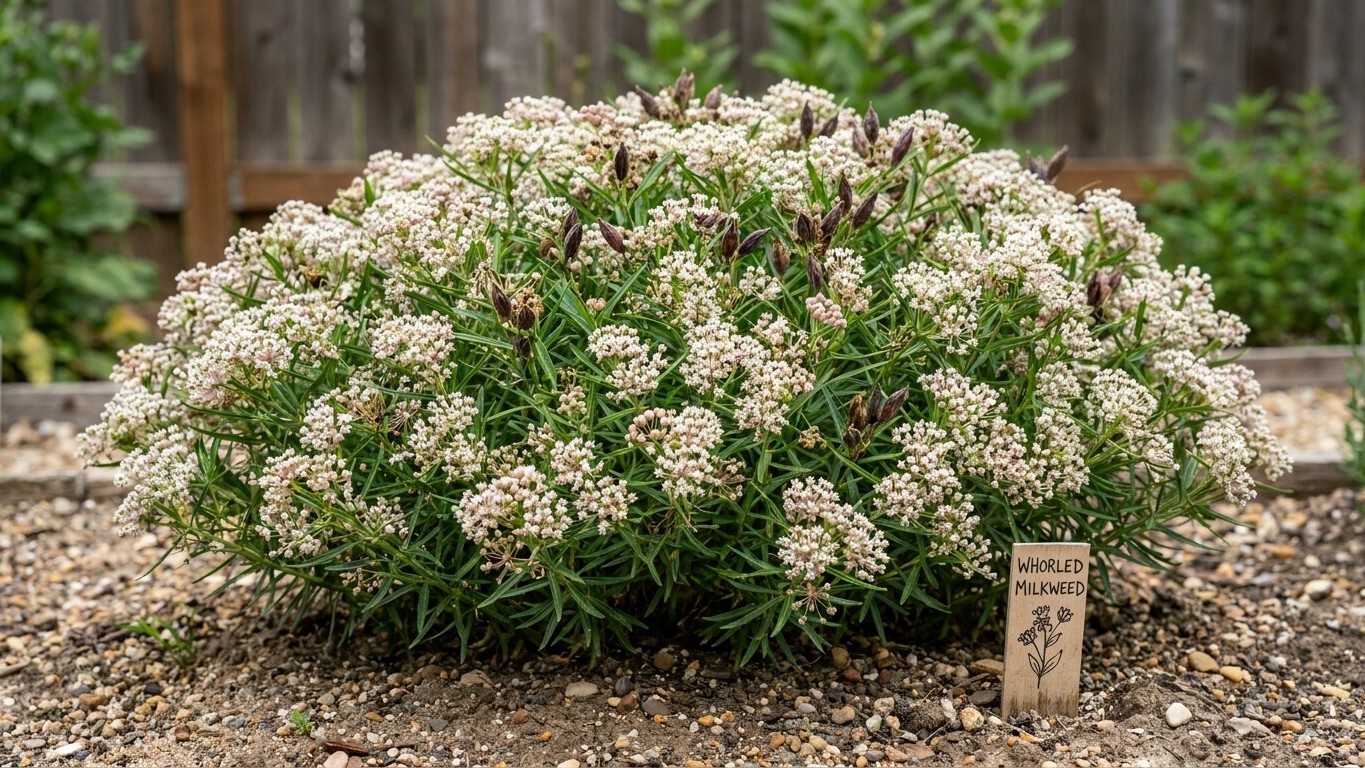

Anacis verticillata is hardy from USDA zone 3a to 9b, tolerates clay, sand and shallow rocky soil as long as drainage is good, and blooms through spring and summer before setting dark achene seed from July into October. It grows fast, stays under three feet wide, and asks for little beyond an occasional cutback and, eventually, division when the clump hollows out in the middle.
Where it will and will not survive

The USDA hardiness range for this plant runs from zone 3a to zone 9b. That number is the whole story for winter survival, and it works better as a filter than as a promise. Below the bottom of that range, in colder zones than 3a, the roots freeze past the point of recovery and the plant does not come back. Above the top, warmer than 9b, the issue flips: winters stay too mild for the dormancy the plant is built around, and summer heat combined with humidity puts a different kind of stress on a plant that evolved for a temperate rest period.
A range like 3a to 9b covers a lot of ground, and it is tempting to read it as a green light everywhere inside those lines. It is not. Hardy to zone 9b means the plant will survive there, not that it will thrive there the way it might in a milder middle zone. The same logic applies at the cold end. A gardener in zone 3a is working at the very edge of what this species can take, and a harder-than-average winter, a late thaw, or a site with no snow cover for insulation can still be enough to lose it. Hardiness numbers describe averages, not guarantees for any single winter.
Find your zone before you plant
None of this is useful without knowing your own zone first, and guessing is where most hardiness mistakes start. Rather than assume where the boundaries of 3a and 9b fall on a map, check your specific location against the hardiness zone guide on this site, which breaks the country down by state and county. Microclimates matter too: a south-facing wall, a low spot where cold air pools, or an exposed hilltop can shift the effective zone on a single property by a full number or more in either direction. The USDA range tells you what the species can survive across its whole distribution. Your yard is the thing that decides whether it actually will.
Light, soil and drainage
The growing conditions reported for this plant cover a fairly wide band, which is part of why it shows up in so many different gardens. Here is how the tolerances break down by category.
| Condition | Tolerance |
|---|---|
| Light | Full sun (6+ hours direct) or partial shade (2-6 hours direct) |
| Soil texture | Clay, sand, or shallow rocky soil |
| Soil pH | Acid (below 6.0) to neutral (6.0-8.0) |
| Drainage | Good drainage, moist, or occasionally dry |
That range of soil textures and pH values makes this a forgiving plant on paper. Drainage is the entry that deserves more attention than it usually gets. For a herbaceous perennial like this one, wet soil sitting around the crown over winter kills more plants than cold ever does. A plant rated hardy into zone 3a can still rot out in zone 7 if it spends January and February sitting in saturated ground, because dormant roots in cold, waterlogged soil have almost no oxygen and no way to fight off rot. The hardiness number assumes reasonable drainage. It does not account for a low spot that stays soggy after every thaw.
A soil check you can run yourself
Before planting, dig a hole about a foot deep and fill it with water. If it drains within a few hours, standard garden drainage should be fine. If water is still standing after half a day, that spot needs correcting, either by working in coarse material to open up the structure or by choosing a raised bed or a naturally higher point in the yard instead. This plant’s listed tolerance for “occasionally dry” soil is a much smaller risk than a site that stays wet, given what it’s rated to handle on the dry end versus the wet end.
When it flowers and how long
Bloom time here runs through spring and into summer, which in practice means a bloom window that shifts by weeks depending on latitude and elevation. A garden at low elevation in a warmer zone can see flowers well before one at higher elevation or farther north, so treat “spring and summer” as the season to watch for, not a fixed date to circle on a calendar.
Deadheading spent blooms during that window can push the plant to keep producing flowers rather than putting that energy into seed. Once the bloom period winds down for the year, cutting the foliage back tidies up what is otherwise a fairly loose, feathery plant for the rest of the season. That’s worth knowing going in: the foliage itself, thread-like and fine-textured, is deciduous and forms a mounding, spreading clump that is pleasant enough on its own but is clearly not the main event. Most of the calendar year, this is a plant valued for texture and habit rather than color.
Bees, butterflies and other pollinators are drawn to the open flowers, and that traffic is tied directly to the bloom period itself. Once flowering ends, that activity drops off with it. But the story doesn’t end there for wildlife value: the dark achene seed that forms after blooming, displaying from July through October, is what draws seed-eating songbirds to the plant later in the season, well after the last flower has faded. Leaving those seed heads standing into fall rather than cutting everything back the moment bloom ends is a small trade-off worth considering if birds matter to you as much as tidiness does.
Planting, and dividing it later
Getting this plant established starts with a few basics that matter more than they might seem.
- Plant in spring or fall, when temperatures are moderate and the plant isn’t stressed by summer heat while it’s trying to root in.
- Space plants according to their mature spread, which runs 12 inches to 3 feet depending on conditions and habit; crowding a spreading, clumping plant this size leads to competition sooner than expected.
- Set the crown at grade, level with the surrounding soil, rather than burying it, since a buried crown is more prone to rot.
- Water regularly through the first growing season while roots establish, tapering off as the plant settles in.
- Mulch around the base to conserve moisture and suppress weeds, keeping mulch pulled back from direct contact with the crown so it doesn’t trap moisture against the plant.
This is where a herbaceous perennial parts ways with a shrub or tree: it will need dividing eventually, and the plant itself will tell you when. Watch for a clump that has gone bare or thin in the center while growth continues only around the outer edge, a noticeable drop in flower production compared to previous years, or a clump that has simply outgrown the space it was given, crowding neighboring plants or losing its shape. Any one of those signs is reason enough to divide rather than waiting for all three.
- Dig up the entire clump, working a spade around the perimeter to lift the root mass with as little damage as possible.
- Separate the clump into sections by hand or with a clean blade, keeping healthy roots and some top growth with each division.
- Discard the old, woody or hollow center that prompted the division in the first place.
- Replant the divisions promptly at the same depth as the original planting, with the crown at grade.
- Water well after replanting to settle the soil around the new roots.
What it resists, and what it does not
Resistance is worth defining before listing it. A resistant plant is one that tends to shrug off a particular pressure more often than not, which is different from being immune to it under every condition. This species is reported to resist deer, rabbits, heat, humidity, salt, drought, dry soil and poor soil.
| Pressure | Reported resistance | What that actually means |
|---|---|---|
| Deer | Yes | Less likely to be browsed, not deer-proof; hungry deer will still sample it |
| Rabbits | Yes | Same caveat as deer: reduced risk, not guaranteed protection |
| Drought | Yes | Applies to established plants with developed root systems, not new transplants |
| Dry soil / poor soil | Yes | Tolerates lean, low-fertility ground reasonably well |
| Heat / humidity | Yes | Handles warm, muggy conditions better than many perennials |
| Salt | Yes | Useful near roadways or coastal exposure where salt spray is a factor |
Notice what is missing from that list: wet or waterlogged soil. That absence lines up exactly with the drainage requirement covered earlier, and it’s the resistance gap that matters most for a perennial’s actual survival odds. Deer resistance gets more attention from gardeners, but soggy soil over winter is the more common way this kind of plant actually dies.
Maintenance is rated low, which is accurate but shouldn’t be read as “no maintenance.” Low upkeep here means occasional deadheading if you want to extend bloom, a cutback once flowering ends or in late winter before new growth starts, and eventual division when the clump shows the signs described above. Figure on a handful of short sessions across the year rather than none at all.
Common questions
Is Anacis verticillata the same as Threadleaf Coreopsis?
The common names in use for this plant, including Threadleaf Coreopsis, Thread-leaf Tickseed and Whorled Coreopsis, all point to the same tickseed-type plant. None of these common names is treated as the single official one, which is exactly why the botanical name is used to identify it in the first place.
Does it need full sun to bloom well?
It tolerates both full sun and partial shade, meaning as little as two hours of direct sunlight a day. Full sun tends to produce the fuller, showier bloom most gardeners picture, but partial shade is listed as an acceptable condition, not just a survival compromise.
How wide of a spot does it actually need?
Mature spread runs 12 inches to 3 feet, which is a meaningful range to plan around. Spacing for the low end of that range in a spot that turns out to support the high end leads to a crowded bed within a couple of seasons.
Is this plant native to my region?
The source classifies it as a native plant, but that designation refers to native status in the southeastern United States specifically, not nationwide. Gardeners outside that region should check their own state’s native plant resources before assuming local origin.