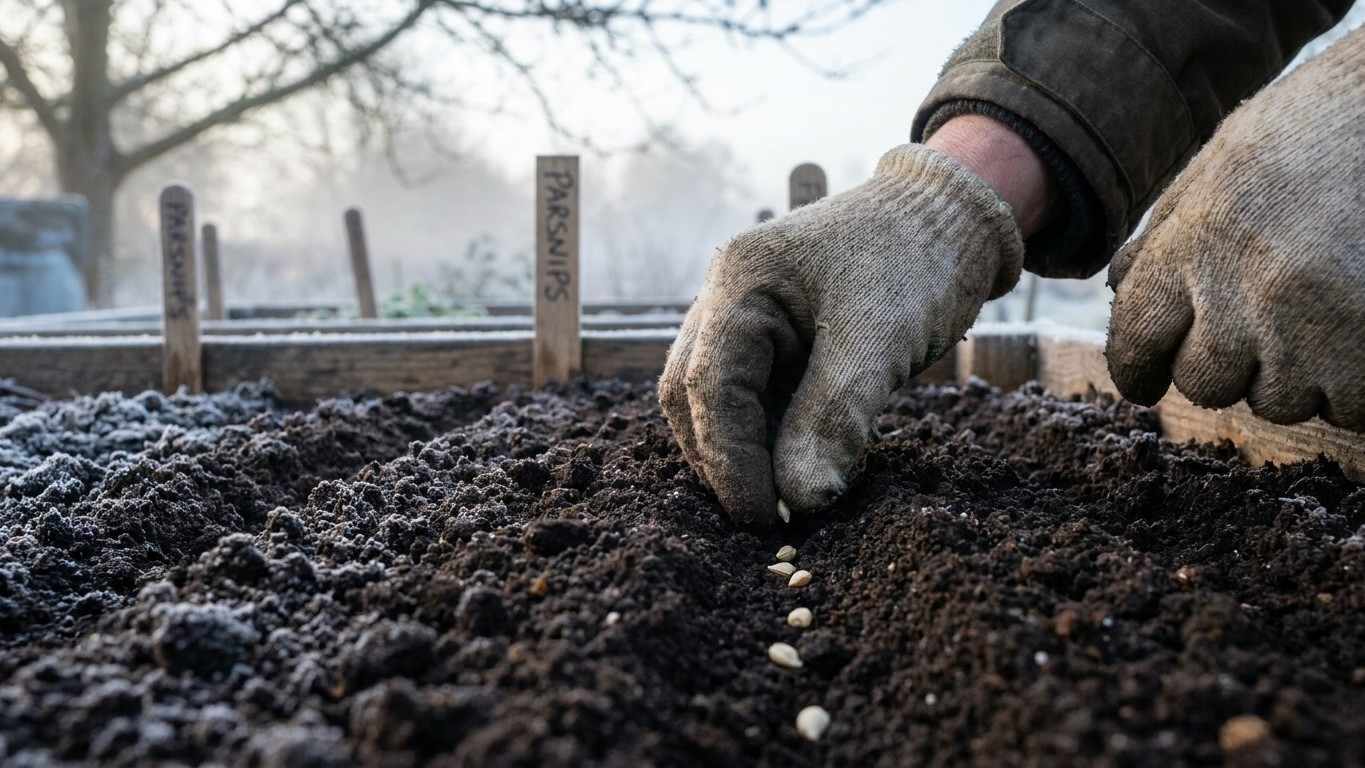

Sow parsnip seed directly in the ground in Rhode Island from mid-to-late March into early April, roughly two to three weeks before the state’s last spring frost. The Ocean State’s cold winters also do the crop a favor: frost exposure after the roots mature converts starch to sugar, giving parsnips the sweet, nutty flavor gardeners wait all season for.
The short answer
Rhode Island’s winter climate answers the sweetening question before you even plant a seed. At the Providence reference station, the coldest month has a mean daily minimum of 22.1°F, according to NOAA NCEI Climate Normals (1991-2020). That’s not a record low or a fluke cold snap. That’s the average low across an entire month, which means the ground here spends weeks, not days, at temperatures well below freezing.
That distinction matters more than most gardeners realize. A hardiness zone tells you whether a plant survives winter here. It says nothing about whether the freezing itself is doing useful work on a root sitting in the soil. Parsnips need the second thing: repeated exposure to frost, not just a zone rating that lets them technically live through the season. A 22.1°F average minimum for the coldest month is a strong signal that Rhode Island delivers exactly that, several consecutive frosty weeks rather than a single light freeze that comes and goes.
So the practical answer splits into two parts. First, timing: sow in place, don’t transplant, starting two to three weeks ahead of the local last frost date. Second, patience: once the roots reach maturity, leave them in the ground through several hard frosts before pulling them. Pull too early, on a warm fall day right after the roots size up, and you’ll get a parsnip that’s perfectly edible but flat, starchy, and missing the sweetness the cold is supposed to deliver. Rhode Island’s climate gives you the raw material for a genuinely sweet parsnip. Whether you get there depends on resisting the urge to harvest the moment the tops look done.
One thing this figure does not tell you is your own yard’s microclimate. A low-lying garden bed or a spot that collects cold air will run colder than the reference station catches, and a south-facing bed against a foundation wall will run milder. The 22.1°F figure is a state-level baseline, useful for deciding whether the climate broadly supports frost-sweetened parsnips (it does), not a promise about the specific patch of dirt you’re planting in.
Does the season fit?
Parsnips are slow. Utah State University Extension puts the timeline at 100 to 120 days from seeding to maturity, plus another 14 to 21 days just for the seed to germinate before that clock even starts counting growth. Laid against Rhode Island’s frost calendar, here’s how the arithmetic actually works out.
- Start with the last spring frost window. NOAA NCEI’s 1991-2020 normals put Rhode Island’s last spring frost, using the Providence airport station as reference, somewhere between April 7 and April 17.
- Back up two to three weeks for sowing. That puts the seeding window at roughly March 17 through April 3, depending on how your particular spring is running and how workable the soil is that week.
- Add 14 to 21 days for germination. Parsnip seed is notoriously slow and uneven to sprout, so seedlings won’t reliably show above ground until early-to-mid April at the earliest, later if a cold snap stalls things.
- Add 100 to 120 days of growth from the original sowing date. Counting from a late-March sowing, that lands maturity somewhere between early July and late July.
- Compare that to the first fall frost. NOAA NCEI puts Rhode Island’s first fall frost, again using the Providence reference station, between October 24 and November 3.
- Measure the gap. Between an early-July maturity date and a late-October frost, there’s a buffer of roughly three to four months where the roots simply sit in the ground doing nothing but waiting, then several more weeks after that where hard frosts do the sweetening work.
That’s a comfortable fit, not a tight one. Rhode Island gardeners aren’t racing the calendar the way growers further north sometimes are with 100-day crops that barely squeeze in before frost. The bigger risk here isn’t running out of season, it’s impatience: pulling parsnips in August because they look ready, when the real payoff comes after they’ve sat through several weeks of the state’s reliably cold late-fall weather.
What goes wrong here
- Forked roots from heavy or stony ground. Parsnips send a single taproot straight down, and anything that blocks that path (compacted clay, rocks, old root debris) makes the root split around the obstruction. Utah State University Extension recommends deep sandy soil for parsnips, and says heavy soil needs to be double dug before sowing. If your Rhode Island bed leans toward clay or has a rocky subsoil, work it a full spade’s depth deeper than usual and pull out stones as you go.
- Forked roots from overwatering. This is a separate cause from heavy soil, not the same problem in disguise. Too much water, especially in the seedling stage, encourages shallow, branching root growth instead of one clean taproot pushing down. Water enough to keep the soil consistently moist for germination, then ease off once seedlings are established, letting the top few inches dry slightly between waterings.
- A season that runs out. This is less likely in Rhode Island given the buffer calculated above, but a late, wet spring that delays sowing past early April can push maturity uncomfortably close to the first fall frost window. If your spring is running behind, sow as soon as the soil is workable rather than waiting for a calendar date, since germination alone eats up three weeks you don’t want to lose twice.
- Pulling the crop before the frost has done its work. Rhode Island’s cold winters supply the frost exposure parsnips need to sweeten, but only if you leave the roots in the ground long enough to get it. A parsnip harvested in September, before several hard frosts have hit, will be fully grown and completely bland. Mark your calendar for a harvest after the first few frosts have passed, not at the first sign the roots look mature.
Common questions
Can I start parsnip seeds indoors in Rhode Island?
Parsnips are sown directly in the garden bed where they’ll grow, not started indoors and transplanted. The long taproot doesn’t tolerate the disturbance of transplanting well, and it’s part of why the seeding date, not a transplant date, is what you count the 100 to 120 days from.
How long does it take parsnip seeds to sprout?
Germination takes 14 to 21 days according to Utah State University Extension. That’s slow enough that gardeners often assume the seed failed and re-sow too early, disturbing seedlings that were about to emerge. Mark the row and wait out the full three weeks before deciding a re-sow is necessary.
Should I mulch parsnips over winter in Rhode Island?
A layer of mulch can make roots easier to dig once the ground starts to freeze hard, since digging through frozen soil by hand is difficult. Keep the mulch light enough that the roots still feel the cold, since it’s the frost exposure itself, not insulation, that produces the sweetness.
Why did my parsnips come up patchy this year?
Uneven germination is normal for parsnip seed, which loses viability quickly and germinates unevenly even under good conditions. Buying seed for the current season rather than carrying over old packets, and keeping the seedbed consistently moist through that 14-to-21-day germination window, are the two biggest factors within a gardener’s control.