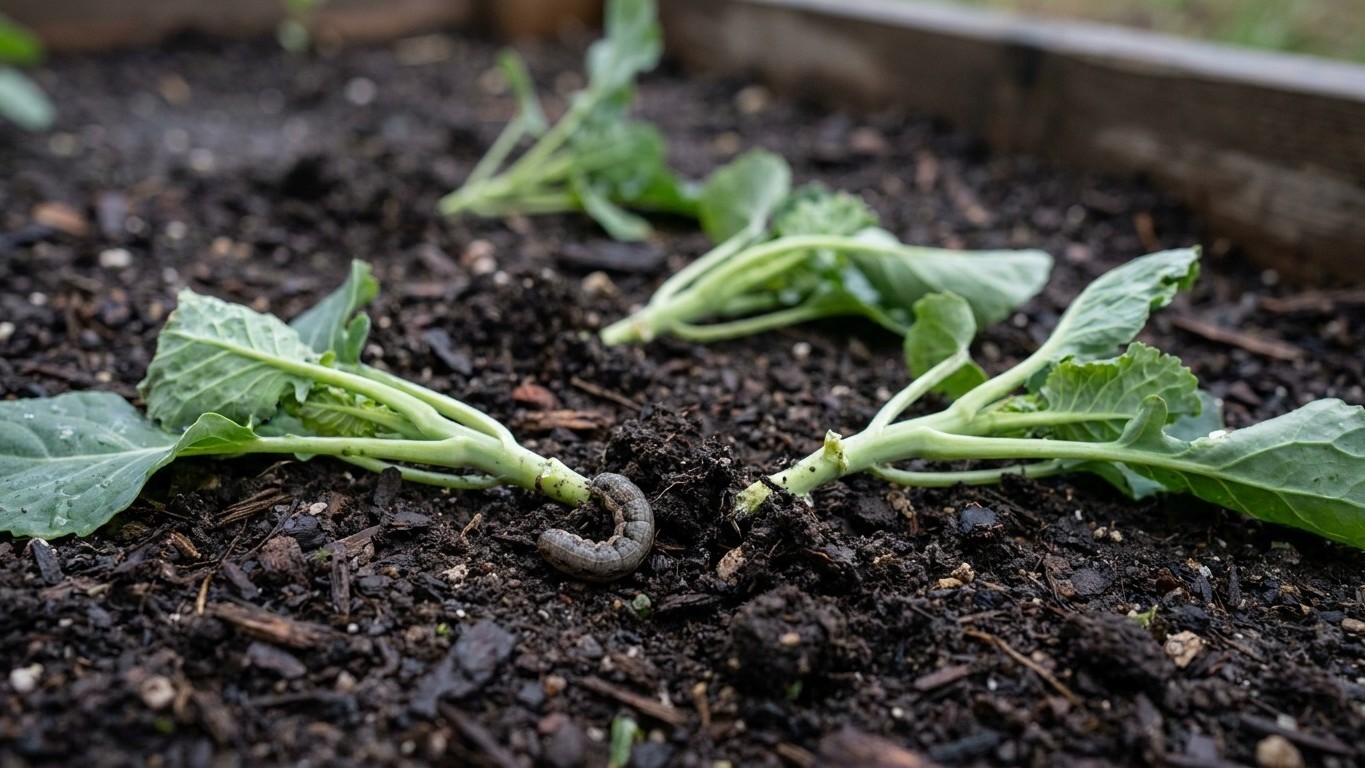

Cutworms show up in Tennessee gardens in early spring, right around transplant time, when soil temperatures climb enough for the larvae to move and feed at night. There’s no fixed calendar date for the state, but the damage typically appears within a few weeks of setting out young plants. Collars, cleared garden debris, and a short delay in transplanting stop most of the damage before it starts.
The weeks to watch

Tennessee’s extension service doesn’t publish a cutworm-specific date range the way it does for some other pests. What the University of Tennessee Extension guide (PB 595) does spell out is a sequence: soil insects show up first at planting, then early-season pests, cutworms among them, along with thrips, flea beetles, and aphids, follow close behind, and foliage and fruit pests take over later in summer. That order matters more than any single date, because it tells you cutworms are a spring problem tied to transplant timing, not a midsummer one.
Early spring vs. late-summer risk
Garden pests in Tennessee run through three to seven generations per season depending on the species, according to the same extension guide. That figure covers “many pests” broadly, not cutworms specifically, so it shouldn’t be read as a cutworm generation count. What it does confirm is that Tennessee’s long growing season supports repeated pest cycles, and cutworm moths laying eggs in spring can produce larvae active well before most gardeners expect trouble.
Practically, that means the highest-risk window sits in the weeks right after your soil warms in spring, when transplants are small and vulnerable, and stems haven’t hardened off yet. Once plants get some size and stem thickness, the same cutworm larvae usually can’t do the same kind of damage, even if they’re still present in the soil.
Reading the calendar from your last frost


Cutworm larvae respond to soil warmth, not to a date on the wall. That’s why the most useful anchor for Tennessee gardeners isn’t a pest calendar at all, it’s the last spring frost date for their location. NOAA’s 1991-2020 climate normals put the last spring freeze for the Nashville area between March 31 and April 12. East Tennessee and the Cumberland Plateau run cooler and later, so gardeners there should expect that same freeze-free window to shift later into April.
- Start with your local last frost date (March 31 to April 12 for Middle Tennessee, later for East Tennessee and the plateau).
- Add roughly two to three weeks after transplanting, since that’s the general window when tender seedlings are most exposed to feeding damage.
That math gives a range, not a single day, because both the frost date itself and a plant’s individual growth speed vary. An early, warm spring pushes soil-active pests earlier; a cool, wet spring delays them. Treat the frost date as a normal to plan around, not a guarantee tied to a specific calendar square.
What it attacks, and what the damage looks like

The first sign most gardeners notice isn’t a bug at all, it’s a seedling lying flat on the ground, severed cleanly at the soil line as if snipped with scissors. Sometimes the damage looks less dramatic: a plant that wilts overnight for no obvious reason, or a stem that’s girdled just below the surface without falling over completely. By the time you see either symptom, the culprit has usually already moved on or burrowed back into the soil nearby.
The damage comes from the larval stage, a soil-dwelling caterpillar that feeds at night and hides in the top inch or two of soil during the day. That detail matters for treatment, because once larvae are established at the base of an established plant, most preventive measures stop being useful, and the options narrow to physical removal.
Crops most commonly affected in home gardens include:
- Tomato and pepper transplants
- Corn seedlings
- Beans and peas
- Cabbage-family plants (broccoli, cabbage, kale)
- Young lettuce and other tender greens
How Tennessee sits in this pest’s range

Cutworms are broadly distributed across the country, and Tennessee sits well within that range rather than at an edge of it. For a widespread pest like this, the difference between one part of the state and another comes down to timing, not whether the insect shows up at all. A gardener in Memphis and a gardener on the Cumberland Plateau will both deal with cutworms most years; the plateau gardener just sees activity start later, tracking the region’s cooler, later spring.
The climate data behind Tennessee’s frost dates comes from a single reporting station in the Nashville area, which is representative of Middle Tennessee but not of the whole state. East Tennessee and the Cumberland Plateau run measurably cooler and later in spring, which pushes back the point at which soil warms enough for cutworm larvae to become active. Gardeners in those higher, cooler pockets should expect the entire early-season pest window, cutworms included, to lag behind what Middle Tennessee experiences by roughly the same margin their frost date lags behind.
What actually works against it

- Clear garden debris in fall. Cutworm moths lay eggs in grassy or weedy areas near garden beds. Removing plant debris and mowing nearby grass short reduces egg-laying sites before winter, which lowers the larval population the following spring.
- Delay transplanting slightly, or harden off transplants longer. Larger, tougher-stemmed transplants are harder for young larvae to sever. This doesn’t stop cutworms from being present, but it reduces how much damage they can do once they find a stem.
- Use physical stem collars. A simple cardboard, plastic, or metal collar pushed an inch into the soil around a transplant’s stem blocks larvae from reaching it while feeding at night. This works because it’s a physical barrier, not a repellent, so it stops working the moment a larva is already inside the collar’s footprint before you install it.
- Hand-pick at night with a flashlight. Cutworms feed after dark and often sit in the top inch of soil right next to a damaged stem during the day. Digging gently around a freshly cut plant frequently turns up the larva responsible, and removing it by hand stops further damage from that individual.
- Rotate crops and till in early spring. Disturbing the soil surface a few weeks before planting exposes overwintering larvae to weather and predators, reducing numbers before transplants go in.
Some gardeners also try copper collars or diatomaceous earth barriers around stems. These are common home remedies, but trials on their effectiveness against cutworms specifically don’t reach a clear conclusion, so it’s fair to say gardeners use them widely without solid proof of how or whether they work. None of these later-stage measures matter once larvae have already tunneled into soil near an established stem; at that point, the only real option left is digging them out by hand.
Common questions
Do cutworms come back every year in the same garden bed?
They can, especially if grassy edges or weedy debris near the bed go untouched over winter, since that’s where moths lay eggs. Clearing debris and tilling in early spring reduces, but doesn’t eliminate, the chance of recurrence.
Can cutworms damage plants that are past the seedling stage?
Rarely to the same degree. Once stems thicken past the transplant stage, cutworms have a much harder time severing them, though they may still cause minor surface feeding on lower leaves or stems.
Is there a way to tell cutworm damage from other early-season pests?
The clean, scissor-like cut at the soil line is fairly distinctive. Flea beetles leave small round holes in leaves, and aphids cluster visibly on stems and undersides of leaves, so the type of damage, not just the timing, helps separate cutworms from the other early-season pests named in Tennessee’s extension guidance.