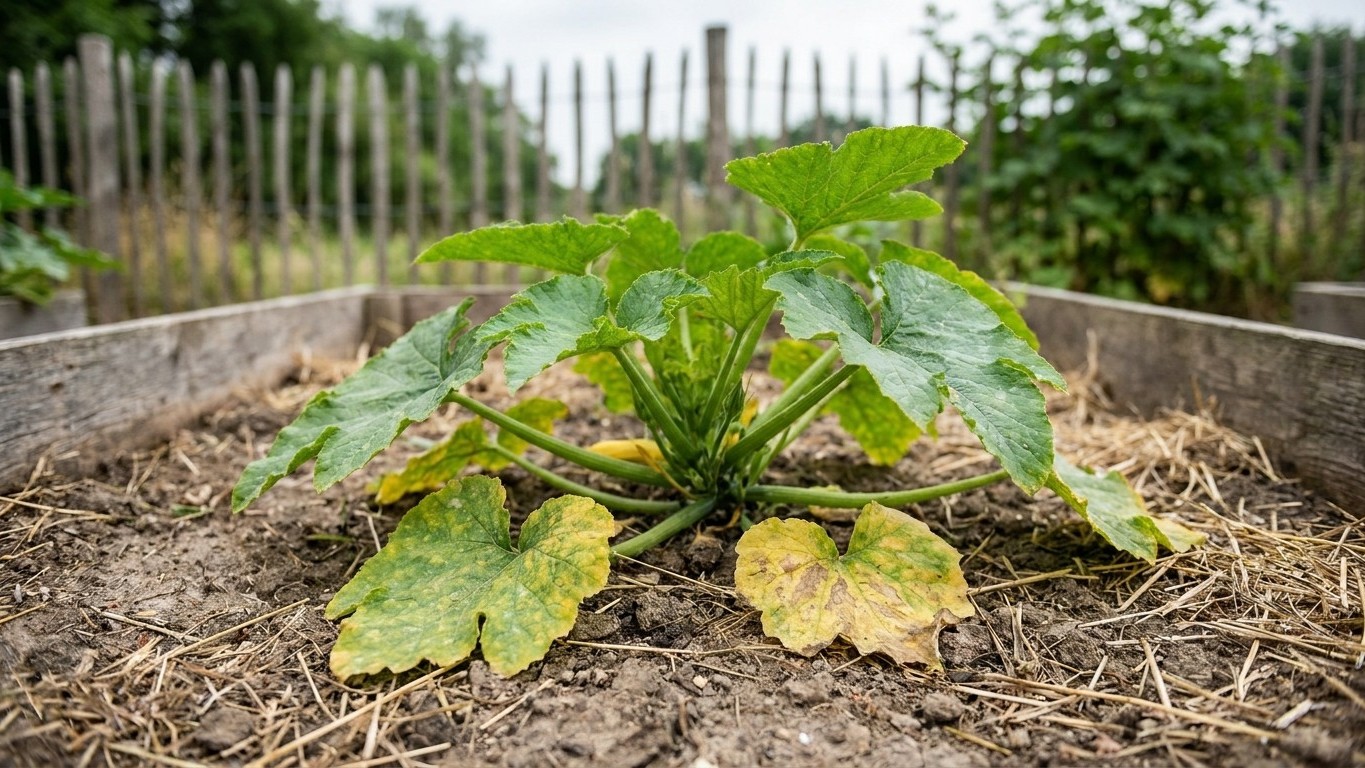

Utah State University Extension documents thirteen insect and mollusk pests on garden vegetables statewide, but only about half of them ever land on a summer squash leaf. The rest belong to cabbage, onions, corn, or tomatoes. Knowing which is which saves a wasted trip to the garden center and a wasted week watching the wrong bug.
Which pests attack Summer Squash in Utah
Utah State University Extension lists the following as documented garden pests in the state: Aphids, Cabbage looper, Corn earworm, Cucumber beetles, Flea beetles, Grasshoppers, Imported cabbageworm, Leafminers, Onion thrips, Slugs, Spider mites, Squash bug, and Tomato hornworm. Not all of them show up on squash, and a reader scouting the wrong pest wastes a week.
Seven of those are the ones that actually feed on summer squash. Squash bug is the one most specific to this crop; it targets squash and pumpkin vines almost exclusively, sucking sap from leaves until they wilt and blacken. Cucumber beetles, striped or spotted, chew seedling leaves and can carry bacterial wilt into the plant through their feeding wounds. Aphids cluster on the underside of leaves and stems, feeding on sap in the same family they attack on melons and other cucurbits. Spider mites favor hot, dry foliage and thrive in exactly the kind of heat load a Utah summer produces. Flea beetles riddle seedling leaves with small shot-holes before the plant has a chance to size up. Grasshoppers are general feeders that chew through squash leaves along with almost anything else in a Utah garden during a dry year. Slugs rasp holes in leaves and scar fruit where it touches damp soil, especially after a rare summer rain.
The other six on the extension list don’t belong on this page. Cabbage looper and Imported cabbageworm feed on brassicas, cabbage, broccoli, kale, not on cucurbit foliage. Onion thrips work the onion family. Tomato hornworm is a nightshade feeder, tomato, pepper, eggplant, and has no reason to be on a squash leaf. Corn earworm targets corn ears primarily and occasionally beans or tomato fruit, not summer squash. Leafminers tunnel inside the leaves of spinach, beet, and chard, a feeding style squash foliage doesn’t host the same way. A gardener who spots one of these six on a squash plant is very likely looking at a different insect, or a different crop problem altogether.
When each one shows up, and what it does first
Utah’s frost-free window sets the clock for all of this. Salt Lake Valley’s last spring frost typically falls **between April 12 and April 29**, and the first fall frost arrives **between October 18 and October 29**, based on 1991-2020 NOAA Climate Normals. Higher elevations and most of the rest of the state run colder and later than that, so a garden’s own transplant date, not a calendar month, is the better marker.
In the first two to three weeks after transplant, flea beetles are usually the first sign of trouble: tiny, irregular shot-holes across young leaves, sometimes enough to stunt a seedling before it establishes. Cucumber beetles tend to arrive around the same window, chewing ragged holes in cotyledons and true leaves and often leaving a sticky residue behind.
Aphids build up a few weeks later, once plants have real foliage to colonize, showing up first as a sticky film (honeydew) on upper leaf surfaces below a cluster of insects on the underside. Squash bugs typically appear once vines start to run, and the earliest sign is often a cluster of small, bronze, football-shaped eggs on the underside of a leaf rather than the adult insect itself. As Utah’s summer heat load climbs, and the reference station averages **52.1 days a year at 90°F or above**, spider mites become the dominant threat, first showing as a fine stippling or bronzing on leaves that can be mistaken for drought stress. Grasshoppers move in from dried-out field edges as native vegetation cures in the heat, chewing ragged notches into leaf margins. Slugs are the outlier: they need moisture to move, so they show up after the rare summer rain event, or wherever a garden gets overwatered, leaving smooth-edged holes and slime trails rather than the ragged chew marks insects leave.
Telling the damage apart from Everything else
Not every ugly leaf is a pest. Utah’s climate creates its own damage that looks a lot like insect feeding, and the fix is completely different depending on which one it actually is. The single most useful habit is checking the underside of the leaf before assuming a cause, since most insect evidence, eggs, honeydew, mites, or the insects themselves, is there and general leaf yellowing on top usually isn’t.
| Symptom | Likely cause | What tells them apart |
|---|---|---|
| Wilting vines, blackened leaves | Squash bug feeding, or bacterial wilt from cucumber beetles | Check leaf undersides for bronze egg clusters or the beetles themselves before assuming disease |
| Fine stippling, bronze cast on leaves | Spider mites, or plain heat and drought stress | Tap a leaf over white paper; mites show as moving specks, drought stress doesn’t |
| Yellowing between leaf veins | Nutrient deficiency, not a pest | Pattern follows the whole plant evenly rather than concentrating near new feeding sites |
| Ragged holes, chewed margins | Grasshoppers or cucumber beetles | Grasshopper damage is coarser and often paired with visible insects nearby; beetle holes are smaller and rounder |
| Smooth holes, slime trails | Slugs, most likely after rain or overwatering | Trails are the giveaway; insect chewing never leaves slime |
A gardener who isn’t sure which column applies is better off with a photo and a call to the local extension office than a guess. Misdiagnosing a nutrient issue as an insect problem, or the reverse, wastes a growing season that’s already short at this elevation.
What actually works here, and what is a waste of time
On a short season, timing beats product every time. A floating row cover installed at transplant, before the frost-free date even arrives, and removed once flowers need pollinators keeps flea beetles and cucumber beetles off seedlings during the exact window they do the most damage, and it costs nothing in chemical exposure. Once vines start to run and flowers open, the cover has to come off for bees to do their job, and that’s also the point where squash bugs start laying eggs, so a daily few minutes checking leaf undersides for those egg clusters is more effective than any spray applied blind.
Crop rotation matters more than most gardeners think in a small yard: squash bugs and cucumber beetles overwinter in garden debris and soil near where cucurbits grew the year before, so moving the bed even a few feet, and cleaning up old vines at season’s end, cuts down next year’s starting population.
What doesn’t work is spraying on a fixed schedule regardless of what’s actually present, or reaching for a treatment before confirming which pest, or which non-pest cause, is behind the damage. Utah State University Extension is the source for what’s legally labeled and effective in this state, and that changes over time, so a specific product recommendation here would be outdated the moment it’s printed. Waiting until vines have already collapsed from squash bug feeding is also a waste of effort: by that stage the insect has done its damage, and the plant’s decline can’t be reversed.
Where to check this for your own county
Everything above is state-level information. What’s actually crawling on a leaf in one yard can differ from a garden ten miles away, since elevation, soil, and microclimate all shift pest pressure within Utah’s borders. The extension office for the county where the garden sits is the resource that knows local conditions, not a statewide list.
Utah State University Extension, at extension.usu.edu, maintains staff and offices by county across the state, and most accept photos of damage for a fast identification. A gardener in a warmer valley near St. George is working with a different bug calendar than one at 6,000 feet near Cedar City, even though both fall under the same statewide pest list.
The next useful step is simple: photograph the underside of an affected leaf, note when the plant was transplanted relative to the local frost-free date, and send both to the county office before treating anything.