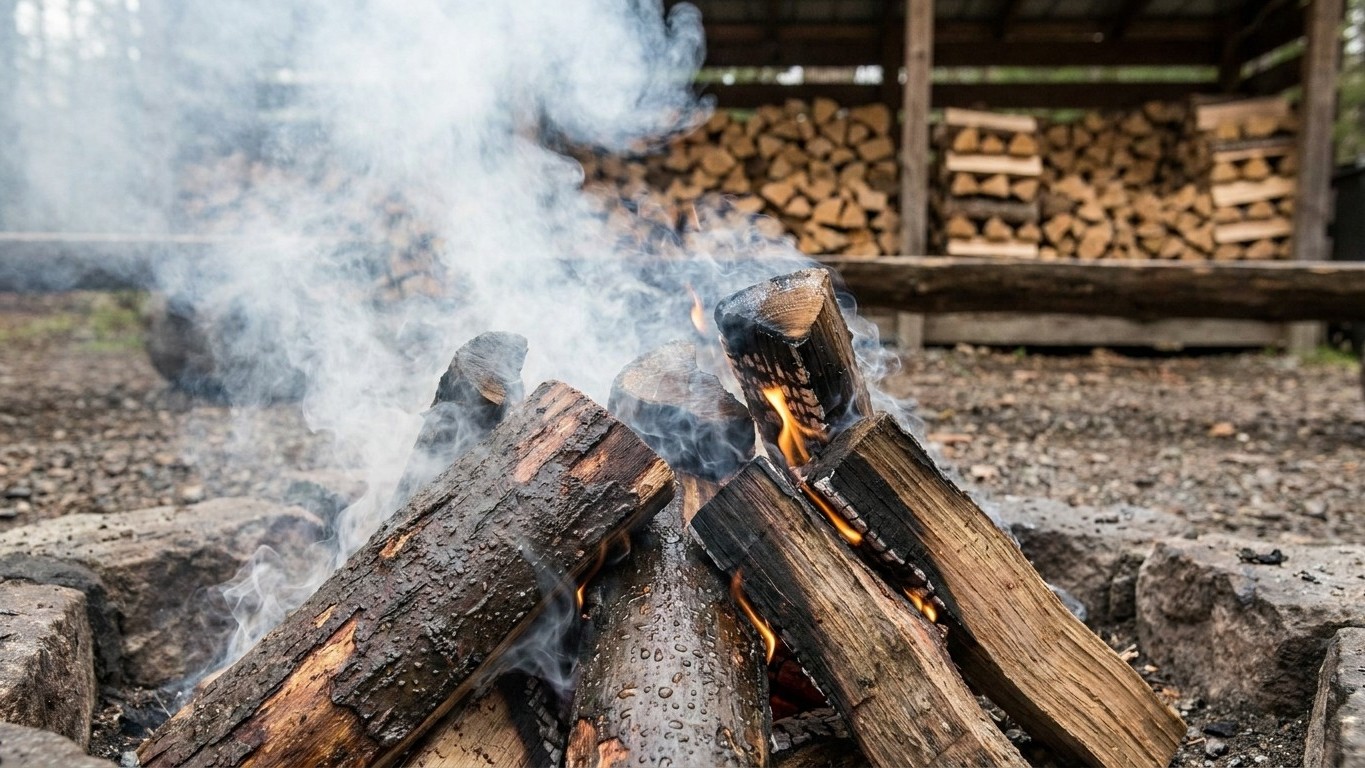

A fire that won’t catch almost always comes down to one of four things: wet wood, bad airflow, poor fire structure, or kindling that’s too thick to ignite easily. Fix the right one and most dead-on-arrival fires turn into a steady burn within minutes.
Before you strike another match, it helps to diagnose the actual problem instead of just dumping more lighter fluid on the pile. A fire needs three things to sustain itself: fuel, oxygen, and heat high enough to keep releasing flammable gases from the wood. When a fire won’t catch, one of those three is missing, and the smoke pouring out (or the flame dying after 30 seconds) usually tells you which one.
Wet or Unseasoned Wood Is the Most Common Culprit

Firewood needs to sit and dry for six months to a year before it burns well. Freshly cut wood, called “green” wood, can hold 45 percent or more of its weight in water. According to the U.S. EPA’s Burn Wise program, properly seasoned firewood should have a moisture content below 20 percent for efficient, cleaner burning. Anything wetter than that spends most of its energy boiling off water instead of producing flame.
Here’s the tell: if your wood hisses, sizzles, or bubbles at the ends when you try to light it, it’s too wet. Green wood also tends to smoke heavily without much orange flame, and it’s noticeably heavier than dry wood of the same size. Split wood dries faster than round logs because the exposed inner grain releases moisture more easily, so a log that’s never been split can still be wet inside even after a year of outdoor storage.
A cheap moisture meter (the pin type, sold for about $15 to $25 at most hardware stores) takes the guesswork out of this. Split a piece of wood and press the pins into the freshly exposed face rather than the bark, since bark reads dry even when the core isn’t. If your readings are consistently above 20 percent, that stack needs more time, not more matches.
Airflow Problems Choke the Flame Before It Grows
Fire needs oxygen to keep burning, and a lot of failed fires get smothered by their own structure. Stack logs too tightly and you cut off the air that would otherwise feed the flame. This happens constantly with beginners who pile wood into a dense pyramid, thinking more wood equals more fire. It’s backwards: a loosely built stack with gaps for air movement will outperform a tightly packed one every time.
Fireplace dampers cause the same issue indoors. If the damper is partially closed, or if the flue is cold and creating a weak draft, smoke and heat get pushed back into the room instead of pulling flame upward. A cold chimney flue is a genuine seasonal problem, especially on the first fire of the season after months of disuse. Holding a lit rolled-up newspaper near the damper opening for a minute before lighting the main fire warms the flue enough to establish an upward draft, a trick chimney sweeps have used for generations.
Wood stoves have their own airflow controls, usually a slide or lever that regulates intake air. If that’s dialed down too far during startup, the fire can smolder and die instead of building heat. Most stove manufacturers recommend running the air control wide open until you’ve got an established bed of coals, then throttling back.
Building the Fire Wrong Sets It Up to Fail
Size mismatch kills more fires than people realize. Tossing a large split log onto a weak flame is like trying to light a candle with a birthday candle’s worth of heat. Wood needs graduated fuel sizes: tinder (thin, dry material that catches instantly), kindling (pencil-to-thumb-width sticks), and then progressively larger splits only after the kindling is fully engaged and producing sustained flame.
The classic mistake is skipping straight from kindling to a full-size log. That jump asks too much of a small flame. A better approach is the “upside-down” or top-down method: place larger splits on the bottom, medium pieces in the middle, and kindling with tinder on top. Lit from the top, this method burns downward, produces less smoke, and tends to catch more reliably because the flame always has appropriately sized fuel to work with as it grows.
Tinder Choices That Actually Work
Not all tinder is created equal. Wax-based fire starters, dry pine needles, birch bark (which contains natural oils and lights even when slightly damp), and finely shredded cardboard all catch fast and burn hot enough to ignite kindling. Newspaper works but burns out quickly, sometimes too fast to transfer flame to kindling that isn’t bone dry. Dryer lint mixed with a bit of wax makes a surprisingly effective and nearly free fire starter, since the lint fibers are already broken down and catch a spark instantly.
Wood Species and Storage Conditions Matter More Than People Think
Softwoods like pine, fir, and cedar ignite faster than hardwoods because of their lower density and higher resin content, which makes them ideal for kindling but poor for a long, sustained burn. Hardwoods like oak, hickory, and maple take longer to catch but burn hotter and longer once established. A fire built entirely from oak with no softwood kindling will frustrate almost anyone, since dense hardwood resists ignition without a strong initial flame to work with.
Storage conditions can undo months of seasoning in a matter of weeks. Firewood stacked directly on the ground wicks up moisture from the soil, even if it looks dry on top. A stack should sit on a pallet or rack, at least a few inches off the ground, with the top covered but the sides left open for airflow. Fully tarping a woodpile on all sides traps humidity inside and can actually slow drying or reintroduce moisture from condensation.
Location matters too. Wood stacked against a north-facing wall in a shaded, damp yard dries far slower than wood stacked in full sun with a breeze running through it. In humid climates like the Gulf Coast or the Pacific Northwest, seasoning firewood can take closer to a full year, while dry climates in the Southwest might get usable wood in four to five months.
Quick Fixes for Starting a Fire With Damp Wood
Sometimes there’s no time to wait out a slow-seasoning stack. A few practical workarounds can rescue a fire in the moment:
- Split wet logs into smaller pieces to expose dry inner wood and speed up ignition
- Use commercial fire starter cubes or wax-soaked wood chips, which burn hot enough to dry the surrounding wood as they ignite
- Bring a few pieces of dry kindling indoors 24 hours ahead if rain is in the forecast, since even a slightly warmer, drier environment helps
- Build a small “pilot fire” with all-dry material first, then feed in damp wood gradually once you have a strong bed of coals producing enough heat to dry it as it burns
None of these replace properly seasoned wood as a long-term solution, but they can turn a frustrating evening around without resorting to a full can of lighter fluid, which burns off too fast to solve an underlying moisture problem anyway.
When the Problem Isn’t the Wood at All
Occasionally the fire won’t catch because of something unrelated to fuel quality. A dirty or restricted chimney flue reduces draft even with perfectly dry wood, and dryer lint isn’t the only thing that builds up over a season, creosote deposits do too. The U.S. Fire Administration recommends annual chimney inspections partly because restricted airflow from soot and creosote buildup doesn’t just create a fire hazard, it also makes fires harder to start and keep burning.
Altitude plays a role too. At higher elevations, thinner air means less oxygen is available for combustion, which is why campers in mountain regions often report needing extra kindling and more patience to get a fire established compared to sea level. This isn’t something to fix, just something to account for by using slightly more tinder and kindling than you would at lower elevations.
A moisture meter reading under 20 percent, a loosely built stack with airflow, graduated fuel sizes from tinder to full logs, and a warmed-up flue cover the vast majority of failed fires. When all four line up and the fire still won’t take, the wood itself, regardless of how it looks on the outside, is usually the last thing worth double-checking with a fresh split and a direct meter reading on the exposed grain.