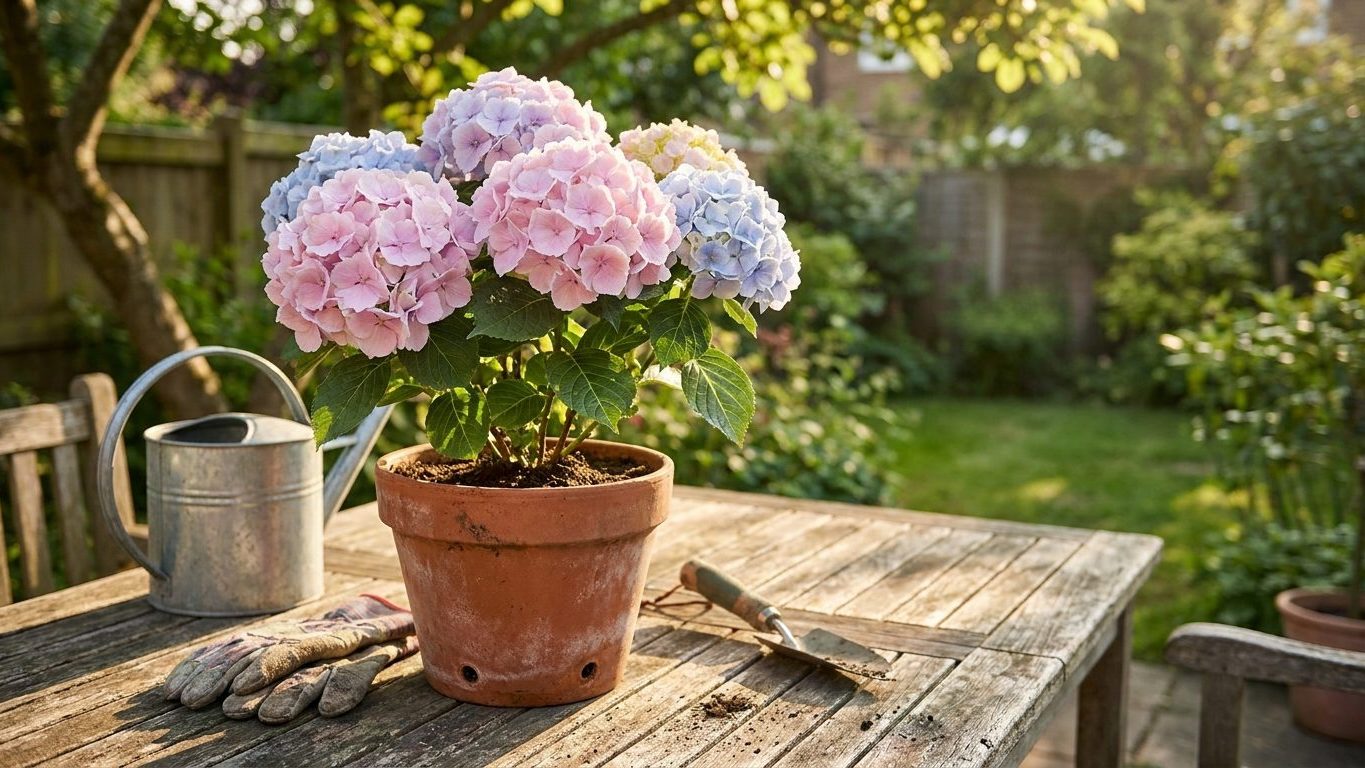

Pots work well for most hydrangea types, but the container itself becomes the limiting factor: root space, drainage and winter exposure all behave differently than in open ground. The type you’re growing decides pot size, sun exposure and whether flower color can even be manipulated at all.
Why this matters
A container changes the physics of the root zone. Soil in a pot heats up and dries out faster than the same soil in the ground, and roots that would normally spread wide to find moisture instead hit plastic or terra cotta walls within a season or two. For a shallow-rooted plant like bigleaf or panicle hydrangea, that means watering becomes the single biggest variable you control, not soil amendments or fertilizer.
Get the container choice wrong and the plant tells you fast: wilted leaves by midafternoon even after a morning soak, stunted new growth, or flowers that come out undersized because the roots simply don’t have the volume to support a full bloom flush. Skip repotting when roots have filled the pot and you get a plant that looks perpetually thirsty no matter how often you water, because there’s no soil left to hold moisture between waterings.
When to do it
Repotting timing follows the plant’s own calendar, not the wall calendar. The signal to watch for is roots circling the inside of the pot or poking out through the drainage holes; that’s the plant telling you it has run out of room. A second sign is a plant that wilts within hours of a thorough watering, a classic symptom of a root mass too dense to hold water.
The safest window sits after the current flush of flowers has faded and before the plant pushes hard new growth for the next cycle. For a bigleaf hydrangea, that means working around the fact that next year’s flower buds are already forming on this year’s wood by late summer, so any root disturbance or pruning needs to happen before those buds set, not after. For a panicle hydrangea, which flowers on new wood, there’s more flexibility because the plant will simply grow fresh flowering stems after the move.
Watch the plant, not the date on a bag of potting mix. A container hydrangea that hasn’t been repotted in two or three growing seasons and is showing reduced flower size is very likely rootbound regardless of what month it happens to be.
How to do it
Start with the container itself. Material matters less than size and drainage: unglazed terra cotta breathes and dries faster, plastic and glazed ceramic hold moisture longer, and either works as long as the pot has real drainage holes, not decorative slits. A pot with no free drainage will waterlog the root zone regardless of how carefully you schedule irrigation, and hydrangeas tolerate occasional wetness but not standing water.
Size the pot to the mature spread of the type you’re growing, not to what looks proportional today. A bigleaf hydrangea, which tops out around 3 to 6 feet tall and wide, can live comfortably in a large container long-term. A full-size panicle hydrangea, which can reach 8 to 25 feet, will eventually outgrow almost any container; in pots, gardeners generally rely on compact panicle cultivars bred for restrained size rather than the species’ full potential.
Soil, placement and feeding
Use a potting mix formulated for containers, not soil dug from the yard. Garden soil compacts in a pot, drains poorly, and often carries weed seed and pathogens that a bagged mix doesn’t. Hydrangeas tolerate clay, loam or sand in the ground, but in a container the mix needs to stay loose enough to drain while still holding enough moisture between waterings.
Placement follows the type. Bigleaf hydrangea wants dappled sun or partial to deep shade and needs protection from direct afternoon sun, which scorches the leaves and stresses a plant already working with a limited root volume. Panicle hydrangea is the one type in the genus that takes full sun well, which makes it the more forgiving choice for a hot, exposed patio or deck.
Mulch the surface of the pot the same way you would a garden bed. Both bigleaf and panicle hydrangeas are shallow-rooted, and a layer of mulch over the container’s soil surface slows evaporation and buffers root temperature swings that hit a pot much harder than open ground. Skip high-phosphorus fertilizer if you’re growing a bigleaf or mountain hydrangea for blue flowers: phosphorus locks up the aluminum the plant needs to pull blue pigment, and a well-meaning feeding schedule can quietly push a blue hydrangea toward pink over a season or two.
Pruning follows the same wood rule as in-ground plants. A bigleaf hydrangea should be pruned before August 1, since it blooms on last year’s wood and a later cut removes next year’s flowers along with this year’s spent ones. A panicle hydrangea can be cut back hard in late winter because it flowers on the current season’s growth regardless of how severely it was pruned.
What goes wrong
Overwatering is the most common failure in containers, and it’s often disguised as diligence: a gardener sees a slightly droopy leaf and waters again, when the actual cause is soggy roots suffocating from the last watering. Check the soil with a finger before adding more water rather than watering on a fixed schedule.
Trying to change flower color with coffee grounds or citrus peel is a widely held belief that rarely delivers. The pH shift from kitchen scraps is small and inconsistent, while what actually moves a bigleaf or mountain hydrangea toward blue is available aluminum in acidic soil, which is why aluminum sulfate works reliably and coffee grounds don’t. It’s also worth remembering that color-by-pH only applies to bigleaf and mountain types; a panicle, smooth, oakleaf or climbing hydrangea will not turn blue no matter how acidic the container soil gets, so acidifying soil for those types is wasted effort.
Pruning a bigleaf hydrangea in spring because it “looks tidier” is a mistake that looks like extra care but removes the very buds that were set the previous summer, and the plant simply won’t flower that year. Choosing an oversized pot “to give it room to grow” backfires too: too much soil volume around a small root ball holds excess moisture and invites rot before the roots ever fill the space.
Doing it differently
Not every type performs the same in a container, and matching the right one to your space matters more than technique.
| Type | Mature size | Sun in a pot | Container fit |
|---|---|---|---|
| Bigleaf / mop-head | 3-6 ft | Dappled, partial shade | Good long-term fit |
| Panicle (full-size) | 8-25 ft | Full sun tolerated | Outgrows most pots; use compact cultivars |
| Smooth (e.g. Annabelle) | Compact, cut-back friendly | Sun to part shade | Easy, since hard pruning resets size each year |
| Mountain | Similar to bigleaf | Dappled shade | Good; buds tolerate late frost better than bigleaf |
| Climbing | 15+ ft, slow to flower | Needs structure to climb | Poor fit for a freestanding pot |
Smooth hydrangea is the most forgiving container choice, since it flowers on new wood and can be cut back hard each year without sacrificing the next bloom, keeping its size manageable indefinitely. Mountain hydrangea suits a shaded patio where late frosts are a recurring problem, since its buds tolerate a cold snap better than a bigleaf’s. Climbing hydrangea, which clings by aerial rootlets and takes years to flower at all, is really a wall or trellis plant, not a pot candidate.
Common questions
Can hydrangeas in pots survive winter outdoors?
That depends entirely on the type and your zone, since hardiness across the genus ranges from USDA zone 3a through 9b depending on species. A container offers less insulation to the roots than open ground, so the safe answer for your specific situation belongs on the zone and type pages of this guide rather than a generic rule here.
Do I need a different pot for each hydrangea type?
Not a different pot material, but a different size expectation. A compact bigleaf or smooth hydrangea can stay in one large container for years, while a full-size panicle hydrangea will eventually need a cultivar bred for restrained growth if it’s staying in a pot long-term.
Is a potted hydrangea dangerous to pets?
Only bigleaf hydrangea is documented as toxic, and only if eaten in large quantities, causing nausea, stomach pain, vomiting and sweating in pets and people alike. The other types named here aren’t flagged as toxic by the same source, but keeping any of them out of reach of a chewing dog or cat is common sense.
What pests or diseases should I watch for in a container plant?
The same ones that affect hydrangeas in the ground: leaf spot, bacterial wilt and powdery mildew, plus rust and bud blight specifically on panicle types. Aphids, scales, nematodes and mites are named as occasional pests but rarely a serious problem, and deer will browse a potted hydrangea just as readily as one planted in a bed.