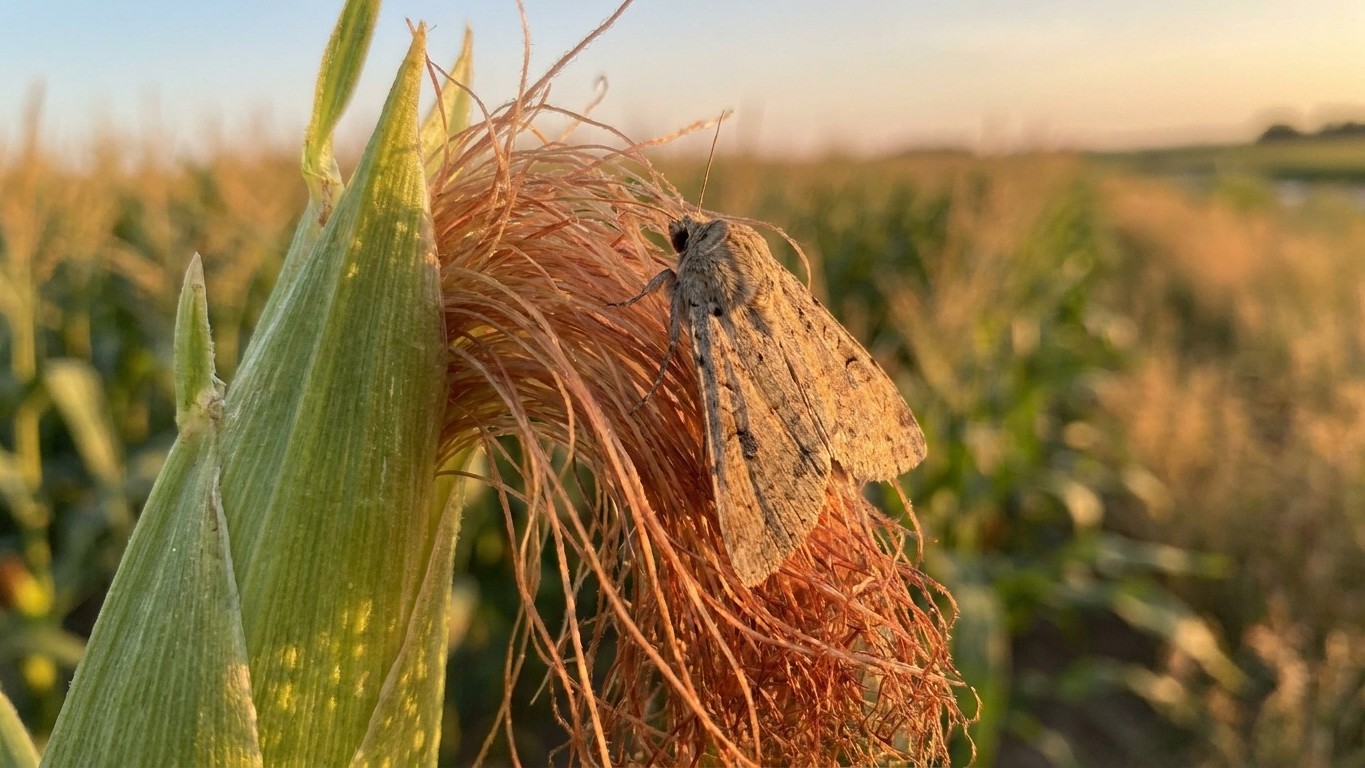

Three insects show up on Arkansas corn often enough that the state’s extension service tracks them: aphids, Japanese beetles, and stink bugs. Each one arrives at a different point in the growing season, tied less to the calendar month than to what the plant is doing at the time, whether it’s pushing new leaves, tasseling, or filling ears.
Which pests attack corn in Arkansas

The University of Arkansas Division of Agriculture Cooperative Extension documents seven insects that gardeners across the state ask about most: Aphids, Japanese beetles, Scale insects, Squash bugs (Anasa tristis), Squash vine borer, Stink bugs, and Whiteflies. That’s the full list this service tracks for home gardens, and no other species should be layered onto it without a name and a source.
Not all seven belong on a corn stalk. Squash bugs and squash vine borers are cucurbit specialists. They feed and lay eggs on squash, pumpkin, and related vines, not on grasses, and a corn planting simply doesn’t offer what either insect is looking for. Scale insects mostly settle on woody stems and ornamentals, sucking sap from bark and leaves that stay in place for years. A corn stalk grows, tassels, and dies back in one season, which gives scale nothing to build a colony on. Whiteflies cluster on broad, soft leaves like tomato and sweet potato foliage; corn’s narrow, upright leaves and grass-family chemistry rarely draw them in numbers worth noting.
That leaves three species actually documented as corn feeders in this territory: aphids, Japanese beetles, and stink bugs. Aphids cluster on new growth and the underside of leaves, feeding on plant sap and sometimes spreading it thin enough to stunt a young plant. Japanese beetles skeletonize leaves and chew on silks, which matters more than it sounds because damaged silks can interfere with pollination and leave ears with missing kernels. Stink bugs pierce developing kernels directly, and their feeding can show up as discolored or shriveled spots on individual kernels rather than damage you’d notice from across the row.
The decision that matters here isn’t which insect looks scariest, it’s which one is actually present on your plants, because a control aimed at the wrong pest wastes a season on a crop that only has 60 to 90 days from planting to work with in Arkansas’s frost windows.
When each one shows up, and what it does first
Arkansas’s growing season runs from a last spring frost window of March 12 to March 28 to a first fall frost window of November 7 to November 20, based on 32°F freeze probabilities. Corn doesn’t go in the ground right at that spring date, though. Sweet corn needs soil above 60°F to germinate reliably, and that threshold arrives well after the frost has cleared, not on the same week. Whatever pest pressure shows up tracks the plant’s growth stage from that later start, not the frost date itself.
Aphids are usually the first sign of trouble, and they show up early, often within the first few weeks after seedlings emerge from that 60°F soil. What you’ll notice first isn’t the insect itself but a sticky residue on leaves or a curling, slightly yellowed look to new growth, since aphids feed in clusters on the softest tissue the plant has.
Japanese beetles arrive later, typically once the plant is tasseling and putting out silks, which lines up with the hottest stretch of summer. Arkansas averages 69.2 days a year at 90°F or higher, and that heat load is exactly when beetle activity peaks. What you’ll see first is ragged, lace-like chewing on leaves, followed by chewed-back silks that look shorter or browner than they should at that stage.
Stink bugs show up last, once ears are filling, because that’s when they have something worth piercing. The first sign isn’t visible from the outside at all. It’s usually discovered at harvest, when individual kernels show a discolored, sunken, or shriveled spot where a feeding puncture went in weeks earlier.
None of this timing is fixed to a date on paper. It’s fixed to plant stage, and plant stage moves depending on when the soil actually crossed 60°F in a given year and how the rest of the season’s heat plays out.
Telling the damage apart from everything else
Insect damage gets blamed for a lot of problems it didn’t cause. Corn is also sensitive to nutrient gaps, water stress, and a handful of leaf diseases, and several of those mimic what an aphid or a beetle leaves behind.
| What you see | Could be insect damage | What actually tells them apart |
|---|---|---|
| Curled, yellowing new leaves | Aphid feeding | Check the underside and leaf axils for actual clusters of small soft-bodied insects, not just yellow color |
| Ragged holes across leaf tissue | Japanese beetle chewing | Beetle damage leaves a lace-like skeleton pattern; wind-torn or hail-torn leaves shred unevenly instead |
| Shortened, browned silks | Beetle feeding on silks | Chewed silks show a blunt, uneven cut; heat-shriveled silks from drought dry out evenly along the whole strand |
| Discolored spots on kernels | Stink bug puncture | A puncture mark is a small sunken dot; disease-related kernel rot spreads in a blotchy patch, not a single point |
| Overall pale, stunted plant | Heavy aphid infestation | Nitrogen deficiency shows first on older lower leaves as a yellow V shape; aphid stunting hits new growth first |
The single most useful habit is checking the plant at more than one point, leaf underside, stalk base, and developing ear, before settling on a cause. A shriveled silk alone doesn’t tell you whether it was chewed or simply dried out in a hot stretch, and Arkansas’s summers give plenty of chances for both to happen in the same week. When the cause still isn’t clear, that’s exactly the situation a local extension office is built to help sort out, not a guess made from a photo online.
What actually works here, and what is a waste of time
Timing beats almost everything else on a season this short. Since sweet corn needs 60 to 90 days from planting to maturity, and the frost windows on either end of the Arkansas season only leave so much room, a planting that goes in as soon as soil reliably holds above 60°F gives the crop its best shot at moving through the vulnerable seedling stage before aphid pressure builds and reaching harvest before stink bugs have weeks to work on filling ears.
Physical barriers placed early do more good than anything sprayed on later. Row covers over young seedlings keep the first wave of aphids off entirely, and they can come off once plants are tall enough that early leaf damage stops mattering as much. The barrier only works if it’s on before the pest arrives, not after damage is already visible. Once beetles are chewing silks or stink bugs are already on developing ears, a cover placed at that point traps the problem inside rather than keeping it out.
Planting corn in blocks of three or more rows, rather than one or two long rows, helps pollination succeed even when some silks get chewed back, since more tassels are shedding pollen within reach of more ears at once. That’s a garden-shape decision, made before anything goes in the ground, not a treatment applied mid-season.
What doesn’t work is guessing at a treatment before knowing which of the three pests is actually present. Since this site doesn’t recommend specific products or active ingredients, and since what’s registered for use in Arkansas changes and varies by pest, that call belongs with the extension service, not a label read off a shelf. Spraying broadly “just in case” also wastes effort on stink bugs, which are notoriously hard to control once they’re established on filling ears, meaning prevention through timing matters far more than a late response.
Where to check this for your own county
Statewide documentation from the University of Arkansas Division of Agriculture Cooperative Extension tells you what’s been recorded across Arkansas as a whole. It doesn’t tell you what’s actually in a specific garden in a specific county this season. Pest pressure shifts noticeably from one county to the next, driven by local weather, nearby crops, and even what neighbors planted last year, so a county extension office is the next real step once a symptom shows up that doesn’t match cleanly to one of the three documented pests.
Every Arkansas county has a Cooperative Extension office tied to the same statewide service named above, and most take walk-in questions, phone calls, or emailed photos for a diagnosis. That local office also knows which control options are currently registered for use in the state, which changes over time and isn’t something to guess at from a national gardening article.
If a symptom is already visible, that’s the moment to reach out, not after guessing at a fix. Bring or describe what’s on the plant, when it showed up relative to planting, and what growth stage the corn was at. That’s more useful to a county agent than a pest name guessed from a photo, and it’s the fastest way to get an answer specific to a garden rather than a state-wide average.
Common questions
Do all three documented pests show up on every corn planting in Arkansas?
No. The extension service’s list reflects what’s been documented across the state, not a guarantee that every planting sees all three. Some years and some gardens see aphids and nothing else; others see stink bug damage show up only at harvest with no earlier signs.
Can sweet corn planted too early avoid these pests entirely?
Not entirely, but earlier plantings that go in once soil holds above 60°F often move past the seedling stage before aphid populations peak, and can finish filling ears before the hottest, most beetle-heavy stretch of summer sets in.
Does planting different sweet corn types together cause pest problems?
That’s a separate issue from insects. Different sweet corn types (su, se, and sh2) lose their sweetness if they tassel at the same time, which is a pollination timing problem, not a pest problem. Keeping their tasseling separated in time, and planting each in its own block, avoids that cross-pollination issue.
What’s the fastest way to know if kernel damage came from stink bugs or something else?
Look for a small, sunken puncture point on an individual kernel rather than a spreading blotch. If it’s unclear, a county extension office can confirm it faster and more reliably than comparing it to photos online.