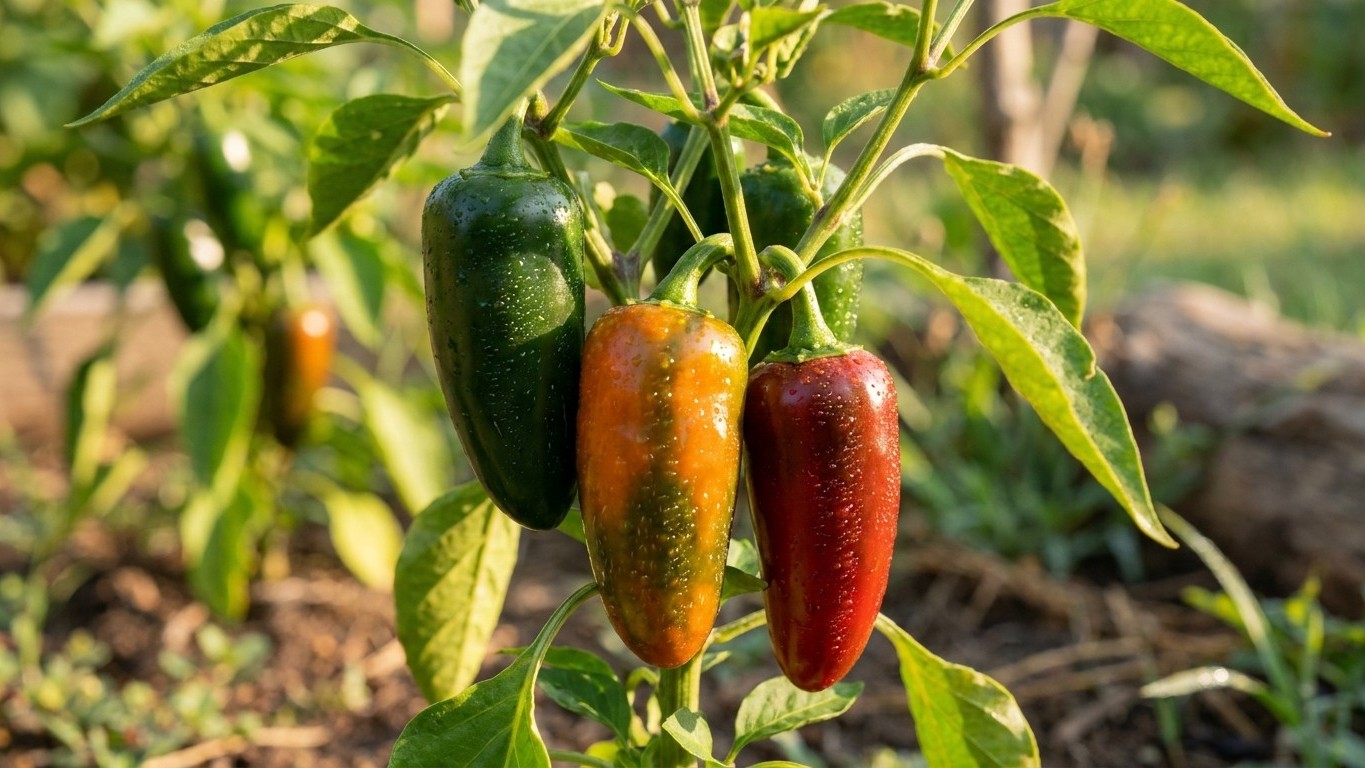

Pepper plants in Arkansas face a short list of insect pests, not the long roster gardeners sometimes worry about. Aphids, Japanese beetles, scale insects, stink bugs, and whiteflies feed on pepper here, according to the state’s extension service. Each tracks the frost-free window and the long run of 90-degree days that define an Arkansas summer. Two lookalike pests common in vegetable gardens don’t feed on pepper at all.
Which pests attack pepper in Arkansas

The University of Arkansas Division of Agriculture Cooperative Extension documents seven insects that turn up in Arkansas vegetable gardens: aphids, Japanese beetles, scale insects, squash bugs (Anasa tristis), squash vine borer, stink bugs, and whiteflies. Not all seven belong on a pepper plant.
Squash bugs and squash vine borer are cucurbit specialists. They feed on squash, pumpkins, and other vining crops, not on pepper foliage or fruit. A wandering squash bug might pass through a nearby pepper plant, but it won’t settle there or cause real damage.
That leaves five insects that genuinely feed on pepper in Arkansas: aphids, Japanese beetles, scale insects, stink bugs, and whiteflies. Aphids and whiteflies are sap-suckers, clustering on leaf undersides and new growth, leaving sticky honeydew behind. Japanese beetles chew, skeletonizing leaves down to the veins. Scale insects attach to stems and leaf undersides and feed slowly over weeks. Stink bugs go straight for the fruit, piercing the wall and leaving sunken, discolored spots underneath the skin.
Arkansas averages 69.2 days a year at or above 90°F, per NOAA NCEI Climate Normals for 1991-2020 at the Little Rock reference station. That heat load pushes plants into stress and speeds up several of these pests’ life cycles at once, which is part of why late summer becomes the busiest stretch for pepper pest pressure in the state.
None of these five is unique to pepper. All move between host plants across a vegetable garden, so a gardener growing tomatoes, squash, or beans nearby often sees the same insects on more than one crop in the same season.
When each one shows up, and what it does first
Arkansas’s frost-free window opens somewhere between March 12 and March 28, based on NOAA’s 1991-2020 climate normals for freeze probability at station USW00013963. Transplants go into the ground after that window closes and the soil has warmed to 60°F, since pepper seedlings need 8 to 10 weeks indoors before they’re ready to face outdoor conditions.
Aphids and whiteflies are usually the first pests to appear, often while the plant is still small and its new growth is soft. Aphids cluster on stem tips and the undersides of the youngest leaves, curling foliage and leaving a shine of honeydew. Whiteflies scatter into a small cloud when the plant is disturbed and leave the same sticky residue, sometimes followed by black sooty mold.
Scale insects tend to show up later, once a plant has enough stem and leaf surface to settle on. They look less like insects and more like small bumps stuck flat against the plant, and because they barely move, an infestation can go unnoticed for weeks before leaves start yellowing for no obvious reason.
Japanese beetles and stink bugs both track the arrival of real heat. Japanese beetles arrive in numbers once the season is fully underway, skeletonizing leaves from the top of the plant down. Stink bugs show up once fruit is actually on the plant, and their damage often isn’t visible until the pepper is cut open: sunken, corky spots where they pierced through to feed.
Fruit set has its own calendar, separate from any insect. A pollinated flower takes 35 to 45 days to become a mature fruit, and that window fails on either end: nights below 55°F or days above 90°F can stall it. This site does not carry Arkansas’s summer night minimums, so a gardener watching for a cool-end failure needs to track their own overnight lows rather than guess from a date on the calendar.
Telling the damage apart from everything else
Insect damage on pepper often gets blamed for problems insects didn’t cause. Blossom drop is a common one: fruit set fails when nights drop below 55°F or days climb above 90°F, no bite marks required. A plant that flowers heavily but sets no fruit during a stretch of Arkansas’s hot summer is showing heat stress, not pest damage.
Fruit spotting is the other frequent mix-up. Stink bug feeding leaves a corky, sunken patch that can appear anywhere on the fruit, while blossom end rot (a calcium and water issue, not an insect) shows up specifically at the blossom end, opposite the stem. Cutting one affected pepper open settles it: stink bug damage traces back to a puncture point under the skin, while blossom end rot shows a flat, leathery, sunken patch with no puncture at all.
| What you see | Insect that can cause it | Non-insect look-alike | What separates them |
|---|---|---|---|
| Curling, yellowing leaves with a sticky sheen | Aphids or whiteflies | Nitrogen deficiency, herbicide drift | Insects, honeydew, or sooty mold visible on leaf undersides; deficiency shows uniform, plant-wide yellowing with no insects present |
| Leaves reduced to a lace of veins | Japanese beetles | Hail or mechanical damage | Beetle damage leaves the vein skeleton intact; hail and physical damage tear irregular holes through veins too |
| Small, immobile bumps on stems | Scale insects | Normal leaf scars or nodes | Scale can be scraped off with a fingernail; scars and nodes cannot |
| Sunken, corky spot on fruit | Stink bugs | Blossom end rot, sunscald | Location on the fruit and a puncture point visible underneath the skin |
Wilting is its own category, and it’s rarely about insects at all. Drought stress, root damage from cultivation, and soilborne disease all produce the same droopy look a pest infestation might, without an aphid colony or a beetle visible anywhere on close inspection. When the cause isn’t obvious, sending a sample or a clear photo to a local extension office beats guessing.
What actually works here, and what is a waste of time
Timing beats product choice on a season this compressed. With the frost-free window opening only between March 12 and March 28, and transplants needing soil at 60°F before going into the ground, an Arkansas pepper crop has a narrow stretch to get established before pest pressure builds alongside the summer heat. Getting transplants in as early as that window allows gives plants more size and resilience before aphids and whiteflies find the soft new growth they prefer.
Physical barriers do more good early than any spray applied later. Floating row cover over young transplants keeps the first wave of aphids and whiteflies off the plant entirely, and it can come off once the plant is large enough to tolerate some feeding without real yield loss. Hand-picking is realistic for Japanese beetles at home-garden scale, since they’re large, slow, and active on top of the foliage in daylight.
Scale insects and stink bugs are harder to manage through simple mechanical means, since scale sits protected under a waxy shell and stink bugs move freely on and off the plant. This is where an actual insecticide may be warranted, and the University of Arkansas Division of Agriculture Cooperative Extension is the source for what’s labeled and legal to use on pepper in the state, since registrations and rates change and vary by product.
What doesn’t work: spraying on a fixed calendar rather than in response to what’s actually on the plant, which wastes material and can kill off the aphid predators that would otherwise keep populations in check. Treating heat-driven blossom drop as though it were a pest problem is another dead end, since no insecticide fixes a night that’s too cold or a day that’s too hot. And a single scouting pass early in the season misses scale insects and stink bugs entirely, since both show up well after the aphid and whitefly wave has already come and gone.
Where to check this for your own county
The University of Arkansas Division of Agriculture Cooperative Extension documents these five pests at the state level, which means the list describes what’s known to feed on pepper somewhere in Arkansas, not necessarily what’s active in any one backyard. A county in the Delta with heavier stink bug pressure from surrounding row crops won’t necessarily match a garden in the Ozarks, where different hosts and microclimates shift which insect shows up first and in what numbers.
The frost-free window itself runs March 12 to March 28 at the state’s reference measuring point, and a specific county can run earlier or later depending on elevation and local terrain. That’s one more reason a county extension office, not a statewide average, is the better source for a planting date this year.
Every county in Arkansas has a Cooperative Extension office tied to the University of Arkansas Division of Agriculture Cooperative Extension, staffed by an agent who can identify a pest from a sample or a photo and who knows what’s currently active in gardens nearby. That local knowledge is worth more than a statewide list, because it reflects what’s active this season, not what’s possible somewhere in the state over a 30-year average.
A pepper plant showing unfamiliar damage is worth bringing in, literally: a few affected leaves in a sealed bag, or a clear photograph of the fruit and the underside of the leaves, gives a county agent enough to work with. That’s the next move for a plant that isn’t matching anything on this page.
Common questions
Do squash bugs or squash vine borer ever damage pepper plants in Arkansas?
No. Both are cucurbit specialists documented by the University of Arkansas Division of Agriculture Cooperative Extension for squash, pumpkins, and related vining crops, not for pepper.
What’s the first sign of pepper pest trouble in Arkansas?
Usually aphids or whiteflies on new growth soon after transplant, showing up as curled leaves, sticky honeydew, or a small cloud of insects when the plant is disturbed.
Why did my pepper plant flower but not set fruit?
It may not be a pest at all. Fruit set fails when nights drop below 55°F or days climb above 90°F, and Arkansas averages 69.2 days a year at or above that heat threshold.
When should peppers go into the ground in Arkansas to get ahead of pests?
After the frost-free window, which runs March 12 to March 28 at the state’s reference station, and once soil has warmed to 60°F, with transplants started 8 to 10 weeks indoors beforehand.