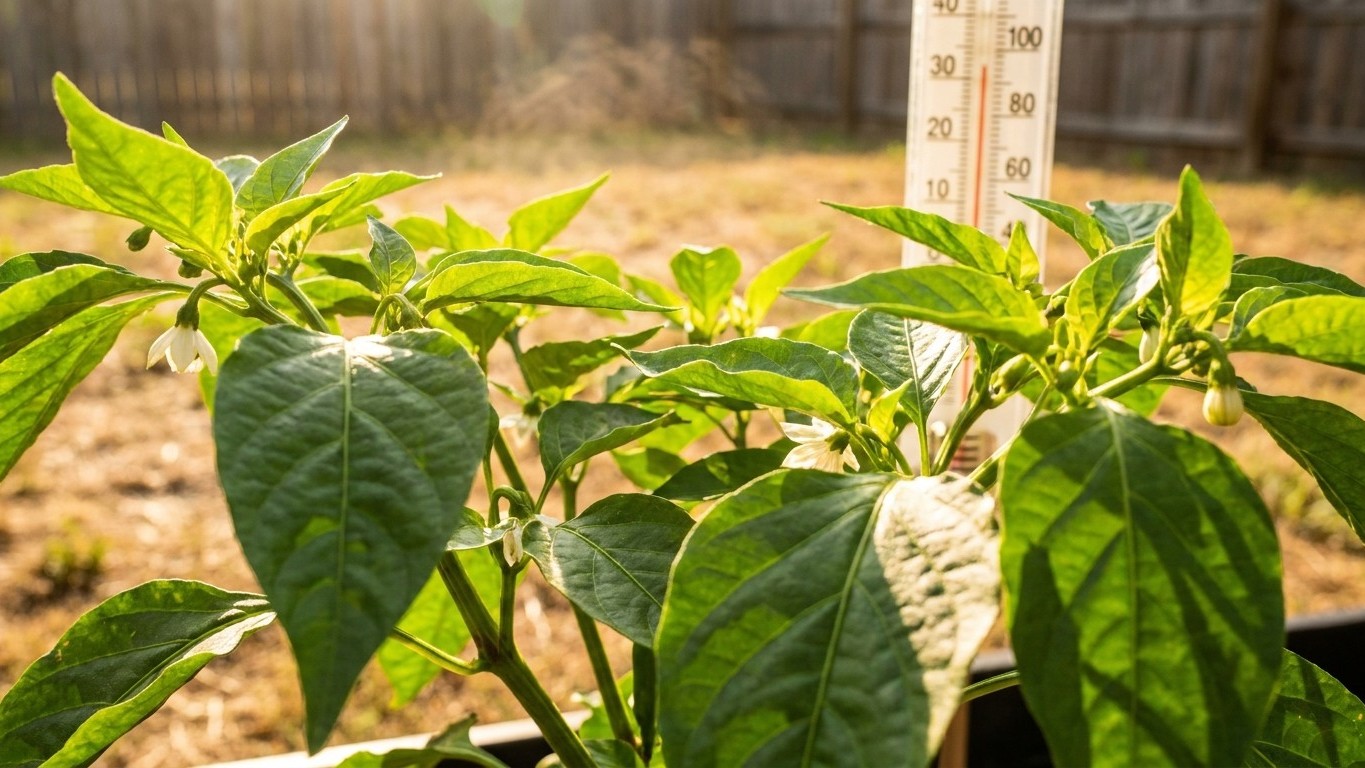

In Arkansas, pepper plants stall out for two separate reasons: nights that drop below 55°F stop pollen from setting, and days that climb past 90°F do the same thing from the other direction. The state’s reference station logs an average of 69.2 days a year at or above 90°F, which tells you the heat problem is real and recurring. The cold-night problem is just as real, but this data doesn’t track summer night lows for Arkansas, so that part is on you to watch.
The short answer

Start with the number that’s actually measured here: 69.2 days a year at or above 90°F, averaged over the 1991-2020 period at the Little Rock reference station, according to NOAA NCEI Climate Normals. That’s not a handful of scorching afternoons in late July. It’s better than nine full weeks, spread across a growing season that typically runs from spring into early fall, where a pepper plant can be sitting in stress heat on any given day. Pepper flowers don’t handle that well. When daytime highs push past 90°F, especially with warm nights on top of it, pollen viability drops and flowers abort before they ever set fruit. You’ll see the plant looking healthy, even loaded with blossoms, and then watch those blossoms drop to the ground without producing a single pepper.
Here’s the part that trips people up: the fix isn’t just “avoid the heat.” Peppers fail at the opposite extreme too. According to Utah State University Extension’s guidance on peppers, fruit set breaks down when nights fall below 55°F, the same way it breaks down above 90°F during the day. That’s a narrower window than most people assume when they picture a heat-loving crop, and it explains, as detailed in Why Peppers Fail to Set Fruit in Arkansas, why a spring planting or a fall planting can stall out even though the calendar says it’s warm enough for tomatoes and squash.
The catch for Arkansas gardeners specifically is that this site tracks days above 90°F because that’s the figure with a solid station-level source behind it. Summer overnight minimums aren’t part of that dataset for this state, and no one should guess at them from a map. Latitude doesn’t tell you what a particular valley, ridge, or urban lot actually does after sunset, and neither does the coldest month of the year, which measures winter, not the June or September nights that matter for pepper set. If you want to know whether your peppers are losing blossoms to cool nights, the only real answer comes from a thermometer on your own property, checked over a few weeks during the stretch when flowers are forming, and a look at When to Start Pepper Seed in Arkansas to make sure your timing gives plants the best shot at that window.
Put those two pieces together and the picture for Arkansas is a heat-heavy season with a real risk of daytime fruit-set failure during the hottest stretch of summer, paired with an unmeasured but plausible risk of cool-night failure at the shoulders of the season. Given both constraints, it helps to know which Pepper Varieties That Ripen in a Arkansas Season before you plan your planting dates. season that you’ll need to track yourself.
When to start seed here
Utah State University Extension puts the indoor seed-starting window at 8 to 10 weeks before transplanting, with transplant timing set by two conditions that both have to be met: the plant goes in the ground after the last frost, and only once soil has warmed to 60°F. Here’s how that arithmetic plays out for Arkansas.
- Find your frost date. NOAA NCEI’s 1991-2020 climate normals put the 32°F freeze-probability window for the reference station (USW00013963) between March 12 and March 28. But peppers are tender plants, and the caution attached to that data points to a warmer threshold for tender crops: at the 36°F light-frost line, the same station data (as reported by the National Weather Service office covering Little Rock) gives April 3 in spring and October 31 in fall. For peppers, work from the April 3 date, not the March window, since a light frost that a hardy crop shrugs off can still set a pepper transplant back hard.
- Wait for 60°F soil, not just 60°F air. Soil warms slower than the air above it, sometimes by several weeks in early spring, so don’t transplant the moment the calendar clears the frost date. Check the soil itself, four inches down, with a simple soil thermometer, and hold off until it reads 60°F even if the frost date has already passed.
- Count back 8 to 10 weeks from your realistic transplant date. If you’re planning to move plants outside in mid-to-late April once soil has caught up to 60°F, that puts your indoor seed-starting window somewhere in the second half of February, give or take, depending on how quickly your soil warms in a given spring.
- Remember the 35 to 45 day gap comes later, not now. Utah State University Extension notes that fruit typically takes 35 to 45 days to develop after flowering, not after sowing or transplanting. That gap matters when you’re estimating a harvest date: it starts the clock at first bloom, which itself may not happen until weeks after the plant is in the ground and settled.
Redo this math for your own county rather than borrowing Little Rock’s dates wholesale. A garden in the Ozarks or the Delta lowlands can run a week or two ahead or behind the reference station, and that shift changes both ends of this calculation.
What goes wrong here
- Blossom drop during a hot spell. Once daytime highs push past 90°F, pepper flowers can abort before pollination completes, and with 69.2 days a year hitting that mark on average, this isn’t a rare event in Arkansas. There’s no fix that changes the temperature, but afternoon shade cloth over the plants during the worst heat waves, along with consistent soil moisture so the plant isn’t fighting drought stress on top of heat stress, gives flowers a better shot at holding on.
- Blossom drop during a cool snap. The same failure shows up when nights drop below 55°F, typically at the edges of the season rather than in midsummer. Since this site doesn’t carry night-temperature data for Arkansas, the only way to catch this is to track your own overnight lows during flowering and be ready to cover plants with row cover on nights that dip unexpectedly cold.
- Sunscald on exposed fruit. Arkansas summers bring strong, direct sun, and peppers that lose leaf cover from disease, pruning, or wind damage end up with fruit exposed to hours of direct light. The skin develops pale, papery patches that eventually turn into soft rot spots. Keeping the plant’s natural foliage canopy intact, and avoiding heavy pruning during the hottest stretch of summer, protects developing fruit from direct exposure.
- Blossom-end rot. This shows up as a sunken, dark, leathery patch on the bottom of the fruit, and it’s driven by inconsistent water delivery interfering with calcium uptake rather than a soil calcium shortage in most cases. Even watering, deep and regular rather than a quick daily sprinkle, is the main way to keep this from spreading through a planting once the heat sets in and water demand climbs.
Checking this against your own county
Everything above comes from station-level and reference-source data, which is a solid starting point but not a substitute for what’s happening in your specific yard. Soil warms differently across a state this size, frost can linger longer in a low-lying hollow than it does a few miles away on a ridge, and summer night temperatures vary block to block in ways no statewide dataset captures.
The University of Arkansas Division of Agriculture Cooperative Extension Service, at uaex.uada.edu, is the named resource for county-level growing guidance in this state. Reach out to your local county extension office through that site for planting calendars, soil testing, and pest pressure specific to where you actually garden, rather than relying only on statewide averages.
Common questions
Why do my pepper plants have flowers but no fruit?
The most likely cause in Arkansas is fruit-set failure at one of the two temperature extremes: daytime highs above 90°F, or nighttime lows below 55°F. Check which end you’re closer to during the stretch when flowers are forming, and track your own night temperatures since that data isn’t captured at the state level here.
How long does it take a pepper to grow after it flowers?
According to Utah State University Extension, fruit typically takes 35 to 45 days to develop starting from flowering, not from the day you transplanted or sowed the seed. Factor that gap in separately when estimating a harvest date.
When should I start pepper seeds indoors in Arkansas?
Count back 8 to 10 weeks from your realistic transplant date, which itself depends on both the last frost and soil reaching 60°F. For the Little Rock reference station, the light-frost date lands around April 3, but soil often takes longer to catch up, so check your own soil temperature before settling on a seed-starting date.
Can I do anything about summer heat killing my pepper blossoms?
You can’t change the temperature, but afternoon shade cloth during the hottest stretch and consistent soil moisture reduce the added stress that pushes flowers over the edge. With an average of 69.2 days a year at or above 90°F in this state, planning for that heat load ahead of time works better than reacting to it after blossoms have already dropped.