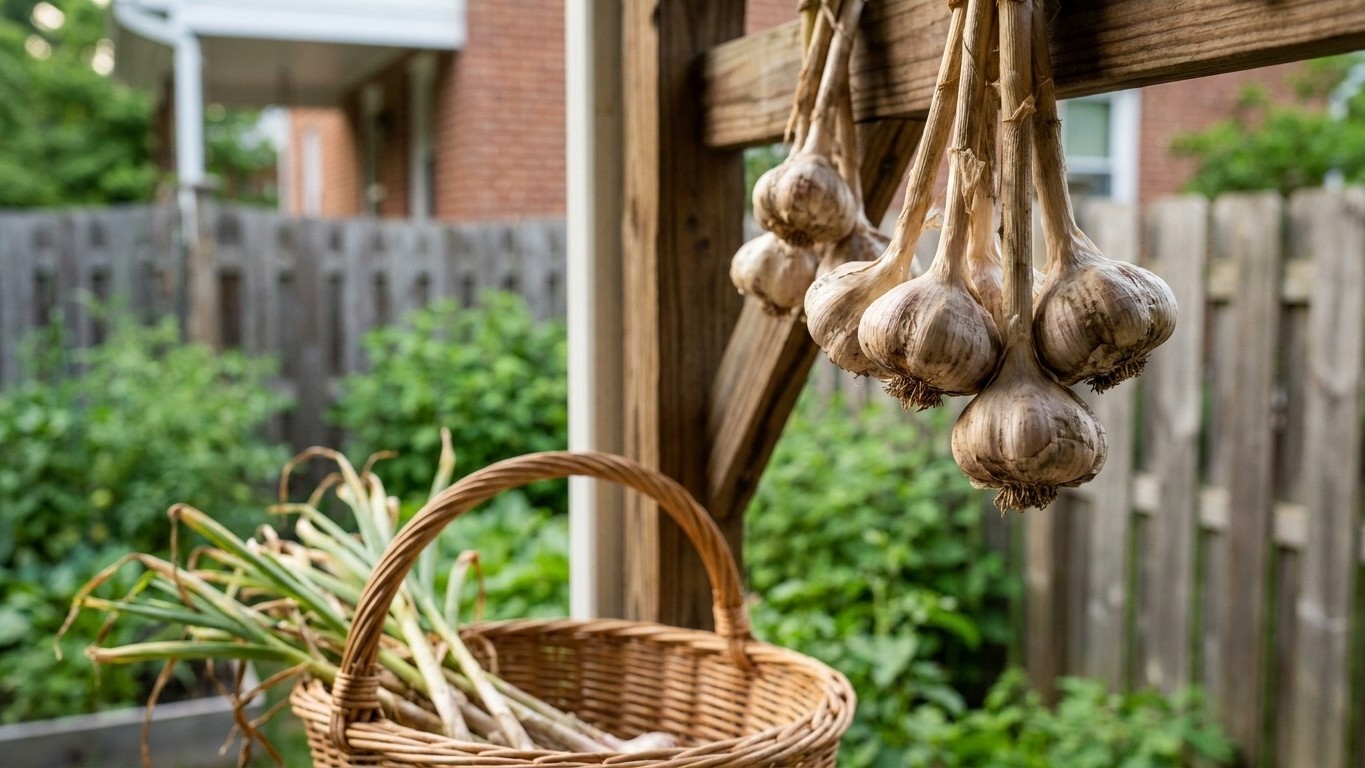

In Connecticut, garlic planted the previous October or November comes out of the ground when the lower leaves start browning back, usually over a stretch of weeks in July. Bulb size and wrapper condition matter more than any date circled on a calendar. Once lifted, bulbs need three to four weeks of shaded, airy curing before storage, and a spot that stays cool, dark, and dry through winter, not a damp basement or a heated kitchen, is what decides whether that garlic lasts until spring.
When garlic is ready to lift in Connecticut
The signal that matters is leaf color, read from the bottom of the plant up. When roughly half the leaves have gone brown and papery while the top few are still green, the bulb underneath has usually finished dividing into cloves and started tightening its wrapper layers. Pull too soon and you get undersized bulbs with skins so thin they won’t cure properly. Wait too long past that point and the wrappers split open in the ground, cloves separate, and soil or moisture gets into the bulb, which wrecks its storage life before it’s even out of the dirt.
This summer’s harvest traces back to last fall’s planting window. Connecticut growers put cloves in the ground during the weeks before the soil locks up for winter, giving roots time to establish before hard freezes settle in. Using Bridgeport as a reference point, the first fall freeze in that stretch of the state typically falls between October 28 and November 10, based on NOAA’s 1991-2020 Climate Normals. That’s a midpoint, not a guarantee. In roughly half of all years, the freeze arrives later than that window, sometimes well into November. Bridgeport also sits right on Long Island Sound, which makes it the mildest corner of the state. Inland and northwest Connecticut freeze noticeably earlier in fall, so a planting schedule built around the coast will run late for a garden in Litchfield County.
Once cloves overwinter and push up shoots in spring, the plant spends the following months building the bulb, and that’s the growth that ends with the leaf dieback you’re watching for in July. A practical way to confirm timing before committing to the whole row: pull one test bulb, brush off the soil, and slice it in half. If the cloves are plump and distinct with intact skins, the rest of the bed is likely close behind. If they’re still fused and small, give it another week and check again.
Curing it, and where to hang it here
Curing is the step that turns a freshly dug bulb into something that survives months in storage, and it’s mostly about airflow and time rather than any special technique. Don’t wash the bulbs. Brush off loose soil by hand and leave the roots and tops attached, then move the whole plant to a shaded spot with steady air movement for three to four weeks. Direct sun during curing can scald the outer wrapper, which then fails to protect the cloves once they’re in storage.
Connecticut’s July and August stretches run humid more often than not, which is the main obstacle to a clean cure here. A closed, still room traps moisture around the bulbs and invites mold before the necks have dried down. A covered porch, an open barn bay, or a garage with the door cracked and a box fan running tends to work better than an indoor room with no airflow. If a humid week sets in, running a dehumidifier in an enclosed curing space, or simply adding a fan, keeps mold from taking hold on the outer skins.
You’ll know curing is finished when the neck above the bulb is tight and dry rather than fleshy, the outer wrappers have gone papery, and the roots have turned wiry and stiff. At that point, trim the tops down to an inch or two above the bulb, trim the roots close, and brush away any remaining soil. Some growers leave tops long and braid softneck types instead of trimming, which works fine as long as the curing airflow was adequate first. For general guidance on timing and technique specific to the state’s climate, UConn Extension is the land-grant resource for Connecticut growers.
Storing it through a Connecticut winter
Cured garlic keeps best in conditions that are cool, dry, dark, and ventilated, which is a harder combination to find in a New England house than it sounds. A finished basement that’s been dehumidified can work, but an older, unfinished basement in Connecticut is often damp enough in winter to encourage rot, especially near a furnace running a humidifier for comfort. On the other end, a heated kitchen or pantry is typically too warm and too dry, which pushes bulbs to sprout early, sometimes by midwinter.
An unheated but insulated space, such as an attached garage that doesn’t freeze solid, a three-season porch closet, or a cool interior closet away from heating vents, tends to split the difference better than either extreme. Bulbs should be stored loose or in mesh bags rather than sealed plastic, since trapped moisture is what starts rot in storage. Check on stored bulbs periodically through winter and pull any that go soft before the mold spreads to neighboring bulbs.
Hardneck vs. softneck in storage
Most Connecticut growers lean toward hardneck varieties because they handle cold winters reliably, but that hardiness trades off against storage length. Softneck types generally hold up longer in storage than hardneck types, which is worth factoring in if you’re planning to eat your way through the harvest gradually rather than using most of it early.
| Type | Winter hardiness in CT | Typical storage length | Curing time |
|---|---|---|---|
| Hardneck | Well suited to CT winters | Shorter than softneck | 3-4 weeks |
| Softneck | Adequate with mulch | Longer than hardneck | 3-4 weeks |
Whichever type you’re storing, save the largest, healthiest-looking bulbs aside if you intend to plant again in fall. Bulbs held back for seed stock should get the same cool, dry treatment as the ones set aside for the kitchen.
What goes wrong here
The most common failure is a mismatched harvest date: lifting while most leaves are still green leaves bulbs underdeveloped, while waiting until nearly all the foliage has collapsed lets wrappers split and cloves separate underground, both of which shorten how long the garlic will keep. A close second is curing in a sealed, humid space, which in Connecticut’s muggy summer stretches shows up as mold spots on the outer skins within days rather than weeks.
Storage mistakes tend to follow the same pattern every year. Bulbs kept in a warm kitchen sprout weeks earlier than bulbs kept somewhere cool. Bulbs kept in a damp, unventilated basement rot from the inside before anyone notices a problem on the outside. Both are avoidable with the storage spot swapped, not with any change to the garlic itself.
On the pest side, Allium leafminer is the one documented for this territory that specifically targets garlic and other alliums, and it’s the one to watch for on foliage in spring and fall. Larvae mine into leaves and can work their way down toward the bulb, weakening plants before harvest and sometimes leaving damage that shows up later in storage. Cutworms are also documented as a general risk to young shoots, which matters most right after fall planting or as shoots emerge in spring, when stems are still tender enough to be cut off at soil level overnight. UConn Extension documents both of these for the state; watching young growth in the weeks after planting and again in early spring is the simplest way to catch damage before it spreads through a bed.
Common questions
Can I harvest garlic early if the leaves are still green?
Pulling bulbs while most leaves are still green usually means the cloves haven’t finished separating and sizing up, which leaves you with smaller bulbs that don’t cure or store as well as ones lifted at the right leaf-color stage.
How long does cured garlic last in Connecticut storage?
It depends on the type and the storage spot more than any fixed number. Softneck types generally outlast hardneck types in storage, and a cool, dry, ventilated space adds months compared to a warm kitchen or a damp basement.
What’s the best time to plant garlic in Connecticut for a summer harvest?
Cloves go in during the weeks before the ground freezes for winter. Since the first fall freeze around Bridgeport typically falls between October 28 and November 10, and runs later in about half of all years, and earlier inland and in the northwest hills, timing needs to be adjusted to your specific part of the state rather than a single statewide date.
Should stored garlic go in the refrigerator?
A refrigerator’s cold, moist environment tends to trigger sprouting in garlic rather than prevent it, which is the opposite of what a good storage spot should do. A cool, dry, dark room or closet away from heating vents works better than the fridge for whole bulbs meant to last through winter.