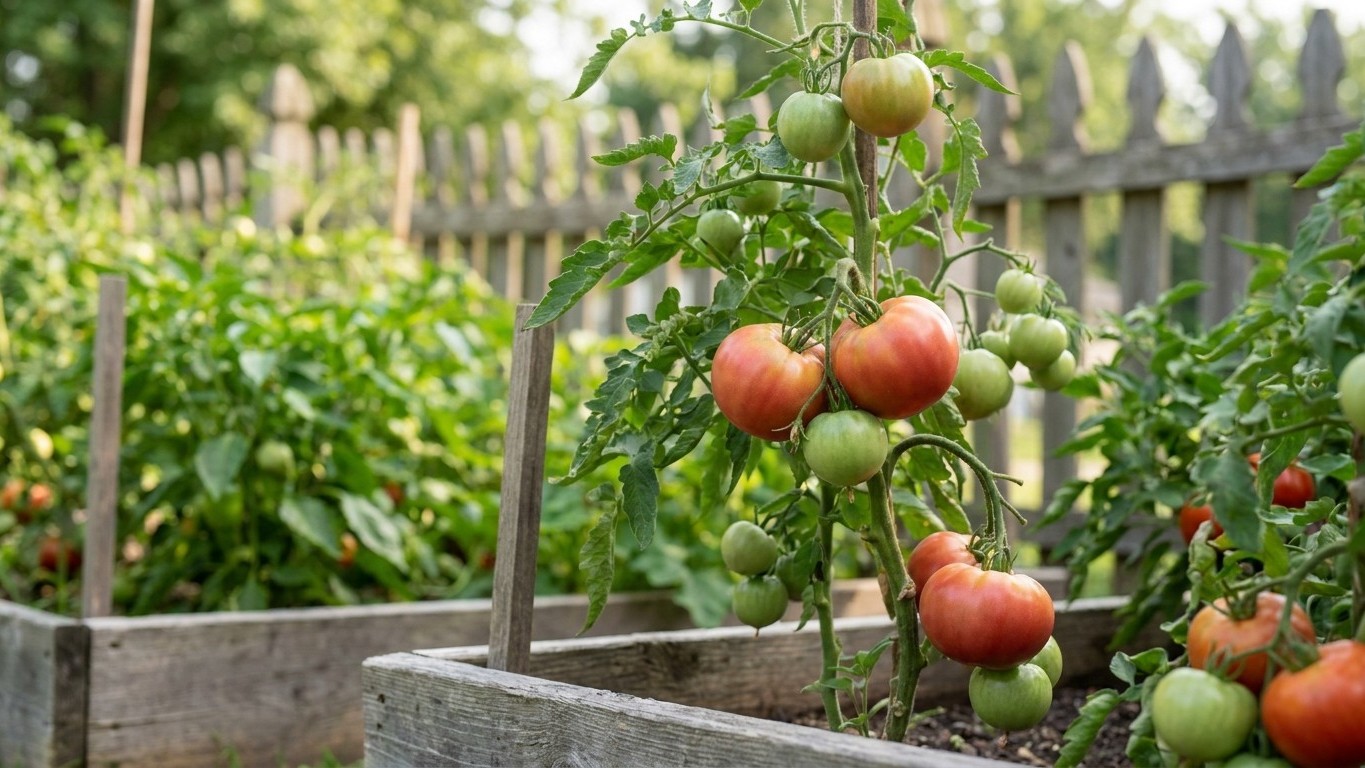

The short answer: pick when fruit shows the first blush of color, not when it’s fully red on the vine. In Mississippi, that decision gets urgent fast once you’re within a few weeks of the first fall frost window, typically November 7 to November 22 near Jackson. Everything still green and marble-sized or larger at that point needs to come inside.
When to pick tomatoes in Mississippi
Tomatoes don’t need sunlight to finish ripening. They need ethylene, a gas the fruit itself produces once it hits a stage called “breaker,” when a star-shaped patch of pink or yellow appears at the blossom end against otherwise green skin. That single fact changes how most gardeners should be picking. Waiting for full vine-ripened red color isn’t necessary, and in a Mississippi summer it often costs you fruit to cracking, sunscald, or birds before you get there.
The practical window runs from breaker stage through light red. A tomato picked at breaker and set on a counter will ripen to the same flavor and sugar content as one left on the vine, according to postharvest research from land-grant universities, it just takes a few extra days. Where timing gets tighter is late in the season. The first fall frost window at the Jackson-area reference station runs November 7 to November 22, but that’s an airport measurement. Rural gardens and low spots in the yard commonly see frost one to two weeks earlier than that, sometimes more where cold air settles in a hollow or a river bottom. If you garden outside the immediate Jackson metro, don’t treat that date range as a guarantee, check your own county’s typical frost history through the Mississippi State University Extension Service before you plan your last picking day.
Reading the stages
Here’s the rough progression fruit moves through, useful for deciding what to leave and what to pull:
| Stage | Appearance | What to do |
|---|---|---|
| Mature green | Full size, skin still solid green, no color break | Will ripen off vine if fully mature; pick before frost |
| Breaker | Star-shaped blush at blossom end | Safe to pick, finishes ripening indoors |
| Pink to light red | Color moving up the fruit, still firm | Ideal picking window for eating soon |
| Full red | Fully colored, softening | Pick immediately, use quickly |
The USDA Plant Hardiness Zone Map places Mississippi across zones 7b through 9a, a range wide enough that a coastal garden and a hill-country garden several counties north can run on noticeably different clocks by fall. That’s another reason a single statewide picking calendar doesn’t hold up, your own frost history matters more than the state average.
What to do with the green ones
Once frost is realistically close, and given how much earlier a home garden can freeze compared to the airport reference numbers, the standard move is to strip the plant of anything at mature green size or larger. A tomato that’s reached full size with a solid, waxy-looking green skin has the internal development to keep ripening after picking. Anything still small, hard, and dull green usually won’t, it’ll just shrivel or rot in storage rather than turn red.
Frost itself is the real deadline, and it’s an unforgiving one. A hard freeze collapses the plant cells in the fruit almost instantly. Tomatoes caught on the vine during a freeze turn watery and mushy within a day or two, and they won’t ripen properly even if you bring them in afterward. That’s why the harvest push has to happen before the cold snap, not after it.
Options for the green haul split a few ways:
- Set aside the greenest, hardest fruit for fried green tomatoes or green tomato relish, since these don’t need to ripen at all
- Sort mature green ones by size and firmness, then start the indoor ripening process described below
- Compost or discard anything soft, blemished, or clearly immature, since these rarely ripen well and can spread rot to the batch
A trick worth knowing: some gardeners pull the whole plant before a freeze, roots and all, and hang it upside down in a garage or shed. The theory is that fruit still attached to the vine continues ripening slightly better than fruit picked loose, since some hormonal signaling from the plant continues briefly. Results are mixed and it takes up space, so most home gardeners get similar results just picking the fruit individually and skipping the plant-hanging step.
Whichever route you take, don’t wash the tomatoes until you’re ready to use or ripen them. Moisture on the skin speeds up mold growth in storage, and a batch of green tomatoes brought in ahead of frost needs to last, sometimes for weeks.
Ripening indoors, and how long they keep
Ripening a mature green tomato indoors comes down to warmth, darkness, and a nudge of ethylene. A paper bag with a banana or an apple tucked in alongside the tomatoes works because both fruits release ethylene gas as they ripen, and trapping that gas in a closed bag speeds up the color change. A cardboard box lined with newspaper, tomatoes arranged in a single layer not touching, does the same job at a slightly slower pace and makes it easy to check on individual fruit without disturbing the rest.
Warmer rooms ripen tomatoes faster than cool ones, which is intuitive but easy to get backwards, a lot of people assume a cool pantry is gentler on the fruit when actually it just stalls the process. A spot near normal room temperature, out of direct sun, works better than a cold basement or an unheated porch. Direct windowsill sun isn’t necessary and can actually cause uneven softening on the side facing the glass.
Checking and sorting
Go through the batch every couple of days. Tomatoes ripen at different rates even from the same picking, so pull each one out as it colors up rather than waiting for the whole batch to turn at once. Any fruit that develops a soft spot, a shriveled patch, or visible mold needs to come out immediately, since one bad tomato in a box can take down its neighbors faster than you’d expect.
How long unripe green tomatoes will hold before they either ripen or spoil varies with the individual fruit’s maturity and how it was handled at picking, bruised or nicked tomatoes go first. Firm, unblemished mature green tomatoes stored in a single layer, checked regularly, and kept out of direct sun typically give you the longest working window, often stretching the harvest usefully past the first frost date. There isn’t a single published shelf-life number that applies to every batch, since it depends heavily on variety, size, and how the fruit was handled at picking, so treat storage as an ongoing check-in rather than a set countdown.
One thing to skip: the refrigerator. Cold storage does slow ripening, but it also breaks down the internal texture of tomato flesh in a way that doesn’t reverse once the fruit warms back up. Tomatoes chilled too early in the ripening process tend to come out mealy and flavor-flat compared to ones ripened at room temperature the whole way through.
What goes wrong here
The most common mistake is timing the harvest off a statewide or even a nearby city’s frost date instead of a garden’s actual local pattern. The reference window used for planning purposes, November 7 to November 22, comes from an airport weather station, and airport sites tend to run warmer than surrounding rural land because pavement holds heat. A garden in a low spot a few miles away can freeze a week or two before that window even opens. Gardeners who wait for a date on a calendar instead of watching their own thermometer sometimes lose an entire late crop overnight.
Picking too early causes a different problem. Fruit pulled before it reaches true mature green size, still small and rock-hard with no internal gel around the seeds, generally won’t ripen at all. It just sits there green and eventually shrivels. This is why sorting by size and firmness at harvest matters more than sorting by color alone.
Overcrowding in storage is another frequent misstep. Piling green tomatoes several layers deep in a box traps moisture and heat unevenly, and one soft or moldy fruit at the bottom of the pile can spread rot upward before anyone notices. A single layer, with a little air space between fruit, holds up far better even though it takes more room.
Finally, a lot of gardeners let the last vine-ripe tomatoes sit too long outdoors hoping for a few more warm days, then lose the whole batch to an early cold snap they didn’t see coming. Given how much a home garden’s frost timing can differ from the reference figures for this region, checking local frost history through the Mississippi State University Extension Service before the season’s last few weeks is a better bet than guessing.
Common questions
Can I pick tomatoes as soon as they start turning pink?
Yes. Once a fruit reaches the pink or light red stage it’s past the point where vine ripening adds meaningful flavor, and picking then reduces the risk of cracking, sunscald, or pest damage before you get to it.
Will small green tomatoes ripen if I bring them inside?
Usually not. Fruit that hasn’t reached full mature size, still hard with underdeveloped seeds, tends to just shrivel rather than color up, even with warmth and ethylene exposure. Size and firmness at picking matter more than color for predicting whether a green tomato will ripen.
Does putting tomatoes in the sun on a windowsill help them ripen faster?
Not really, and it can cause uneven softening on the sun-facing side. Ripening runs on warmth and the fruit’s own ethylene production, not light, so a warm spot out of direct sun works as well or better.
How do I know my area’s actual frost dates instead of relying on the regional average?
Local frost timing can run noticeably earlier or later than airport-based figures depending on elevation, soil type, and how sheltered the garden is. The Mississippi State University Extension Service is the resource to check for county-level frost history rather than relying on a single statewide window.