
Pick apples in New Hampshire based on what the fruit itself is telling you, not the date on the calendar. Background color turning from green to yellow, brown seeds, and a stem that lets go with a gentle twist all say the same thing: this apple is ready. Depending on variety, that moment lands anywhere from late August to mid-October, with early types finishing well ahead of the first fall frost and the storage-bred late apples hanging on almost until it arrives. What happens next in the kitchen or the cellar depends entirely on which variety you picked.
When apples are ready to pick in New Hampshire
The two dates that frame the whole apple season here come from the NOAA NCEI Climate Normals for 1991-2020, using the Manchester station as reference: last spring frost falls between April 16 and April 27, and first fall frost arrives between October 13 and October 26. Bloom happens a few weeks after that spring frost window closes, and harvest for most trees wraps up before, or right around, the fall frost window opens. Everything in between is the growing season a New Hampshire apple tree actually gets to work with.
Inside that window, timing is a matter of variety, not month. Early apples, the kind bred for eating fresh off the tree, typically finish ripening in late August to early September, well ahead of any frost risk. Mid-season varieties come off through most of September. The keepers, the dense-fleshed types built for winter storage, often aren’t ready until late September into October, sometimes picked within a couple of weeks of that first fall frost date. A grower who picks by the calendar instead of by the fruit ends up with pale, starchy apples pulled too soon or a soft, mealy mess left too long.
Reading the tree, not the month
Four checks matter more than any date: background skin color (green fading to yellow or cream under the blush), seed color (white means wait, brown means go), ease of separation (a ripe apple parts from the spur with an upward twist, an unripe one resists and tears), and taste (starchy and sour versus sweet with real crunch). Cut one open before committing to a full picking day.
One caution worth repeating: the frost dates above come from an airport weather station. Gardens and orchards outside the immediate Manchester area, especially in the hills, up north, or at any real elevation, tend to see that first fall frost arrive earlier and the last spring frost linger later, sometimes by a week or two. That pushes the whole ripening window earlier for higher or more northern ground. Check your own county’s frost history before setting a picking date off Manchester’s numbers alone.
Winter hardiness is a separate question from ripening timing, and it decides something different: whether the tree survives here at all. The Manchester station’s mean daily minimum for the coldest month sits at 17.1°F. That figure, not the record low and not a monthly average, is what a tree’s roots and wood have to tolerate most winters. Varieties bred for milder regions can struggle against repeated nights in that range, which is one more reason to buy stock recommended for northern New England rather than assuming any apple tree will do.
Which ones keep, and which must be eaten
Not every apple is built the same way once it’s off the tree. Some varieties have thin skin and soft flesh that starts breaking down within days of picking. Others have dense, firm flesh and a tougher skin that resists moisture loss for months in the right conditions. That difference in structure, more than anything about how they’re grown, is what decides whether an apple belongs in a pie this week or in a cold cellar until spring.
Early-season apples, the ones ripening well before any frost risk, are almost always the short-keepers. They were bred for flavor and texture eaten fresh, not for standing up to months in storage. Mid-season types split the difference: good for a few weeks in the refrigerator, not much longer. Late-season apples, the ones picked closest to that October frost window, are usually the true keepers, the varieties that were selected over generations specifically because they hold their texture into winter and beyond.
| Harvest timing | Typical keeping behavior | Best use |
|---|---|---|
| Early season (before frost risk) | Short-lived, softens quickly | Eat fresh, bake soon after picking |
| Mid-season | Holds a few weeks refrigerated | Sauce, fresh eating, short-term storage |
| Late season (near first fall frost) | Firm for months in cold storage | Root cellar or basement storage through winter |
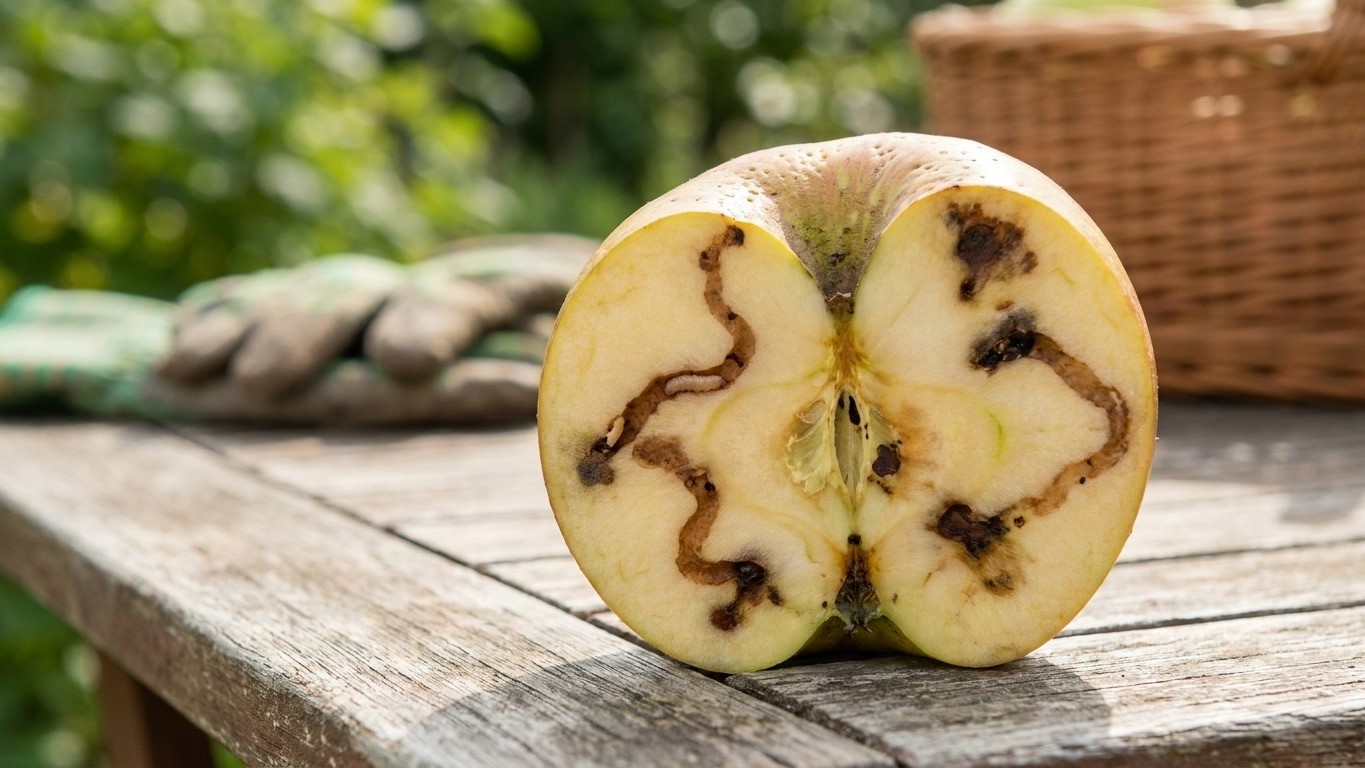
A practical rule for anyone with a mixed home orchard: sort as you pick, not after. Any apple with a bruise, a soft spot, or insect damage should go into the eat-now pile regardless of variety, because damaged fruit releases ethylene gas that speeds up ripening in everything stored around it. That’s the old wisdom behind “one bad apple spoils the barrel,” and it’s still accurate. A single rotting apple in a storage crate can shorten the life of every apple around it within a couple of weeks.
Skin thickness is a decent visual shortcut in the orchard, but it isn’t foolproof. The only reliable test is experience with that specific variety over a season or two, or a call to the local extension office, since storage life varies by tree even within the same general category.
Storing them through a New Hampshire winter
Long-keeping apples want three things: cold, humidity, and darkness. A temperature just above freezing, ideally somewhere in the mid-30s, slows the ripening process to a crawl. Humidity in the 90 percent range keeps the skin from shriveling. Darkness prevents the fruit from continuing to green up or soften under light exposure. A basement corner, an unheated but insulated garage, or an old-fashioned root cellar all work, provided the space doesn’t swing wildly with outdoor temperature.
That last part matters more in New Hampshire than in milder states. With the coldest month here averaging a nightly minimum of 17.1°F at the Manchester reference station, an unheated outbuilding can drop well below freezing during a hard cold snap, and apples stored in unprotected containers can freeze solid. Frozen apple flesh turns mealy and brown once it thaws, ruining fruit that would otherwise have kept for months. Wrapping crates in old blankets, moving storage to an insulated basement during the coldest stretches, or simply checking a thermometer in the storage space during a deep freeze are cheap insurance against losing a winter’s worth of picking in one cold night.
Layering matters too. Apples stored loose in a single layer, not stacked deep in a bin, bruise less and are easier to inspect. Wrapping each apple individually in newspaper slows moisture loss and keeps any one spoiling apple from spreading rot to its neighbors. Check the stored fruit every few weeks through the winter and pull anything soft, spotted, or leaking, the same ethylene problem applies in storage as it does at picking time.
For specifics tuned to New Hampshire conditions, including which varieties are being recommended locally and how storage advice differs by region of the state, the University of New Hampshire Cooperative Extension publishes guidance at extension.unh.edu. That’s a more reliable source for county-level detail than general storage advice written for a different climate.
What goes wrong here
The most common failure in New Hampshire isn’t storage, it’s timing at the other end of the season. Bloom happens shortly after that last spring frost window (April 16 to April 27 at the Manchester reference station) closes, and a late frost that arrives after blossoms have opened can wipe out that year’s crop before a single apple forms. This is the trade-off worth understanding plainly: a variety that flowers early, often because it needs less accumulated winter cold to break dormancy, gets exposed to exactly this late-frost risk. In a state with a spring frost window running into late April, planting the earliest-flowering varieties available is a real gamble. Given how cold New Hampshire winters run, chill accumulation is rarely the limiting factor here, so there’s little reason to reach for an early-flowering, low-chill variety in the first place. Choosing a variety that blooms a bit later, closer to when frost risk has actually passed in your specific area, is the safer bet.
Storage failures usually trace back to one of two mistakes: mixing damaged fruit in with sound apples, or letting the storage space freeze during a hard cold snap. Both are avoidable with routine checks rather than special equipment.
Pest and disease pressure varies enough by region and by year that no single article can responsibly cover it with specific figures. No sourced data for this page names particular pest outbreak timing or severity for New Hampshire specifically, and it would be a mistake to invent one. Anyone dealing with unusual leaf damage, fruit drop, or fungal spotting is better served contacting UNH Cooperative Extension directly, since they track what’s actually active in the state that season.
Finally, remember that every date and figure here comes from one reference station near Manchester. A hillside orchard forty miles north or a garden at real elevation is working with a different, usually shorter, growing season and colder winter minimums than what’s documented here.
Common questions
Can apple trees survive New Hampshire winters?
Most standard apple varieties tolerate the cold here without issue. The coldest month at the Manchester reference station averages a nightly minimum of 17.1°F, and mainstream apple varieties sold for northern New England are bred to handle that range. Trees intended for warmer regions are the ones at risk, so buying stock rated for this climate matters more than the state name on the label.
How do I know an apple is ripe without cutting it open?
Check background skin color under the blush (green fading toward yellow or cream), how easily it separates from the branch with an upward twist, and whether windfall apples have started dropping on their own. Cutting one open to check seed color is still the most reliable single test.
Do early frost warnings mean I should pick everything at once?
Not necessarily. Early and mid-season varieties are usually already off the tree before the first fall frost window (October 13 to October 26 at the Manchester station) opens. Only the latest-ripening storage varieties are typically still hanging when frost risk arrives, and a light frost doesn’t damage most apples still on the tree, it’s the blossoms in spring that are vulnerable, not the fruit in fall.
Where can I get New Hampshire-specific growing advice?
The University of New Hampshire Cooperative Extension, at extension.unh.edu, publishes region-specific guidance for the state. That’s a better source for local variety recommendations and current pest activity than general national advice.