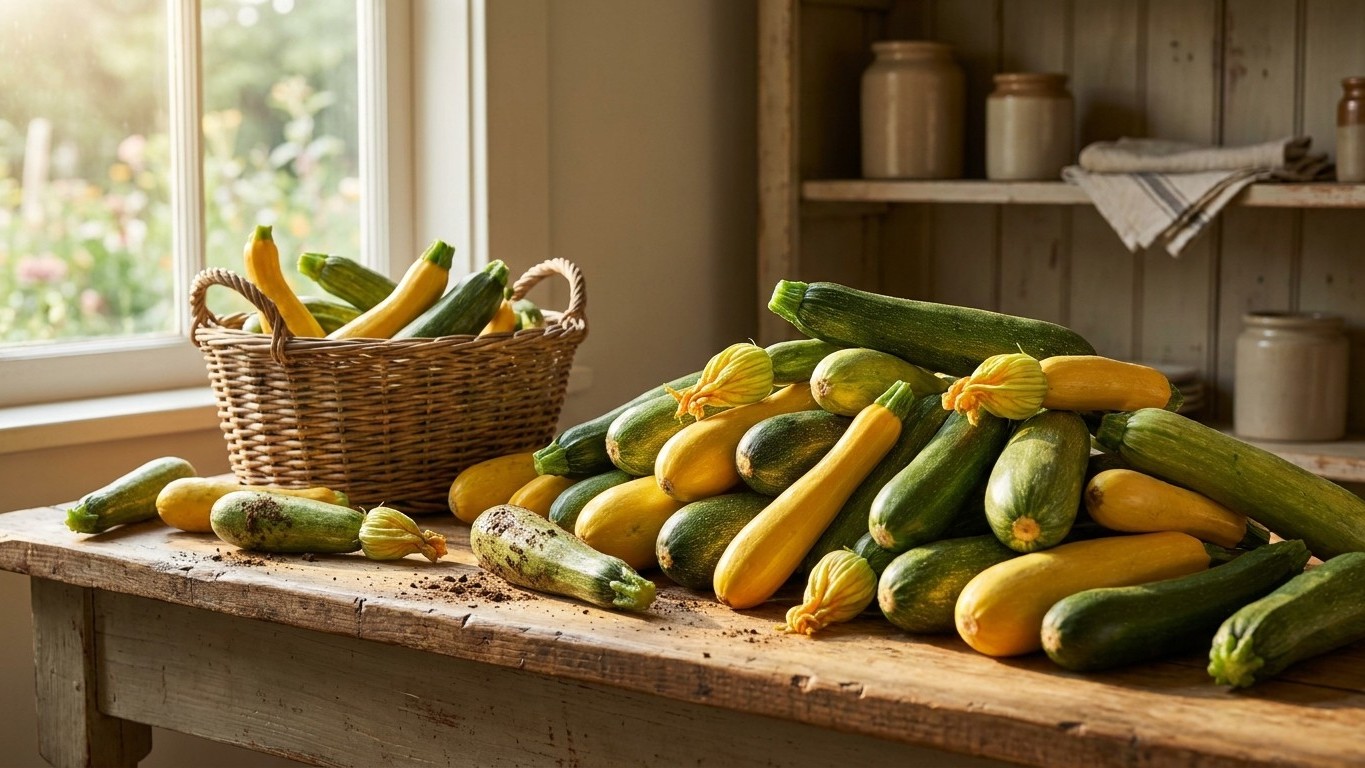

The fix is simple, even if the pile of squash on the counter isn’t: harvest small and often, process what you pick within a day or two, give away the surplus fast, and cut back on the number of plants next season. That last part matters most, because the glut is a planting decision that shows up six weeks later, not a problem you can harvest your way out of.
What is actually going on

Squash doesn’t ripen in a steady trickle. It sits quiet for weeks while the plant builds leaves and roots, then flowers open, pollinators show up, and suddenly every fruit on the vine seems to hit picking size within the same three or four days. That’s the curve: nothing, then everything, then a slow decline as the plant tires out or disease catches up with it. A household that planted two hills of summer squash didn’t plan for a trickle. They planned, without meaning to, for a wave.
Part of the reason the wave feels so sudden is that a single healthy plant can carry a dozen or more fruit in different stages at once, and once the first few reach picking size, the rest follow within days because they were all pollinated around the same window. Bees don’t wait for a grocery list. If the weather turns warm and dry right when the first flowers open, pollination happens fast and uniformly, and the harvest arrives just as uniformly. A cool, wet stretch during flowering does the opposite: it staggers pollination, which staggers the harvest into something a household can actually keep up with. That’s one reason the same garden can feel manageable one year and overwhelming the next, even with identical planting.
The other piece is scale. Two plants of summer squash, given decent soil and a full season of sun, can outproduce what most households eat fresh in a week, several times over. That’s not a flaw in the plant. Summer squash is bred and selected for exactly this kind of output, because for most of its history it fed people who were putting food by for winter, not people eating three zucchini a week and calling it enough. The mismatch between how the plant produces and how a modern household eats is the entire root of the glut.
Pest and disease pressure can compress the timeline further. Once squash vine borer or powdery mildew take hold late in the season, plants often push out a final concentrated flush of fruit before declining, as if racing to finish what they started. Growers sometimes read this last surge as a sign of health, when it’s closer to the plant’s exit note. Understanding that rhythm, quiet, then flood, then decline, is what makes the rest of this manageable, because it tells you where to intervene: not at harvest, but at planting.
In the garden
The number that actually matters is plants per household, not seeds per packet. Most extension guidance suggests that two to three well-spaced summer squash plants supply more than enough fresh fruit for a family of four across a full season, and that’s before anyone starts freezing or drying anything. Here’s how that plays out depending on the choice made at planting time, and what tends to go wrong at each level.
| Approach | What happens | Where it goes wrong |
|---|---|---|
| One plant | Steady, manageable fresh harvest for a couple, rarely a surplus problem | A single pest hit or a spell of bad weather can wipe out the whole household’s supply at once |
| Two to three plants, staggered a few weeks apart | Fresh eating all season with a modest, freezable surplus | Skipping the stagger and planting all at once still produces the classic glut, just with fewer plants |
| Four or more plants planted together | Weekly gluts that outpace fresh eating within a month | Growers often keep planting this way out of habit or because seed packets encourage full rows |
Once the harvest is bigger than what gets eaten fresh that week, the options split into three paths, and each has a failure mode worth knowing before it happens.
- Freezing: summer squash freezes well grated or sliced and blanched, and holds its texture reasonably in soups, breads, and sautés later. Skip the blanch and it turns mushy and off-flavored within a couple of months in the freezer, which is the most common reason people say frozen squash “doesn’t work.”
- Drying: thin slices dehydrate into a snack or a rehydratable ingredient for stews. Slice too thick or dry at too low a temperature and the pieces mold before they finish drying, which ruins the batch and wastes the effort.
- Giving away or trading: neighbors, food pantries, and co-workers absorb a surprising amount of surplus, but only if it’s picked at a reasonable size. Oversized, seedy squash gets left on porches and thrown out, which is a waste nobody intended.
Picking size is the detail that ties all of this together. Fruit left two extra days past its prime size turns woody, seedy, and far less useful for any of the three paths above. Daily or near-daily checks during the peak weeks aren’t optional if the goal is to actually use what’s grown, rather than compost it.
What it depends on where you are
How long the glut lasts, and how hard it hits, is mostly local, even though the mechanism behind it is the same everywhere summer squash is grown. Season length decides how many total weeks of production a household is dealing with. A longer, warmer growing season doesn’t just mean more squash overall, it often means a second wave later in the season if a grower succession-plants or if the first planting rebounds after a rest.
Summer heat changes the pace of ripening more than most gardeners expect. In regions with long stretches of high heat, fruit can move from flower to picking size in a matter of days, which shortens the window for catching it at the right stage and makes the “check daily” advice less optional and more literal. In cooler summer climates, that same process stretches out, giving a bit more slack between checks but often compressing the whole season into a shorter overall window.
Rainfall and humidity shift the other side of the equation: disease pressure. Regions with humid summers tend to see powdery mildew and other fungal issues shorten plant lifespan, which paradoxically can reduce total glut by ending production early, sometimes before all that fruit gets used. Drier regions often see longer-lived plants and a more drawn-out, if less intense, surplus.
None of this is something a general guide can resolve, because it depends on the specific summer a specific garden is having in a specific state. The state-level pages on this site cover regional planting windows and locally trialled varieties in more detail, and a state extension service, most of which run a horticulture hotline or a master gardener program, can answer questions about local pest pressure, disease timing, and recommended succession schedules better than any national source. That’s not a cop-out. It’s the honest answer to a question that genuinely has two layers, one universal and one local.
The mistake that costs the most
The single most expensive mistake isn’t picking too late, and it isn’t failing to freeze enough. It’s planting the entire season’s worth of summer squash in one go. Four or six plants going into the ground on the same weekend guarantees that every one of them hits its production curve at roughly the same time, which is exactly the scenario that produces the pile nobody can use fast enough.
The fix is succession planting, and it’s simpler than it sounds. Instead of putting in every plant at once, a household plants a smaller number, then adds another small planting three to four weeks later. By the time the first planting is winding down from disease or age, the second is just ramping up, which turns one overwhelming month into two manageable ones. It also builds in insurance: if the first planting gets hit by vine borer or a bad stretch of weather, the second isn’t affected and still comes through.
This is worth doing even for a household that’s certain it wants a lot of squash for canning, freezing, or trading. Spreading four plants across two planting dates produces roughly the same total harvest as planting all four together, but it arrives in two digestible batches instead of one flood that outpaces the freezer, the neighbors, and the patience of everyone in the house. A grower deciding on plant counts or planting dates should check with their state extension service for locally trialled types and the succession windows that work for their specific season, since that’s the detail that turns this general principle into a plan that actually fits the garden it’s meant for.