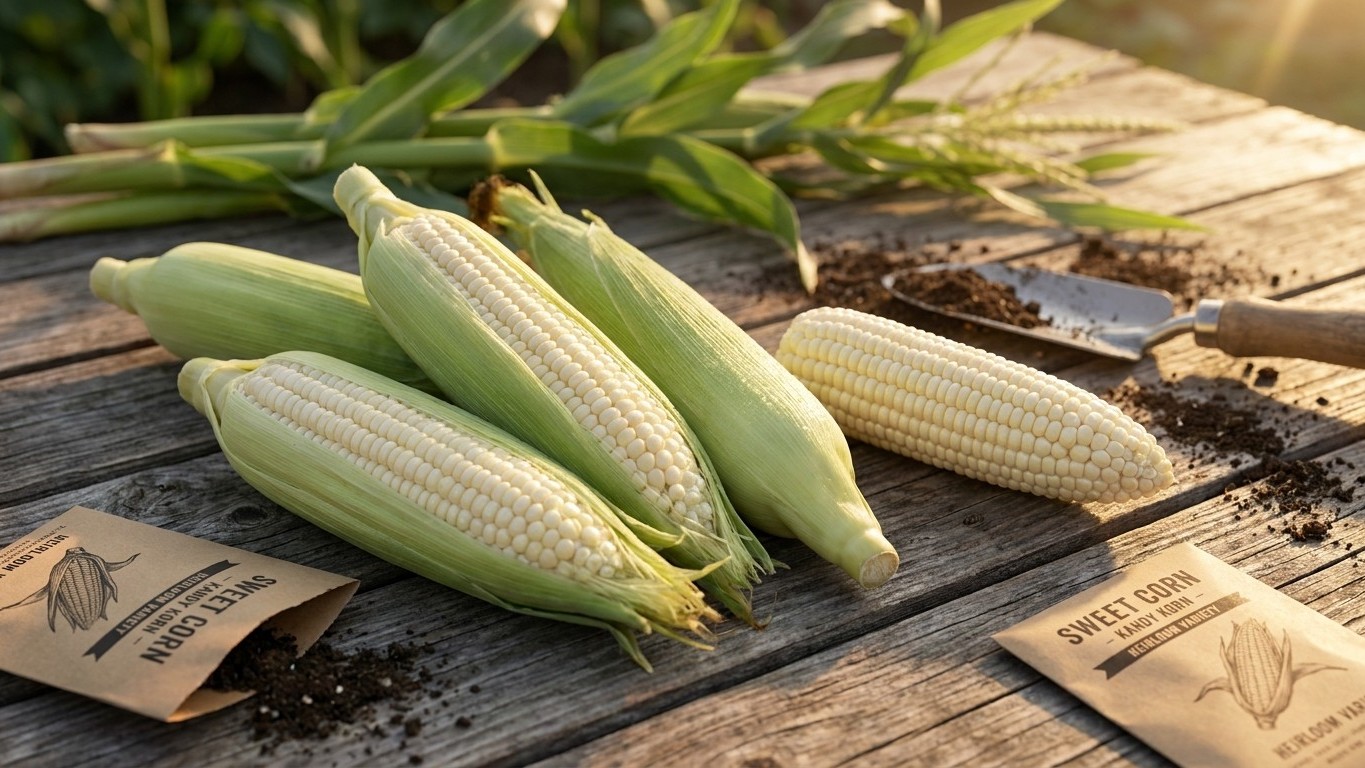

Kandy Korn is a sugary enhanced (se) sweet corn recommended by Clemson Cooperative Extension, with white kernels and no isolation requirement from other sweet corn. Plant it once soil at a 4-inch depth reaches 50°F, not the 65°F threshold reserved for supersweet (sh2) types. The se genotype holds its sugar longer after picking than standard sugary (su) varieties, though every ear still loses sweetness in storage. Days to maturity aren’t published here; check your own seed packet for that number.
Genotype and Kernel Color: What Sets This Corn Apart
The letters after a sweet corn variety name tell you more than the variety name itself. Kandy Korn carries the sugary enhanced (se) genotype, a middle tier between ordinary sugary (su) corn and the modern supersweet (sh2) hybrids. In practical terms, se corn is sweeter and more tender at the eating stage than a plain su variety, and it hangs onto that sugar for a longer window after the ear leaves the stalk. That’s the trade-off gardeners are buying into when they pick an se cultivar over an older su heirloom.
Kernel color is the other identifying trait, and Kandy Korn’s is white. Clemson Cooperative Extension lists this cultivar with white kernels among its recommended sweet corn selections for home gardens. It’s worth being precise about what that color does and doesn’t tell you: it’s a visual preference, nothing more. White corn isn’t sweeter than yellow corn, and yellow isn’t sweeter than white. Sweetness comes from the genotype, not the pigment. Plenty of gardeners have strong opinions about kernel color anyway, usually rooted in regional habit or how the corn looks on a plate, but Clemson’s list doesn’t rank flavor by hue, and neither should anyone reading a seed catalog.
What this means at the seed rack: if you see “se” printed on a packet, expect a corn that splits the difference between old-fashioned sweetness and the intensely sugary bite of a supersweet hybrid, with tenderness that holds up reasonably well through a few days of kitchen storage. The kernel color on the packet is a separate decision entirely, driven by what looks good on the table, not by which one performs better in the ground.
When Soil Temperature Says It’s Time to Plant
Sweet corn doesn’t care what the calendar says. It cares about soil temperature at seed depth, and that number changes depending on genotype. For an se variety like Kandy Korn, the ground needs to reach 50°F at a 4-inch depth before seed goes in. That’s a different, lower bar than the one set for supersweet (sh2) hybrids, which need soil at 65°F at the same depth before germination becomes reliable. Confusing the two thresholds is one of the more common mistakes gardeners make when they switch from one type of sweet corn to another and assume the old planting window still applies.
The depth matters as much as the number. A soil thermometer pushed only an inch or two into the ground will read warmer than the actual temperature seed experiences once it’s sitting at a proper planting depth. Surface soil heats up fast on a sunny afternoon and cools just as fast overnight, which makes a shallow reading misleading. Four inches down is where the seed actually sits, and that’s the depth that determines whether it germinates promptly or rots in cold, damp ground before it ever sprouts.
No calendar date, no maturity count
There’s no fixed calendar date attached to this rule, and for good reason: soil warms at different rates depending on region, soil type, and the particular spring a gardener happens to be planting in. A raised bed in a sandy, well-drained yard might hit 50°F weeks before a heavy clay garden bed a few miles away. Checking the soil directly, with an actual thermometer, is the only way to know it’s time.
Days to maturity is a separate question, and no figure for Kandy Korn is published in the source used for this guide. Seed packets typically print that number for the specific lot and growing conditions the seed company tested, and that’s the figure worth trusting over any general estimate based on genotype alone. An se corn doesn’t mature on a fixed schedule just because it’s se; check your own packet.
Isolation: Why This Variety Skips the Supersweet Rule
Isolation distance is the rule that trips up gardeners who’ve grown supersweet corn before and assume every sweet corn variety needs the same treatment. It doesn’t. The isolation requirement exists specifically for sh2 hybrids, because their genetics make them vulnerable to pollen drift from ordinary sweet corn growing nearby. When that cross-pollination happens, the sh2 ears lose the intense sweetness they were bred for, and nothing about the ear looks wrong until it’s actually eaten and tastes starchy instead of sugary.
Kandy Korn’s se genotype doesn’t carry that vulnerability. Sugary enhanced corn needs no isolation from other sweet corn. It can be planted near su varieties, other se varieties, or a mixed block of different sweet corn types without the sweetness of the harvest being compromised by cross-pollination. This is one of the practical advantages of choosing se over sh2 for a home garden with limited space: there’s no need to plant blocks a set distance apart, and no need to stagger planting dates to keep tassels from shedding pollen at the same time as a neighboring variety.
| Genotype | Isolation from other sweet corn needed? | Why |
|---|---|---|
| Sugary (su) | No | Not genetically sensitive to cross-pollination sweetness loss |
| Sugary enhanced (se) | No | Same as su; the sensitivity belongs to sh2 types only |
| Supersweet (sh2) | Yes | Pollen from ordinary sweet corn reduces sweetness in the kernel |
No specific isolation distance or timing window is published for sh2 varieties in this guide either, and that’s intentional; the figure varies by source and by how strict a gardener wants to be about it. What matters for Kandy Korn is simpler: that whole conversation doesn’t apply. Plant it wherever it fits in the garden.
Taste, Storage, and Why the Genotype Matters at Harvest
The reason genotype gets so much attention on a sweet corn variety page comes down to what happens after the ear is picked, not just how it tastes standing in the garden. Clemson Cooperative Extension puts it plainly: “Sweet corn loses sugar from the kernel rapidly at high temperatures… Sweet corn can be stored under optimal conditions for about five days, but will lose sweetness with each day of storage.” That’s the mechanism behind the old advice about running straight from the garden to a pot of boiling water. It isn’t folklore. Sugar genuinely leaves the kernel over time, and heat speeds up how fast that happens.
This is where genotype earns its keep. An su variety loses sugar the fastest of the three types, which is part of why traditional advice pushed same-day eating so hard. An se variety like Kandy Korn holds its sweetness longer than su, giving a wider window between harvest and the dinner table without a noticeable drop in flavor. Sh2 varieties hold it longest of all. None of that changes the outer limit Clemson describes, about five days under optimal storage conditions, and that figure is a ceiling, not a guarantee. An ear left in a hot car for an afternoon won’t make it anywhere close to five days before it’s noticeably less sweet.
Refrigeration slows the process considerably compared to leaving ears on a countertop, since cold temperatures are what keep the sugar-to-starch conversion from accelerating. For a home gardener growing Kandy Korn specifically, the se genotype is the practical reason to expect a bit more flexibility at harvest time than an older su variety would allow, without needing to treat every ear like it has to be eaten within the hour.
Common questions
Is Kandy Korn a supersweet variety?
No. It’s a sugary enhanced (se) variety, which sits between ordinary sugary (su) corn and supersweet (sh2) hybrids in both sweetness and how long that sweetness lasts after picking.
Does Kandy Korn need to be isolated from other corn varieties?
No isolation is needed from other sweet corn. That requirement applies specifically to supersweet (sh2) types, which are vulnerable to cross-pollination in a way se varieties are not.
What soil temperature should I wait for before planting?
Wait until soil at a 4-inch depth reaches 50°F. That’s the threshold for se and other standard sweet corn types, lower than the 65°F needed for supersweet varieties.
How long will harvested ears stay sweet?
Under optimal storage conditions, Clemson Cooperative Extension notes sweet corn can be stored for about five days, though it loses sweetness with each day that passes. The se genotype holds sugar longer than su corn, but that five-day figure is a maximum, not a promise.