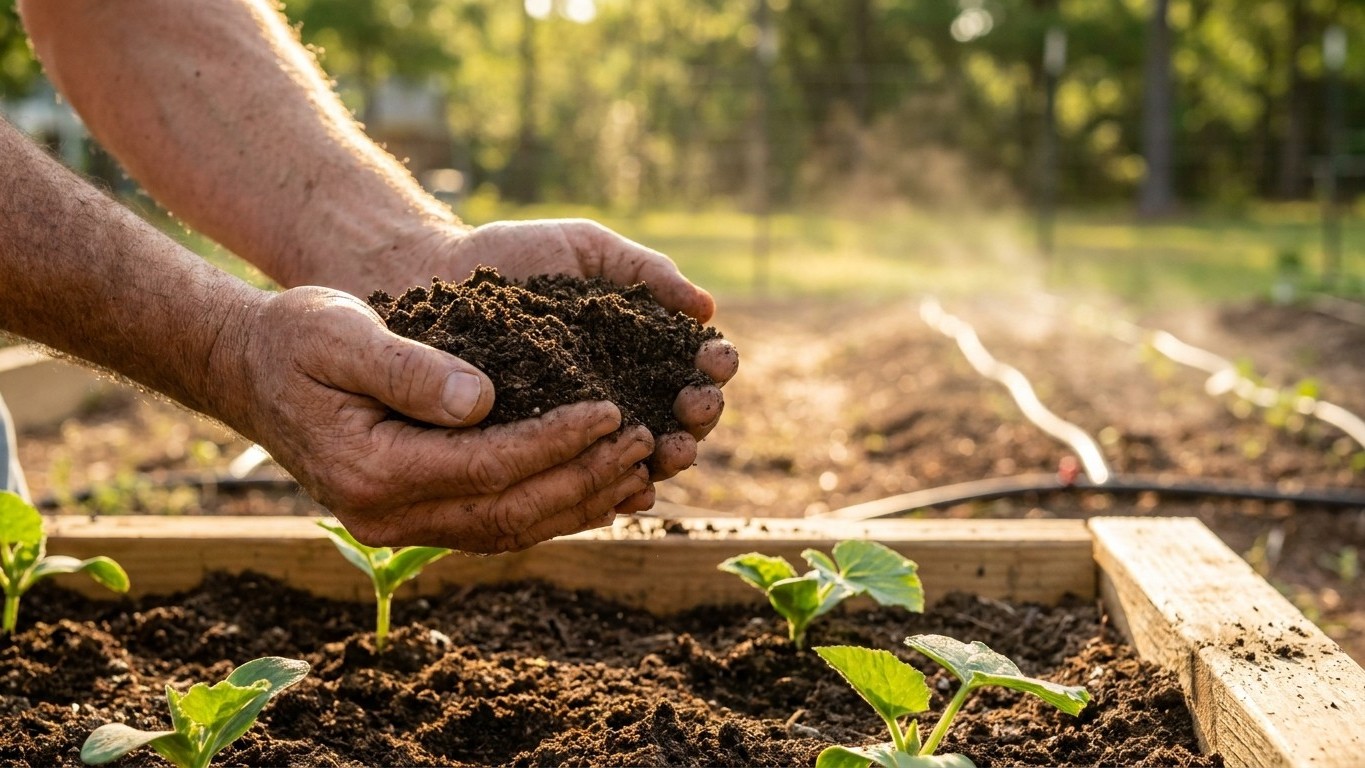

Summer squash goes in the ground once soil temperatures hold above 60°F, which in most of Georgia lines up with early-to-mid April south of Atlanta and closer to late April in the mountains. The state’s long, humid growing season allows two sowings for gardeners on the coastal plain, but heat above 90°F and short summer rainfall mean irrigation, not planting date, ends up deciding the size of the harvest.
When the soil is warm enough in Georgia
The question every Georgia gardener asks in March is simple: is it safe yet? The honest answer starts with frost, but frost isn’t really the thing that matters. At the reference station used for the Atlanta area (NOAA station USW00013874), the last spring frost falls somewhere between March 11 and March 29, based on 1991-2020 climate normals and a 30-70% freeze probability band. That’s a wide window, and it’s a probability, not a promise. Some years the frost risk clears earlier; some years it lingers past the calendar date and catches a bed of tender seedlings that went in too soon.
Frost matters to summer squash mainly as a proxy. The seed and the young plant can’t survive a freeze, so the frost date marks the earliest point transplanting becomes possible at all. But squash doesn’t actually care about air temperature once frost risk passes. It cares about soil temperature, and soil warms slower than air, usually by a week to ten days after the last frost date has cleared. Pushing seed into cold, wet soil in late March, right at the edge of that frost window, tends to produce weak germination or rot rather than an earlier harvest. Waiting those extra days for the soil itself to warm is usually the faster route to a productive plant.
Georgia spans USDA hardiness zones 6a through 9b, a range wide enough that a single statewide planting date doesn’t really exist. The frost data above is anchored to Atlanta, which sits in an urban heat island and runs warmer than its surroundings; north Georgia and the mountains see frost risk clear several weeks later, while the coastal plain often warms up sooner and stays frost-free longer into fall. A gardener in Blue Ridge and one in Valdosta are working from different calendars even though they’re in the same state.
None of this changes with fertilizer timing or a particular seed brand, and there’s no shortcut around watching soil temperature directly with a simple probe rather than trusting the calendar alone. For the specific window your county tends to run, and for guidance on hardening off transplants before they go in the ground, the University of Georgia Cooperative Extension keeps county-level planting charts that reflect local trial data rather than a single statewide average.
How long the season lasts here
Bookend the frost dates and Georgia’s frost-free window becomes clearer. The last spring frost falls between March 11 and March 29; the first fall frost arrives between November 13 and December 1, from the same NOAA station and the same 1991-2020 normals. Taking the conservative pairing, the latest likely spring frost against the earliest likely fall frost, the frost-free stretch runs from March 29 to November 13, a window of roughly seven and a half months. Taking the more optimistic pairing, from the earliest spring frost to the latest fall frost, that window stretches closer to eight and a half months.
That length is unusually generous compared with much of the country, and it changes what’s worth attempting in the garden. A short season, the kind found in northern states with six-week gaps on either side of summer, forces a single planting and makes every week of delay costly. Georgia’s window is long enough that a first sowing in April can be followed by a second one in mid-to-late summer, timed to mature before the fall frost risk climbs back up in November. That second sowing also sidesteps a problem that shows up later in the season: squash bugs and vine borers tend to build up on the first planting, and a fresh sowing in clean soil often outruns them.
The long window also changes whether transplanting is worth the trouble. In a short-season territory, starting seed indoors and transplanting buys weeks that matter. In Georgia, with seven-plus months of frost-free ground, direct-seeding is usually simpler and skips the root disturbance that summer squash, with its notoriously fragile root system, tends to resent. Transplants still make sense for that second, later sowing, when getting plants established quickly before the worst of the August heat is more valuable than the extra root shock.
For the mechanics of spacing out that second planting, including how far apart to time the sowings and what to watch for as the first planting winds down, see the site’s guide to succession sowing for summer squash.
Heat and water in Georgia
Georgia averages 35.8 days a year at or above 90°F, measured at the Atlanta reference station over the 1991-2020 normals period. That’s a real heat load, not an extreme one, but it’s concentrated in exactly the weeks when summer squash is trying to set fruit. Pollen viability in squash drops off once daytime temperatures push into the high 90s, and Georgia’s summer regularly brushes that ceiling. The visible result is a plant that flowers heavily, looks healthy, and still drops fruit or produces small, misshapen squash because pollination failed at the flower stage rather than anything going wrong later.
Heat does a second kind of damage that’s less obvious. Summer squash carries some of the largest leaves of any common garden vegetable, and those leaves lose water through transpiration fast, especially on afternoons above 90°F. The plant’s root system, by contrast, is shallow and spreads wide rather than deep. When evaporative demand from the leaves outpaces what those shallow roots can pull from the soil, the plant wilts by midafternoon even in soil that isn’t fully dry, a stress response that, repeated day after day, shows up later as smaller fruit and shorter productive life.
| Month | Average rainfall |
|---|---|
| June | 4.54 in |
| July | 4.75 in |
| August | 4.3 in |
Summer rainfall totals about 13.6 inches across June, July and August, with August running driest at 4.3 inches. On paper that’s not a drought-level number, out of a yearly total near 50.4 inches Georgia gets a reasonable summer share. But two things change how that rain actually functions for a squash plant. It tends to arrive as afternoon thunderstorms, dumping an inch in an hour that runs off a compacted or sloped bed rather than soaking down to root depth. And the same 90°F-plus days that stress pollination also pull moisture out of the soil surface fast, so a week without rain during a hot stretch can leave a shallow-rooted plant short on water even though the monthly total looks adequate. A rain gauge on the actual bed, not the regional average, is what tells a gardener whether to irrigate this week.
None of this makes Georgia a difficult territory for summer squash, but it does make consistent watering during July and August, ideally at the soil line rather than overhead, more decisive than almost anything else a gardener controls. Where the humidity stays high after those thunderstorms, powdery mildew on the leaves becomes the other recurring problem, favoring airflow between plants over dense spacing.
Which summer squash suit Georgia
Georgia’s climate profile, a long frost-free window, real but not extreme heat, and humid summers with heavy but irregular rainfall, points toward three priorities rather than one. The long season means there’s little pressure to chase the earliest-maturing types the way a short-season northern garden would; there’s room for a full-season type in the first sowing and something else entirely in the second. The heat load, at nearly 36 days a year above 90°F, rewards types known locally for holding fruit set through hot spells and for tolerating the light afternoon shade some gardeners provide during the worst of July. The humidity, layered on top of that heat, makes resistance to powdery mildew and other foliar disease the first real screening criterion, ahead of size, color or shape.
What this page won’t do is name a specific variety. Summer squash cultivars get trialled county by county, and the types that hold up against Georgia’s particular mix of vine borer pressure, mildew and August heat in a Macon garden aren’t necessarily the same ones performing best on the coastal plain or in the mountains. A name printed here, without that local trial data behind it, would be a guess dressed up as a recommendation, and it’s the kind of error a gardener notices the first season it fails.
The University of Georgia Cooperative Extension publishes county-level variety trial results that reflect actual performance against local pest and disease pressure, updated as new resistant types come through testing. That’s the list worth checking before ordering seed, not a generic national one. The same office can also speak to soil test results and confirm whether a particular county’s clay or sandy ground changes the watering schedule laid out above, since soil texture, more than any other single factor, decides how far that 13.6 inches of summer rain actually reaches the root zone.