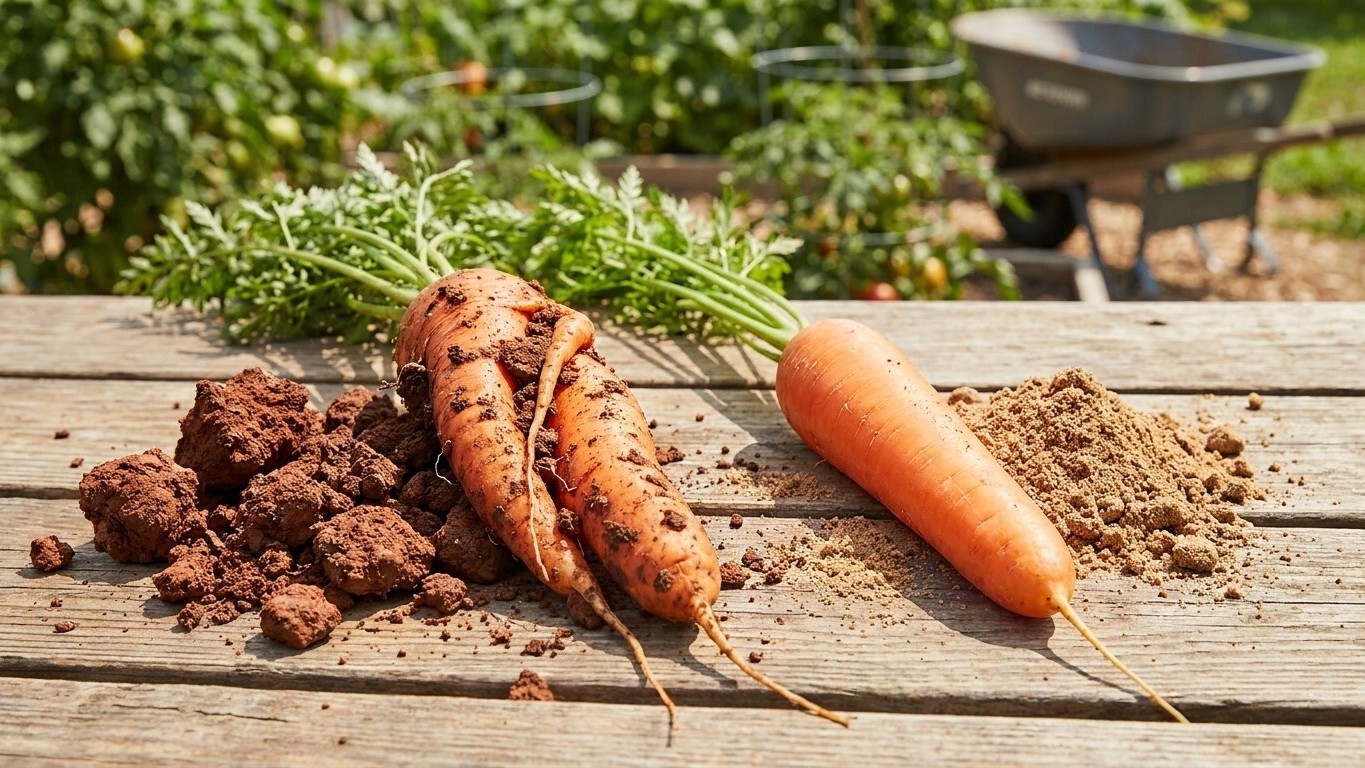

Only three of the ten species Georgia’s extension service tracks for vegetable gardens actually target carrot: aphids, cutworms, and spider mites. Aphids and mites build up on foliage as the canopy fills in, while cutworms do their damage in the first two weeks after seeding, before a carrot root has even formed.
Which pests attack carrot in Georgia
UGA Cooperative Extension documents ten insect pests for home vegetable gardens in the state: Aphids, Colorado potato beetle, Corn earworm, Cowpea curculio, Cutworms, Melonworm, Mexican bean beetle, Pickleworm, Spider mites, and Squash vine borer. That list covers the whole vegetable patch, not one crop, and most of it has nothing to do with a carrot bed.
Colorado potato beetle feeds on potato, tomato, and eggplant foliage, the solanaceous family, and carrot isn’t on its menu. Corn earworm targets corn ears (and will nip at tomato fruit), not a root crop growing underground. Cowpea curculio is a pod feeder that goes after cowpeas and southern peas. Melonworm and pickleworm both bore into cucurbit fruit and vines, squash and melon territory. Mexican bean beetle, as the name gives away, strips bean foliage. Squash vine borer tunnels into squash stems. None of these six have a documented reason to show up on a carrot leaf or root, and a gardener who spots one of them shouldn’t chase it around a carrot bed.
The three that actually matter for carrot
That leaves aphids, cutworms, and spider mites as the pests worth watching in a Georgia carrot planting. Aphids cluster on the undersides of new foliage and feed by piercing plant tissue, which stunts growth and can spread virus between plants. Spider mites do similar damage from the same feeding style, stippling the foliage and thriving in hot, dry stretches. Cutworms work differently: they hide in the soil during the day and sever tender stems at the soil line at night, which means their damage shows up as seedlings that are simply gone or lying flat, not as chewed leaves.
The short list isn’t a gap in the record. Carrot foliage is tough and low-growing compared to beans or squash, and the root itself sits below ground where most of the state’s documented chewing insects can’t reach it. The gardener’s real decision point is which of these three symptoms they’re seeing, because the fix for a cutworm problem looks nothing like the fix for an aphid problem.
When each one shows up, and what it does first
Carrots are direct-seeded, never transplanted, and the maturity clock for the crop runs 70 to 100 days from the day seed goes in the ground, according to Utah State University Extension. That window is the backbone for timing pest pressure, since there’s no transplant date to reference on this crop.
Cutworms hit first, right at emergence
Cutworms are a seedling-stage problem. The critical window is the first two to three weeks after seeding, while stems are still thin enough to sever. A gardener checking a carrot row in the morning and finding young plants toppled over or simply missing, with no chewing visible on the leaves themselves, is looking at cutworm damage rather than anything happening above ground. Once the taproot thickens and the stem toughens past the seedling stage, cutworm risk drops off sharply.
Aphids and spider mites build later, as foliage fills in
Aphids and spider mites are foliage-stage pests, and they show up once the carrot tops have enough leaf mass to feed a colony, generally as the plant moves from seedling to established rosette. Aphids appear first as small, soft-bodied clusters on new growth near the crown, often with a sticky residue (honeydew) on nearby leaves. Spider mites are harder to spot directly; the first sign is usually a fine, pale stippling across the leaf surface, sometimes with faint webbing on the undersides in the driest, hottest stretch of the growing season. Both problems tend to intensify as the carrot approaches the back half of that 70-to-100-day window, when the canopy is at its fullest and heat stress is highest. Neither pest is documented here with a specific date range, so the trigger to watch is the growth stage of the plant, not the calendar.
Telling the damage apart from everything else
Not every rough-looking carrot bed is a pest problem, and Georgia’s ground gives gardeners a specific reason to check soil before blaming an insect. The state’s representative soil, the Tifton series, runs about 84 percent sand and only 6 percent clay at the surface, and it’s naturally acid with low organic matter. That’s not a measurement of any one garden, just what the mapped soil tends to do, but heavy or rocky ground anywhere in the state can make a carrot root fork rather than grow straight down, and forking gets mistaken for pest damage more often than it should.
A quick sorting table
| What you see | Likely cause | What settles it |
|---|---|---|
| Forked, stubby, or twisted roots | Heavy, rocky, or compacted soil | Dig a test hole; check for clay clumps or stones, not insects |
| Seedlings toppled or missing overnight | Cutworms | Check the soil surface at the base for the curled larvae after dark |
| Sticky residue, curled new leaves | Aphids | Look on the underside of young leaves for clusters of small insects |
| Fine pale stippling, dry brittle leaves | Spider mites or drought stress | Tap a leaf over white paper; mites will fall as tiny moving specks |
| Yellowing older leaves, slow overall growth | Nutrient deficiency or low organic matter | A soil test, not a pest scout, gives the answer |
A soil test is the one step that rules out the most common false alarm, because low organic matter and acid, sandy ground can produce yellowing and stunted growth that looks a lot like pest stress but has nothing to do with an insect. Anyone unsure which column their carrot bed falls into should bring a sample, or a photo, to their local extension office rather than guessing.
What actually works here, and what is a waste of time
Timing beats treatment on a root crop that only spends 70 to 100 days in the ground. A lightweight floating row cover laid down at seeding, before cutworm moths have a chance to lay eggs near the row, blocks the single most damaging window in the whole crop cycle and costs nothing in follow-up labor once it’s in place. That same cover works against aphids landing on young foliage, though it has to come off once the canopy fills in and pollination or airflow becomes a concern, which is less of an issue for carrot than for fruiting crops.
Clearing garden debris and weeds around the bed before seeding removes cutworm hiding spots, since the larvae overwinter in plant litter and soil clumps near the previous season’s plants. For spider mites, keeping plants evenly watered through the hottest stretch of the season matters more than any spray, because mite outbreaks track drought stress closely; a carrot bed that never dries out hard rarely sees a serious mite problem.
What wastes time is treating a soil-texture problem as an insect problem. Spraying a bed of forked, stubby carrots does nothing, because the cause is compaction or rock content, not a pest, and the fix is a raised bed or double-digging worked in ahead of the next seeding, per Utah State University Extension guidance on carrot soil prep. This site doesn’t name products or rates for treating aphids, cutworms, or mites once they’re established; the local extension office is the source for anything registered and legal to use in Georgia.
Where to check this for your own county
UGA Cooperative Extension keeps county-level offices across the state, and that’s the right first call for anything beyond what’s documented here. The statewide pest list describes what’s been recorded across Georgia’s home gardens broadly; it doesn’t say which of the three carrot pests, if any, are active in a specific county this season, because pressure shifts with local weather, soil, and what’s growing nearby.
Why the state list isn’t the garden list
A pest documented for the state can be common in one county and nearly absent in another, especially with something as weather-driven as spider mites or as soil-dependent as forking from compacted ground. The Tifton soil series is representative of Georgia broadly, not a description of any one yard, and the same caution applies to pest pressure. The single most useful next step is a call or visit to the county extension office, ideally with a sample or a clear photo of the damage, since that office can confirm what’s actually present locally and what, if anything, is registered to treat it.
Common questions
Do carrots need protection from cutworms after they sprout?
Risk drops off once stems toughen past the seedling stage, which is why the first two to three weeks after seeding is the window worth protecting, not the whole 70-to-100-day cycle.
Can aphids on carrots spread to other vegetables?
Aphids move between host plants readily and can carry plant viruses, so a colony on carrot foliage is worth addressing before it spreads to a neighboring bed rather than ignoring it as a minor cosmetic issue.
Is a forked carrot root a sign of pest damage?
No. Forking is almost always a soil-texture issue, heavy clay, compaction, or rocks blocking the taproot, not an insect feeding on the root itself.
Does Georgia’s sandy soil make carrots more or less prone to pests?
The state’s representative soil, the Tifton series, is well-drained and sandy, which favors straight root growth, but that drainage and texture has no documented link to aphid, mite, or cutworm pressure; those three respond to plant growth stage and weather, not soil texture.