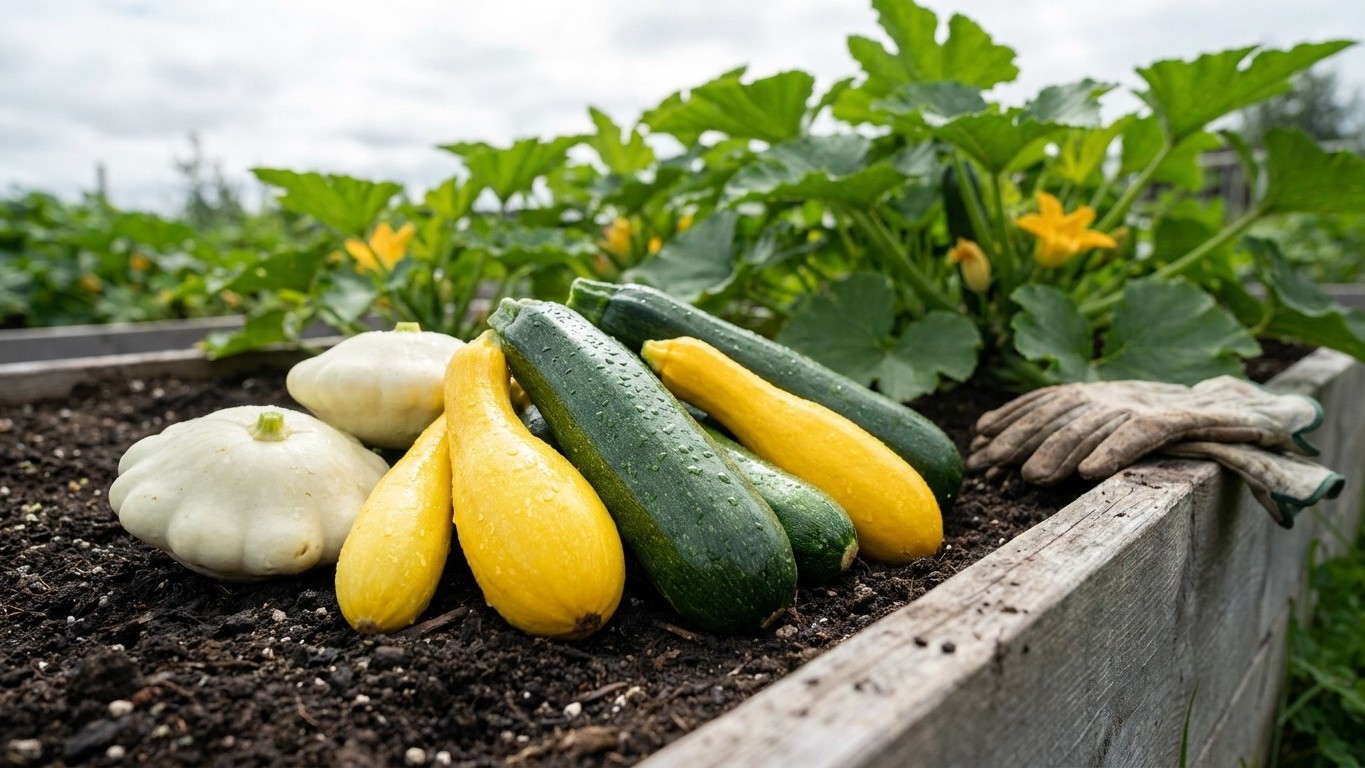

Summer Squash in Kentucky isn’t a race against frost, it’s a race against humidity and heat. Zucchini, yellow crookneck, straightneck and pattypan all fit comfortably inside the state’s frost-free window, so the type that actually keeps producing into August is the one bred to shrug off powdery mildew and the squash vine borer, not the one with the shortest days-to-maturity number on the seed packet.
The short answer for Kentucky
Start with the calendar, because it changes the whole conversation. The last spring frost across the state’s reference station falls between March 24 and April 4, and the first fall frost doesn’t show up until November 2 to November 12. Stack those dates together and Kentucky gardeners are working with somewhere in the neighborhood of 210 to 230 frost-free days. Summer squash needs 45 to 65 days from seed to first harvest. That gap is enormous. It means almost any type of summer squash, bush or semi-vining, early or a little later, will physically have time to mature here, often twice over if you plant a second round in early July.
So the type isn’t the decision point. Heat and moisture are. The reference station logs an average of 37.2 days a year at or above 90°F, and that heat load is what actually determines whether a plant keeps setting fruit or stalls out with dropped blossoms in late July. Layer on about 12 inches of rain across June, July and August, arriving unevenly (4.27 inches in June, 4.05 in July, and a noticeably drier 3.71 inches in August), and you’ve got a climate that’s warm enough for constant fungal pressure and hot enough to punish anything set up on a rigid watering schedule.
Given that combination, the practical decision by type looks like this: pick the summer squash you actually like to eat (zucchini, crookneck, straightneck, pattypan and cousa all behave similarly under Kentucky conditions), then choose the variety within that type described as resistant to powdery mildew and, ideally, tolerant of continued fruit set in high heat. A bush habit is worth favoring over a sprawling vine mainly for airflow, not for speed. In this state, disease resistance and heat tolerance do more work than maturity date ever will.
What will not work here
The single biggest mistake in a Kentucky squash bed is treating spring planting as the only planting. The squash vine borer lays its eggs in a wave that typically lines up with early to midsummer, and a spring-sown plant that looked strong in June can collapse by mid-July once the larvae get into the stem. Because the frost-free window here runs into early-to-mid November, there’s plenty of season left to start a second sowing in late June or early July, but gardeners who plant once in spring and assume that’s the whole season routinely lose the crop for the rest of the summer with no backup plants coming along behind it.
Powdery mildew is the second failure point, and the numbers explain why it’s so consistent. Roughly 12 inches of rain falling across June through August, combined with 37.2 days a year of 90-degree-plus heat, keeps the air around the plants warm and damp for long stretches even when the soil itself has dried out. A non-resistant heirloom variety, one without any mildew tolerance bred in, will often show white-dusted leaves by early August and be functionally done producing well before the first fall frost even becomes a concern.
Watering on a fixed weekly schedule fails for a related reason. August is the driest of the three summer months at 3.71 inches, and it’s also deep in the stretch of highest heat load. A once-a-week soaking that seemed adequate in a wetter June leaves the plant short on water during the hottest, driest part of summer, which shows up as dropped blossoms and misshapen fruit rather than an obviously wilted plant. And tight spacing, the kind some seed packets list as a minimum, backfires in this climate specifically: with this much ambient summer humidity, crowded leaves don’t dry between rain events, and mildew moves down an entire row within a couple of weeks.
What changes across Kentucky
Kentucky isn’t one climate, and the hardiness zone map makes that plain. The state spans USDA zones 6a to 7a, a range built on average annual extreme minimum winter temperature. That’s a meaningful spread within a single state’s borders, and it means there’s no single frost date or heat expectation that applies evenly from one county to the next.
In practice, the cooler end of that range (the higher-elevation and northern pockets) tends toward later last frosts in spring, earlier first frosts in fall, and cooler summer nights, all of which shorten the effective window for heat-loving squash and can slow fruit set even inside the frost-free season. The warmer end (generally the western lowlands) runs closer to the numbers used above: an earlier start, a later finish, and more of those 90-degree days stacking up through summer. Gardeners on that warmer end can often push a spring planting slightly earlier and still count on time for a second summer sowing; those on the cooler end have less room for error and benefit more from starting seedlings indoors rather than direct-sowing.
The frost dates and heat totals cited throughout this page come from a single reference station, and NWS Louisville itself notes that station runs later in spring and earlier in fall than the rural county around it. That’s worth sitting with: even the “urban” numbers used here understate how tight the window can get once you leave town. Rather than guess which zone applies to a particular yard, the right move is checking the USDA Plant Hardiness Zone Map directly for that address, since a few miles of elevation change can shift the zone entirely.
Where to check this for your own county
Everything above describes Kentucky at the state level, and a state-level answer is only ever a starting point. The University of Kentucky Cooperative Extension Service is where that starting point gets corrected for an actual county.
Two things are worth looking for once there. First, the county-level planting calendar, which will reflect local frost data rather than the single reference station used for statewide normals, and which matters most for gardeners in rural areas where NWS has already flagged that frost timing runs tighter than the urban readings suggest. Second, look for any list of summer squash varieties the local county extension office has actually trialed in demonstration gardens or recommended based on regional disease pressure. Extension offices track which varieties held up against powdery mildew and vine borer in their specific county in recent seasons, and that kind of on-the-ground result outranks any general statewide guidance, including everything on this page.
A county recommendation beats a state one every time, because it accounts for local soil, local microclimate and local pest history in a way a statewide page never can. Treat this article as the broad framework: season length, heat load, rainfall pattern, the reasons certain approaches fail. Treat the county extension office as the source for the specific varieties and dates that apply to one particular piece of ground.
Checking this against your own garden
None of the dates or averages above beat what’s actually happening in the soil. Three simple observations tell a gardener more about their own microclimate than any regional normal.
Soil warmth by feel is the first. Summer squash seed sits and rots in cold soil rather than germinating, so before sowing, dig down a few inches and check whether the soil feels cool to the touch even at midday. If it still feels cold well into the frost-free window described above, that’s a sign the specific plot warms slower than the regional average, often because of shade, heavy clay, or a north-facing slope, and sowing should wait regardless of the calendar date.
The first flush of male flowers is the second signal worth tracking. Squash plants typically produce male blossoms before female ones, and a long stretch of male-only flowers with no fruit-bearing female flowers following can point to heat stress or inconsistent watering rather than anything wrong with the variety itself.
The first true leaves, the second set that appears after the rounded seed leaves, mark the point where a plant is established enough to handle a normal watering rhythm rather than the gentler care seedlings need. Watching how quickly that second set appears, compared to the general timeline from a seed packet, gives a rough read on whether a particular spot in the yard runs warmer or cooler than the county average.