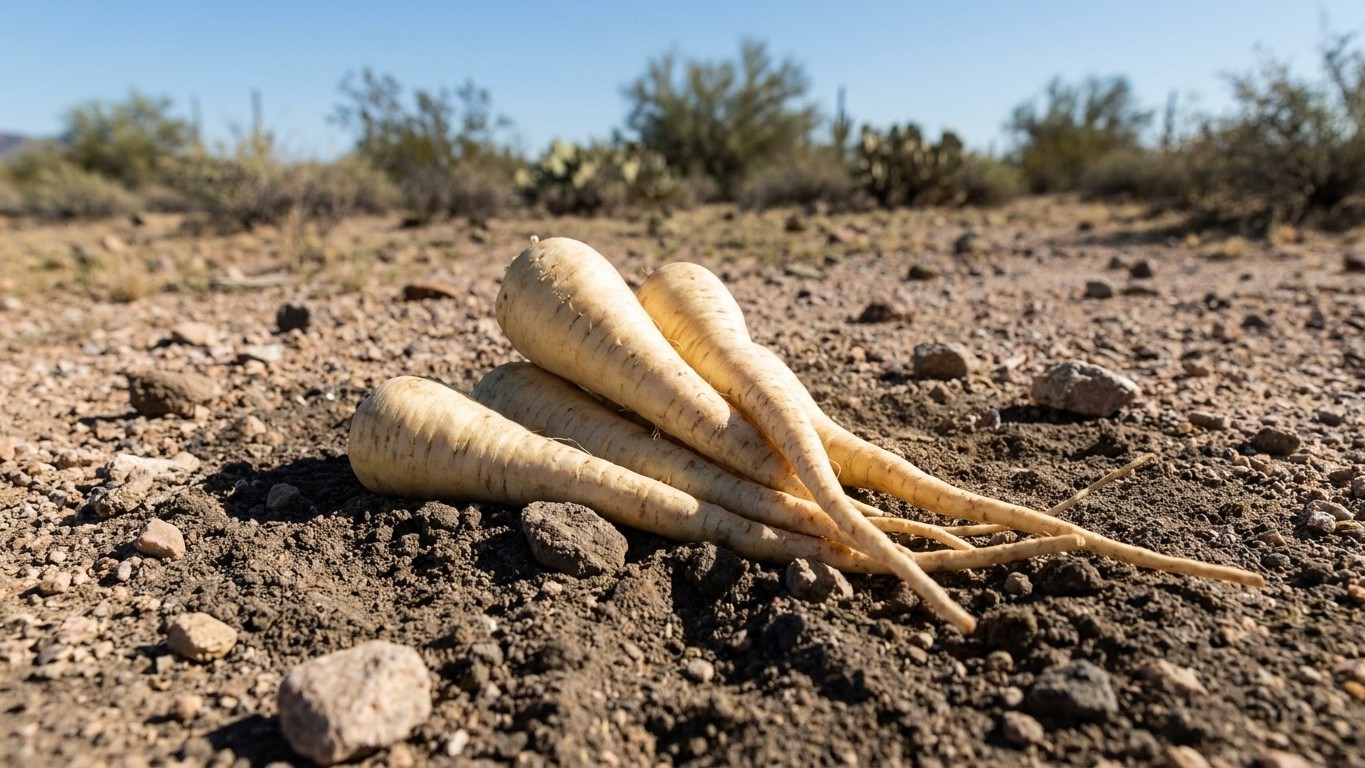

University of Idaho Extension documents a specific handful of insects that actually go after parsnip in Idaho gardens, and only some of them, drawn from a longer statewide vegetable pest list, target this particular root crop. Timing follows the state’s frost calendar rather than named months, since Boise’s last spring frost lands between April 23 and May 7 while most of the state sits higher and colder. What matters for a home gardener is knowing which insect is which, and when each one commits to the crop.
Which pests attack parsnip in Idaho
University of Idaho Extension lists a dozen insects across its vegetable garden guidance, but only a handful of them have any real business on a parsnip bed: Aphids, Carrot rust fly, Cutworms, Grasshoppers, and Wireworms. Everything else on that broader list feeds on a different plant family and doesn’t cross over.
Colorado potato beetle, Tomato hornworm, and the entry simply labeled cabbage in the extension’s records all target solanaceous or brassica crops, potato, tomato, cabbage-family leaves, none of which share a family with parsnip. Imported cabbageworm follows the same pattern: it wants cabbage, broccoli, and their relatives, not a root vegetable in the carrot family. Onion maggot is built for onion roots specifically, Pea leaf weevil feeds on pea seedlings, and Squash bug goes after cucurbits like squash and pumpkin. None of these five overlap with parsnip’s host range, so a gardener who spots them elsewhere in the yard doesn’t need to worry about them near the parsnip row.
Why the five that remain matter
Aphids are general feeders that colonize soft new growth on almost anything in the vegetable garden, parsnip foliage included. Carrot rust fly is the one most specific to this crop, since its larvae tunnel directly into carrot-family roots, parsnip among them. Cutworms and wireworms both live in the soil and attack young plants from below or at the base, which matters because parsnip’s own season runs 100 to 120 days from seeding, so early soil-pest pressure costs weeks a shorter growing window can’t easily give back. Grasshoppers round out the list as an above-ground foliage feeder that builds through the season rather than showing up all at once.
That’s the full, sourced list for this territory. University of Idaho Extension doesn’t document a longer roster of parsnip-specific insects here, and padding the list with pests known elsewhere would misrepresent what’s actually recorded for Idaho gardens.
When each one shows up, and what it does first
Cutworms are the earliest threat, active right as seedlings emerge. Because parsnip germination itself takes 14 to 21 days, the seedling stage stretches out longer than most vegetables, which gives cutworms a wider window to sever stems at the soil line before the plant has any size to spare. A row that looked fine one week and shows scattered, toppled seedlings the next, cut cleanly rather than chewed ragged, points to cutworms working at night near the soil surface.
Wireworms operate in that same early window but from underground, feeding on the seed itself or on the thin root as it forms. A patchy, weak stand where some seeds simply never came up, especially in ground recently broken from lawn or sod, suggests wireworm activity rather than a germination problem alone.
Aphids build up as the season warms and the canopy fills in, clustering on the undersides of leaves and new growth. The first sign is usually curled or slightly yellowed foliage with a faint shine from the honeydew aphids leave behind, well before any visible insect count looks alarming.
Carrot rust fly works differently: adults lay eggs near the base of young carrot-family plants earlier in the season, and the larvae then tunnel into the developing root over the following weeks. Nothing looks wrong above ground until harvest, when rust-colored tunnels show up in roots that seemed healthy right up to digging.
Grasshoppers are the latecomer, with pressure building toward late summer as populations grow and food elsewhere dries up. Ragged, irregular holes chewed through parsnip foliage that get worse as the first fall frost window (October 7 to October 21 in the Boise valley) approaches usually trace back to grasshoppers rather than any of the earlier-season pests.
Telling the damage apart from everything else
Several parsnip problems look like insect damage but aren’t, and mixing them up wastes time treating the wrong thing. A forked or misshapen root has two separate possible causes here, and they don’t get merged into one explanation: heavy or stony ground that physically deflects the taproot, and overwatering that encourages the root to branch instead of growing straight down. Neither one is an insect at work, and neither responds to a pest treatment.
A root that grew normally but never developed sweetness is a different kind of non-pest problem. Parsnip needs several weeks of cool, frosty weather after it reaches size for stored starch to convert to sugar, according to Utah State University Extension. A mild, comfortable stretch of weather isn’t the same as that frost exposure, so a bland parsnip dug too early, or dug before enough frosty weeks have passed, isn’t insect damage or disease. It’s simply a chilling requirement that hasn’t been met yet.
A quick comparison
| Symptom | Likely cause | What tells them apart |
|---|---|---|
| Seedlings cut off at soil line | Cutworms | Check soil right at the base at dusk; larvae curl up near the stem |
| Rusty tunnels found at harvest | Carrot rust fly larvae | Tunnels run lengthwise through the root, no external warning beforehand |
| Sticky, curled leaves | Aphids | Colonies visible clustered on leaf undersides |
| Ragged foliage holes, worsening late summer | Grasshoppers | Adults or nymphs visibly present on and near the plants |
| Patchy stand, seed never sprouted | Wireworms, or simply the 14-21 day germination window not finished | Dig gently to check for a decayed seed or a larva versus a seed still swelling |
| Forked or split root | Heavy or stony soil, or overwatering | Neither shows insect feeding marks on the root surface |
| Root is fine but bland | Not enough frost exposure yet | No pest damage present; taste improves after further cold weeks |
When the cause still isn’t clear from these signs, that’s a question for a local extension office rather than a guess made from a photo online.
What actually works here, and what is a waste of time
Timing beats product choice on a growing season this short. A physical barrier over the parsnip row, put down right after seeding and kept on through the vulnerable seedling weeks, keeps carrot rust fly adults from laying eggs near the base in the first place. The barrier has to go on before the flies find the bed, not after, since once larvae are already inside a developing root, nothing applied from outside reaches them. Rotating parsnip away from any bed that grew carrots or other carrot-family crops the previous year also reduces the odds of carrying rust fly pressure over.
For cutworms, a simple collar pushed into the soil around each seedling stops the larva from reaching the stem, and it costs nothing but a few minutes per plant. Handpicking works reasonably well against both cutworms and grasshoppers in a small home garden, since neither pest moves in overwhelming numbers the way aphids can. For soil that was recently sod or lawn, working the ground earlier and disturbing it repeatedly before seeding reduces wireworm numbers more reliably than anything applied after the crop is already in the ground.
What doesn’t work: treating aphids or rust fly heavily once damage is already visible inside the root, since by then the insect responsible for root tunneling is protected from anything sprayed on the surface. Any product decision beyond these mechanical and timing steps needs to go through University of Idaho Extension, since they’re the ones who know what’s currently registered for use in the state.
Where to check this for your own county
University of Idaho Extension documents these pests at the state level, and a statewide record isn’t the same as a confirmed presence in one particular garden. Elevation, soil history, and what grew in a bed the previous year all shift which of these five insects actually shows up on a given property, even within the same county.
The most useful next step is contacting the University of Idaho Extension office for the specific county where the garden sits. County-level extension staff can confirm which of these pests have been reported locally in the current season, look at a sample or photo directly, and advise on anything currently registered for use in that county, since regulations and availability can differ from one part of the state to another.
A garden at elevation in a mountain valley faces a different set of pressures and a shorter frost-free window than one down in the Boise area, and the county office is the place that knows the difference for that specific location, not a general statewide guide.
Common questions
Do parsnips need to be seeded directly, or can they be transplanted?
Parsnips are sown in place. The 100 to 120 day maturity period runs from the seeding date itself, not from a transplant date, according to Utah State University Extension.
How long should I wait before assuming parsnip seed failed to germinate?
Germination takes 14 to 21 days for parsnip. A bare-looking row before that window closes isn’t necessarily a failed planting or a pest problem.
Does a colder hardiness zone make parsnip sweeter?
No. Sweetness comes from several weeks of exposure to frosty weather after the root has sized up, not from the general winter hardiness of the growing zone. A mild winter can still grow a fine root that never develops much sweetness.
Is a forked parsnip root always a sign of a pest problem?
No. Forking traces back to heavy or stony soil deflecting the taproot, or to overwatering encouraging the root to branch, not to insect feeding on the root itself.