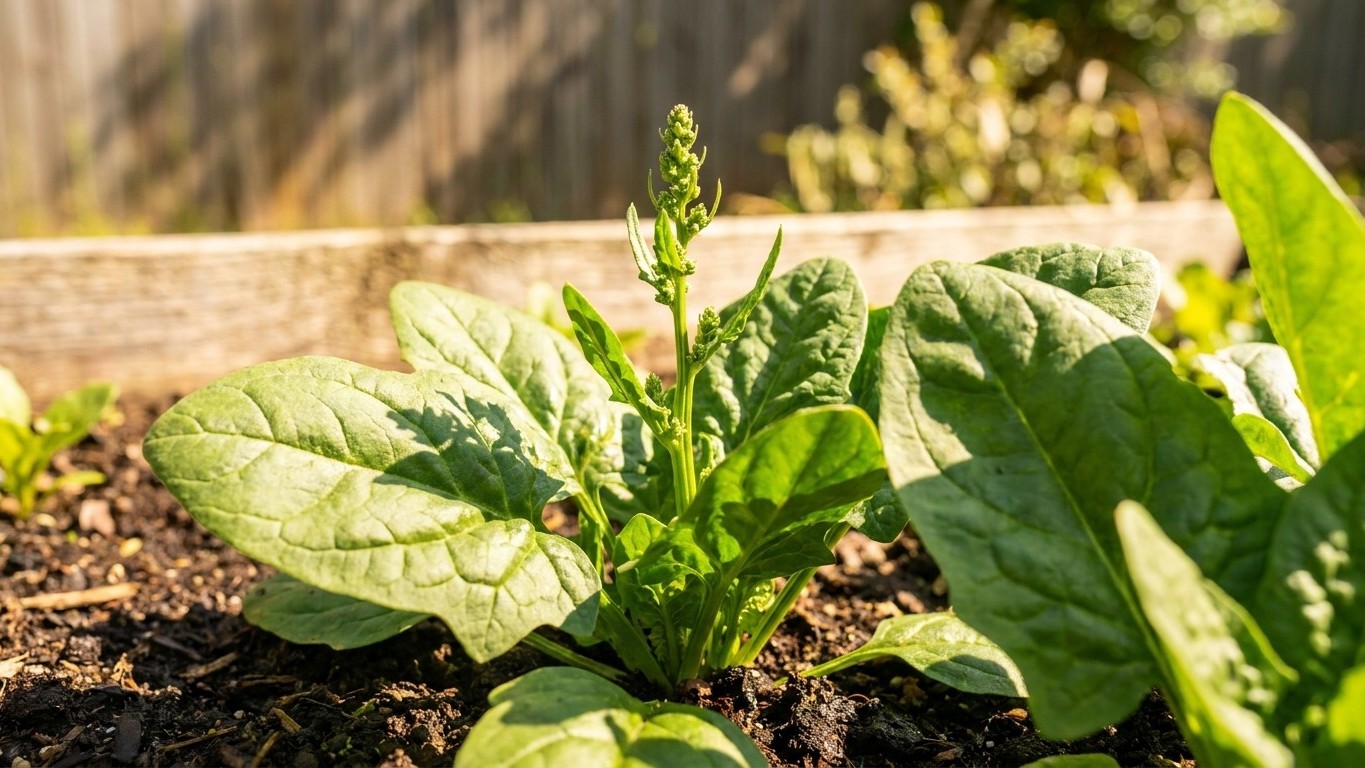

In Idaho home gardens, only four of the pests documented by University of Idaho Extension actually target spinach: aphids, cutworms, grasshoppers, and wireworms. The rest of the state’s documented pest list feeds on carrots, nightshades, brassicas, onions, peas, or squash, not leafy greens. Timing follows the state’s short cool window, cutworms and wireworms hit at the seedling stage near the last spring frost, aphids build as days lengthen, and grasshoppers peak in midsummer heat, usually after spring-sown spinach has already bolted.
Which pests attack spinach in Idaho
University of Idaho Extension documents eleven pests across its home vegetable garden pages: Aphids, Carrot rust fly, Colorado potato beetle, Cutworms, Grasshoppers, Imported cabbageworm, Onion maggot, Pea leaf weevil, Squash bug, Tomato hornworm, and Wireworms. That’s the complete documented list for this territory. It is not, though, a list of spinach pests. Most of those eleven have a narrow appetite for one crop family, and spinach isn’t on their menu.
Carrot rust fly larvae tunnel into carrot and celery roots; they have no reason to visit a spinach bed. Colorado potato beetle and tomato hornworm are nightshade specialists built for potato, eggplant, and tomato foliage. Imported cabbageworm targets the brassica family, cabbage, broccoli, kale, none of which spinach belongs to. Onion maggot needs onions, garlic, or leeks to complete its life cycle. Pea leaf weevil feeds on pea and legume seedlings. Squash bug is a cucurbit specialist that won’t touch a leaf crop. Seeing any of these on a county pest sheet doesn’t mean they’re a spinach problem; it means they’re documented for the territory’s vegetable garden as a whole.
That leaves four generalists worth watching in a spinach planting: Aphids, Cutworms, Grasshoppers, and Wireworms. Aphids are true generalists that colonize the undersides of almost any leafy crop wherever soft new growth is available. Cutworms are soil-surface caterpillars that clip seedling stems at ground level on a wide range of vegetables, and spinach’s tender young stems are an easy target. Grasshoppers are indiscriminate foliage feeders; when populations build, they’ll strip a spinach leaf as readily as anything else nearby. Wireworms live in the soil and feed on germinating seed and root tissue, which puts a direct-seeded, cool-season crop like spinach within reach, especially early in spring when soil is still slow to warm.
The error worth avoiding is treating a county’s full pest roster as a shopping list of what’s actually damaging one crop. University of Idaho Extension’s documentation covers the vegetable garden broadly, not spinach specifically; the sorting above is what narrows it down to what actually matters.
When each one shows up, and what it does first
Spinach in Idaho runs on a narrow clock. At the reference low-valley station, the last spring frost falls between April 23 and May 7, and the first fall frost arrives between October 7 and October 21. Nearly everything about spinach, and what eats it, plays out inside or just outside that window.
Cutworms and wireworms both show up early, right around germination and seedling emergence, when soil is barely warming after the last frost date. Cutworm damage looks like a seedling that stood yesterday and is now severed at the soil line, sometimes missing outright, with no chewing visible higher up because the cut happens below ground. Wireworm damage is quieter and easier to miss: poor stand establishment, seed that never comes up, or a seedling that wilts and collapses without any visible feeding above the soil, because the larvae are working on the seed or root underneath.
Aphids arrive later, once days lengthen and new growth stays soft. The first sign is curled or puckered young leaves with small soft-bodied insects clustered on the undersides, sometimes with a sticky residue on the leaves below where they’ve been feeding. This tends to coincide with the stretch of the season also pushing spinach toward bolting, since long days and warmth work on the plant at the same time aphids are working on it.
Grasshoppers build through the hottest part of summer, the same stretch responsible for a mean of 47.5 days a year at or above 90 F at the reference station. By the time grasshopper numbers are large enough to notice, a spring-sown spinach crop has usually already bolted or been pulled under the pressure of heat and day length, so grasshopper feeding more often shows up on whatever’s left nearby, or on a fall planting still in the ground. Their damage is unmistakable once it starts: ragged, irregular holes chewed inward from leaf edges, sometimes leaves stripped down to the midrib.
Telling the damage apart from everything else
Not everything that looks like pest damage on Idaho spinach is a pest. Spinach grows best where temperatures stay below 75 F, and that same number marks the point where leaves start turning bitter and the plant shifts toward flowering. A plant sending up a central stalk, with leaves turning sharp-tasting, isn’t being eaten, it’s bolting from heat and long days, and no amount of pest control changes that.
| What you see | Likely cause | What distinguishes it |
|---|---|---|
| Yellowing leaves, no insects visible | Nutrient shortfall or overwatering | Uniform across the bed, not patchy like feeding damage |
| Wilting despite moist soil | Cutworm or wireworm damage at stem or root | Gently dig at the base; look for a severed stem or larvae in the soil |
| Ragged holes, edges chewed inward | Grasshopper feeding | Insects visible on the plant during the day |
| Bolting, bitter taste, central stalk forming | Long days and heat above the 75 F ceiling | No insect involved at all; it’s the plant’s own response |
| Sticky, shiny residue, curled leaves | Aphids | Flip the leaf; clusters of small soft insects on the underside |
Seed that never comes up at all in late summer often isn’t a pest issue either. Soil above 80 F reduces spinach germination outright, which is a soil-temperature problem, not a wireworm problem, even though the symptom (no stand) can look the same. When the cause isn’t obvious from the plant itself, a county extension office can look at a sample and settle it faster than guessing.
What actually works here, and what is a waste of time
On a season this short, timing does more work than any treatment. A floating row cover set down right after seeding, before seedlings emerge, keeps cutworm moths and aphids from ever reaching the bed, and it should go on before the last frost date passes, not after damage is already visible. Once spinach is established and past the seedling stage, cutworm risk drops sharply, so the cover matters most in that narrow early window.
For wireworms, the more useful move happens the season before: turning soil in fall exposes larvae to cold and to birds, and rotating spinach away from a bed that grew grass or sod the prior year cuts the population down before planting even starts. For grasshoppers, handpicking is realistic while numbers are still low; once populations build through the hot stretch of summer, a spinach planting is usually past saving anyway, since heat and long days have already pushed it toward bolting.
What wastes time is spraying broadly before knowing what’s actually causing the damage. Since bolting, heat stress, and soil-temperature failures produce symptoms that look pest-related, treating a plant for insects when the real cause is a 75 F growth ceiling or 80 F germination block does nothing but delay the diagnosis. This site doesn’t recommend specific products or active ingredients; what’s registered for use in Idaho changes, and a county extension office is the only source that keeps that current.
Where to check this for your own county
University of Idaho Extension is the source for everything documented on this page, and its county offices are where a specific pest problem gets confirmed. What’s documented at the state level describes what’s known to occur across Idaho broadly; it doesn’t describe what’s in one particular garden bed. Elevation changes that fast in Idaho, and a valley floor with a longer frost-free stretch behaves nothing like a mountain garden a short drive away with a shorter season and colder soil.
The reference frost dates used throughout this page come from a low-valley station; most of the state sits higher and colder, with a shorter window on both ends. A garden at elevation may see cutworm and wireworm activity compressed into a narrower spring, and may never reach the heat load that pushes grasshopper numbers up the way a low valley does. The next useful step is a call or sample drop-off to the local county extension office, not a broader search for what’s documented statewide.
Common questions
Do aphids kill spinach outright, or just damage it?
Aphids rarely kill an established spinach plant on their own. They stunt growth, curl leaves, and leave a sticky residue, but a heavy infestation on a plant that’s about to bolt from heat and day length anyway often isn’t worth treating separately from the bigger issue.
Can cutworm damage be stopped without any spray?
Yes. A physical barrier placed around each seedling stem, or a row cover set down before emergence, blocks cutworms without any product. This works because cutworm damage is concentrated in a narrow window right at germination.
Why do grasshoppers show up so late for a spinach problem?
Grasshopper populations build through the hottest stretch of summer, which is also when spring-sown spinach has usually already bolted from long days and heat. The timing rarely overlaps with a healthy, harvestable spinach crop.
Does the same pest list apply to a fall-sown spinach crop?
The same four pests are documented for the territory regardless of season, but the fall sowing window is set by soil cooling below the germination threshold, not by pest pressure. Wireworms and cutworms are worth watching again at that later seedling stage, just as they were in spring.